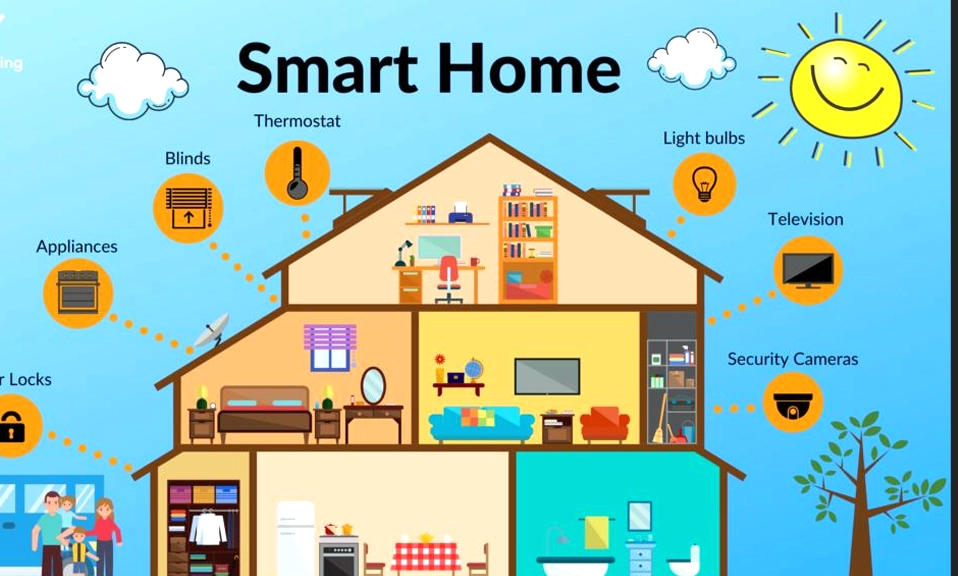
The modern smart home is a marvel of convenience, but it’s also a sprawling, interconnected attack surface. The devices that make life easier—the TV you stream on, the fridge that keeps your food fresh, the car that waits in your driveway—are increasingly powerful computers connected to the internet, and that connectivity comes with a price. In 2026, that price is being paid in real-world security incidents, exposing uncomfortable truths about the gadgets we welcome into our most private spaces.
📺 Your Smart TV: A Doorway in the Living Room
The television has become a focal point of smart home vulnerabilities. According to the Bitdefender and NETGEAR 2026 IoT Security Landscape Report, smart TVs generated a staggering 270.3 million vulnerability observations between January and September 2026, the highest count of any device category. They are uniquely problematic because they can serve as a target, a proxy for relaying third-party traffic, a sensor gathering information, and a foothold for a broader network attack.
A concrete example from November 2026 illustrates the risk. Security researchers disclosed multiple critical flaws in Hisense VIDAA smart TV firmware (versions V0000.01.00a.P0220):
Authentication Bypass (CVE-2026-123998) : The TV’s remote-control service accepted default credentials and used a weak 4-digit pairing PIN with no rate limiting. An attacker on the same network could brute-force the PIN in about five seconds to inject key presses, change inputs, or launch applications.
Unauthenticated Access (CVE-2026-123994) : The TV’s DIAL service accepted control requests from any device on the network without authentication. This allowed attackers to query running apps, terminate sessions, and potentially access YouTube viewing history and subscriptions by spoofing headers.
These flaws are particularly dangerous in settings like hotels or shared living spaces, where untrusted users often have access to the same local network.
🧊 The Refrigerator: From Cold Storage to Security Risk
The idea of a hacked fridge might sound like a joke, but 2026 has made it a serious concern. In early November, a wave of cyberattacks targeted supermarket refrigeration systems across Europe. In France, refrigerators and freezers in hundreds of stores were remotely heated to 50°C overnight, sparking fires and spoiling food. Similar incidents affected stores in Belgium, Luxembourg, and Ireland, forcing the removal of chilled products from sale.
The vulnerabilities are not limited to commercial systems. Researchers have repeatedly demonstrated flaws in consumer appliances. In 2015, a Samsung smart refrigerator was shown to be compromiseable, allowing interception of internet traffic passing through it. More recently, in 2026, researchers disclosed 14 vulnerabilities in Dixell refrigeration units used in commercial settings, many with severity scores between 8 and 9.8. One flaw was so severe that the login page ran the submitted username as a shell command before checking the password, granting attackers root access. The core risk is clear: a compromised fridge can disrupt temperature controls, ruining food, and potentially serve as a pivot point into a wider network.
🚗 The Connected Car: A Remote Control for Your Vehicle
The modern car is a smartphone on wheels, and that means it inherits the smartphone’s security problems. In February 2026, researchers Shubham Shah and Sam Curry discovered a critical misconfiguration in the identity platform (ForgeRock) used by two major automakers. An administrator console was left exposed with the default credentials ‘admin:admin’. By exploiting a path-traversal flaw to bypass perimeter controls, the researchers gained full access to the identity server. This allowed them to achieve full account takeover for any customer, enabling them to remotely unlock doors and start engines of connected vehicles in the US, Canada, and Australia. Both systems were remediated within two hours of disclosure, but the incident highlights a dangerous pattern: identity infrastructure misconfigurations, not novel zero-day exploits, are the primary enabler of large-scale vehicle compromise.
📊 The Bigger Picture: A Target-Rich Environment
These individual incidents are part of a broader trend. The 2026 IoT Security Landscape Report, based on data from roughly 10.4 million smart homes, reveals that the average household now has 24 connected devices, up from 22 the previous year. The report analyzed 5.4 billion security events and found that 90.1% of detected attack activity was automated reconnaissance—port scans and probes searching for weakly secured devices. The vast majority of observed vulnerabilities (99.97%) are publicly known CVEs, meaning they could be patched. The problem is that many devices, especially long-lived ones like TVs and smart plugs, remain online long after their manufacturers stop issuing security updates.
🛡️ Is Your Smart Home Safe? Practical Steps to Protect Yourself
The situation is serious, but it is not hopeless. The most effective defenses are also the simplest, and they focus on reducing your attack surface.
1. Master Your Passwords and Authentication
This is the single most important step. Change the default password on every device the moment you set it up. Use a password manager to create unique, complex passwords for each device and account. Wherever possible, enable multi-factor authentication (MFA) on the accounts that control your devices.
2. Segment Your Network
Your smart TV, fridge, and car do not need to talk to your laptop or phone. Create a separate Wi-Fi network (often a “guest network” on your router) exclusively for your IoT devices. This isolates them from your more sensitive personal computers and storage, preventing a compromised gadget from becoming a gateway to your entire digital life.
3. Update Religiously
Enable automatic firmware updates on your router and every smart device that supports it. If a device is no longer receiving security updates, it is time to consider retiring it, especially if it is an older smart plug or camera.
4. Turn Off What You Don’t Use
Many smart devices have features you may never need, like remote access or voice control. If you don’t use it, disable it. This reduces the number of potential entry points for an attacker.
5. Do Your Homework Before Buying
Before purchasing a new smart device, research the manufacturer’s reputation for security and, crucially, how long they promise to provide security updates. A cheap device that is abandoned by its maker in two years is a liability, not a convenience.
💎Your smart home is safe
only to the extent that you make it safe. The threats are real, as the incidents of 2026 have proven, but they overwhelmingly target devices that are left with default passwords, unpatched software, and flat networks. By taking a few deliberate, practical steps, you can enjoy the benefits of a connected home without leaving the door wide open for attackers. The convenience is real. So is the risk. The choice of which one defines your home is, for now, still yours.