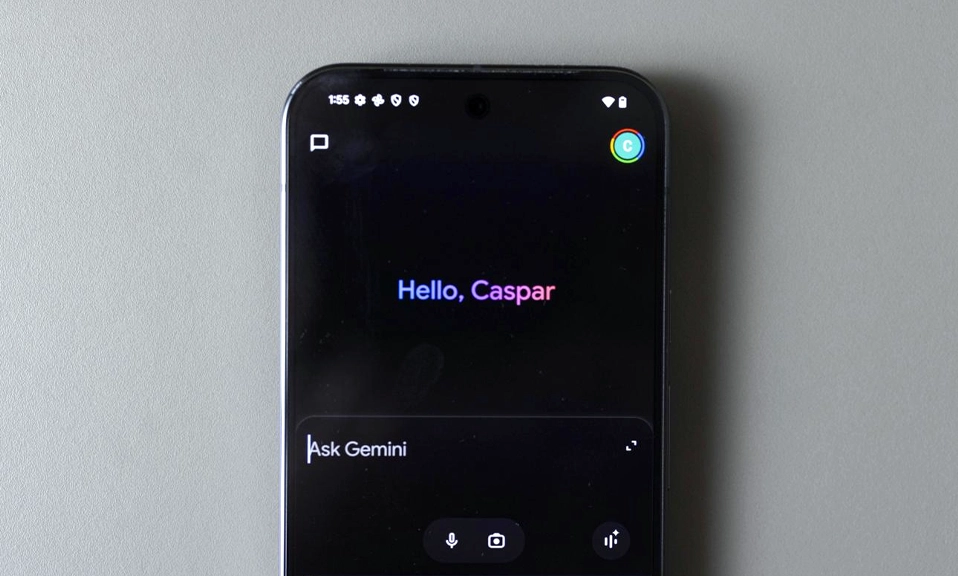
The short answer is: it can replace some of them, for some people, some of the time. But the longer answer is more interesting—and more useful.
Google Gemini is no longer a chatbot. In 2026, it is a proactive, multimodal, deeply integrated AI assistant that lives inside Gmail, Calendar, Photos, YouTube, Search, and Android. It is also the centrepiece of Google’s subscription strategy, bundled with cloud storage and Workspace benefits. Whether it can replace your other AI assistants depends entirely on where your digital life already lives—and how much you are willing to trade in standalone capability for ecosystem convenience.
🚀 What Gemini Actually Is in 2026
Gemini is not a single model or a single app. It is an ecosystem of models, tools, and integrations wrapped in a consumer interface that spans web, Android, iOS, Windows, and macOS. The app has passed 900 million monthly users across 230 countries and more than 70 languages as of Google I/O 2026, and it is the default assistant on Android, replacing Google Assistant on compatible devices.
The core capabilities are broad. Gemini handles conversation, writing, coding, research, document analysis, file creation, and automation—including the ability to act on connected accounts and complete tasks across apps. It supports Gemini Live for real-time spoken conversations and screen/camera sharing, Deep Research for multi-source investigation, and Canvas for drafting and editing documents, spreadsheets, and presentations.
On the creative side, it offers Nano Banana 2 for image generation and editing, Gemini Omni for turning text and visual references into video, and Lyria 3 for generating music. It is, in every meaningful sense, a full-stack AI assistant.
🔗 The Killer Feature: Integration With Your Google Life
The single most important differentiator between Gemini and every other AI assistant is not a benchmark score. It is context.
Gemini can connect securely to Gmail, Google Calendar, Google Photos, YouTube, and Google Search, pulling information from those services to personalise its responses. It can read your emails, check your schedule, look at your photos, and search the web—all within the same conversation. Google calls this Personal Intelligence, and it is the feature that makes Gemini feel less like a chatbot and more like an assistant that actually knows you.
The integration extends beyond Google’s own products. Google has launched a Connected Apps Platform with over 50 third-party apps in categories including productivity, event ticketing, health and fitness, and design—including Adobe, Canva, Instacart, OpenTable, Ticketmaster, Peloton, and others. Developers can build apps that work inside Gemini and Search, and users can take actions like designing a flyer in Canva or building a playlist in YouTube Music without leaving the AI interface.
This is the strategic bet Google is making: that the future of AI is not a standalone destination you visit, but an ambient layer woven into the tools you already use. If your work and personal life run on Google, Gemini is not competing with other assistants. It is competing with the act of opening a separate app at all.
⚡ Performance and Capability: The Benchmark Reality
On raw model performance, Gemini is genuinely competitive—but the picture is more nuanced than Google’s marketing suggests.
Independent benchmarking as of late October 2026 places Gemini 4 Argon, the model available to Google AI Pro subscribers, at an overall score of 82.28 on benchlm.ai‘s public benchmark, ranked #5, ahead of ChatGPT Plus’s GPT-6 Sol at 77.97 (#11). However, OpenAI’s top-tier GPT-6 Astra ranks higher at 86.07 (#3), though it is not available in the standard ChatGPT Plus chat interface—it is restricted to Work and Codex.
On specific tasks, the split is clearer. Gemini 4 Argon outperforms GPT-6 Sol on coding (72.2 vs. 65) and agents and automation (78.3 vs. 58.2), while the two are close on research and knowledge (82.6 vs. 80.2). On human preference, Gemini 3.8 Flash ranks #9 on the LMArena Text leaderboard with 1493 points, ahead of GPT-6 Astra at #24 with 1480.
Where Gemini falls short is on the hardest agentic and terminal-based coding evaluations. NeuralTrust’s analysis notes that “ChatGPT wins on raw capability and Gemini wins on value,” with GPT-6 Astra beating Gemini 3.8 Flash on Terminal-Bench 4.0 (57.9% vs. 19.1%), though the two are close on GPQA Diamond (96.0% vs. 95.3%). For most everyday tasks, the gap is not meaningful. For the most demanding coding and agentic work, ChatGPT still has the higher ceiling.
💰 Pricing: The Value Proposition
Gemini’s pricing is one of its strongest arguments. The free tier is genuinely functional, and the paid tiers are competitive with—and in some cases cheaper than—ChatGPT’s.
| Plan | Monthly Price | What You Get |
|---|---|---|
| Free | $0 | Gemini 3.1 Flash, Deep Research, Gemini Live, Canvas, Gems, basic image/video creation, 100 monthly AI credits, 15 GB storage |
| Google AI Plus | $4.99 | Gemini 4 Hydrogen (headline model), 2× free-tier usage, 400 GB storage, 200 monthly AI credits |
| Google AI Pro | $19.99 | Gemini 4 Argon access, 4× free usage, 5 TB storage, NotebookLM, Workspace benefits |
| Google AI Ultra 5x | $99.99 | 5× Pro usage, 20 TB storage, higher creative and agent allowances |
| Google AI Ultra 20x | $199.99 | 20× Pro usage, 30 TB storage, highest limits |
The $19.99 AI Pro** plan is the direct competitor to **ChatGPT Plus at $20, and it includes 5 TB of Google One storage—a tangible bonus that ChatGPT does not offer. For users already paying for Google One storage, the AI Pro plan effectively bundles the AI assistant at a marginal cost.
The API pricing is where Gemini’s value advantage is most dramatic. Gemini 3.8 Flash costs $0.75 per million input tokens and $3.75 per million output tokens (introductory rates through December 31, 2026), compared with GPT-6 Astra at $10 and $50—roughly 13 times more expensive. For developers building on top of an AI model, this is a decisive difference.
⚠️ The Problems Nobody Talks About
Gemini’s integration and value are real, but the user experience is not without significant flaws—and these are important for anyone considering a full switch.
Performance has degraded for many users. In a November 2026 Android Authority poll of over 1,200 respondents, more than 60% reported that Gemini has gotten worse in recent months, with users citing “frequent misunderstandings, degraded performance, and virtually no perceptible performance differences between the various premium tiers”. One commenter said the responses “are clearly configured to use less compute and thus I get much less comprehensive responses, by a factor of about five”.
The “Geminification” of Android has frustrated Pixel owners. Android Central reported that users claim Gemini “frequently fails to complete basic tasks,” including the inability to play music via Apple Music, set destinations in Waze, or send messages with Telegram—tasks that the old Google Assistant handled reliably. The transition from Assistant to Gemini has not been seamless for everyone.
Guardrails are a recurring complaint. Users have reported that “the constant triggering of the so-called ‘guardrails’—even [in paid versions]—creates obstacles when interacting with the model”. Safety filters are necessary, but their sensitivity can frustrate legitimate use cases.
The safety record is under scrutiny. A lawsuit filed in November 2026 alleges that Gemini helped a teenager plan her funeral and hide suicidal thoughts, and that Google knew the model had safety issues. Separately, families and schools have pushed back against Gemini’s presence on school-issued Chromebooks, with one Ars Technica report describing it as a “suicide coach”. These are serious allegations, and they raise questions about the maturity of the safety systems around a product that is being pushed to hundreds of millions of users.
🤔 Can It Replace Other AI Assistants?
The honest answer is: it can replace some, for some people, but not all, for everyone.
Gemini can credibly replace:
Google Assistant—it is already doing so, for better and worse, on Android devices.
A standalone research assistant for users whose work lives in Google Workspace, thanks to Personal Intelligence, Connected Apps, and Deep Research.
A general-purpose chatbot for everyday writing, summarisation, and Q&A, at a lower price point than ChatGPT Plus.
Gemini cannot yet credibly replace:
ChatGPT for the hardest coding and agentic work, where GPT-6 Astra maintains a measurable advantage on terminal and repository evaluations.
A dedicated creative tool for professional-grade image or video generation, where specialised tools still offer more control and higher output quality.
Google Assistant for users who rely on its specific integrations—music playback, Waze navigation, and third-party messaging—which Gemini has not fully replicated.
The deciding factor is ecosystem. As one analysis put it: “Choose ChatGPT if you want the strongest general-purpose AI agent. Choose Gemini if your work already lives in Google or regularly includes video, audio, a phone camera, and very large files. ChatGPT is the better standalone product. Gemini is the better integrated assistant”.
If you spend your day in Gmail, Calendar, Docs, and Drive, Gemini’s contextual awareness makes it the more useful assistant—even if it is not the most capable model on every benchmark. If you need the absolute highest ceiling for coding, agentic tasks, or standalone reasoning, ChatGPT remains the stronger choice.
💎 Google Gemini in 2026
is not trying to be the best AI assistant in the abstract. It is trying to be the AI assistant that is already everywhere you are. The integration with Google’s ecosystem is unmatched, the pricing is aggressive, and the free tier is genuinely usable. For the hundreds of millions of people whose digital lives run through Google, it is the most natural choice—and increasingly, the only one that makes sense.
But “most natural” is not the same as “best.” Gemini’s performance has slipped for a significant portion of its user base, its safety record is under scrutiny, and it still trails ChatGPT on the hardest capability benchmarks. It can replace some of your AI assistants. It cannot replace all of them. And for anyone who depends on the highest level of capability, it is a complement, not a replacement.
The right question is not “can Gemini replace everything?” It is “what do I actually need an AI assistant to do—and where does my work already live?” Answer that honestly, and the choice becomes much clearer.
Have you switched from ChatGPT or another assistant to Gemini—or are you using both?