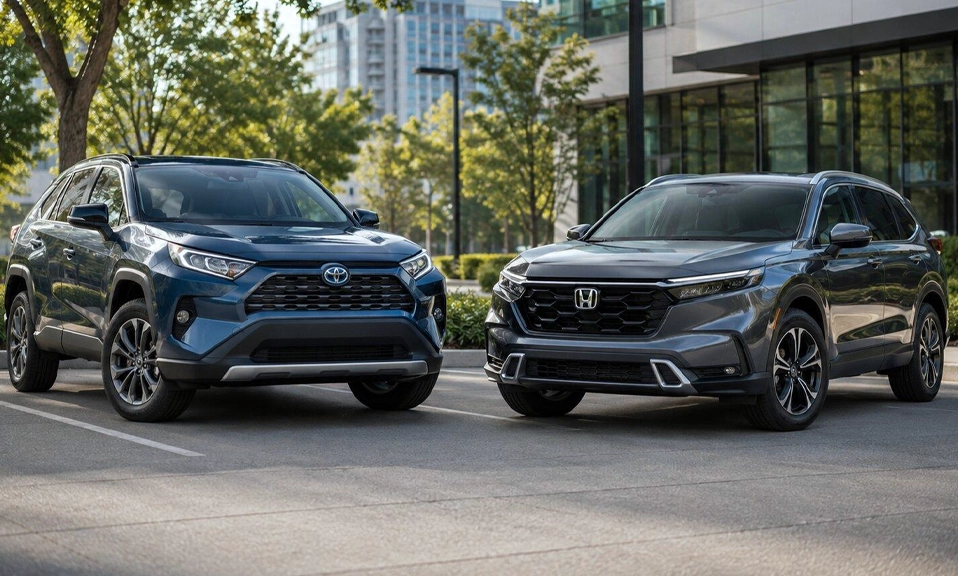
The Hyundai Tucson and Kia Sportage are not just rivals. They are siblings—built on the same platform, sharing the same engines, and competing for the same driveways. For 2026, both have been refreshed, both offer a bewildering array of gas, hybrid, and plug-in hybrid powertrains, and both are among the best compact SUVs you can buy. The honest answer to which one you should buy is that there is no wrong choice. But there is a different choice, and the differences that remain are the ones that will shape your daily life for years.
Here is the definitive breakdown of how they compare, based on pricing, powertrains, interior space, safety, technology, and the real-world experience of driving both.
The Specs at a Glance
| Feature | 2026 Hyundai Tucson | 2026 Kia Sportage |
|---|---|---|
| Base Price (Gas) | $29,450 (SE FWD) | $28,790 (LX FWD) |
| Base Price (Hybrid) | $32,400 (Blue AWD) | $32,790 (S AWD) |
| Top Price | $48,550 (PHEV Limited AWD) | $47,190 (PHEV X-Line Prestige) |
| Gas Powertrain | 2.5L I4, 187 hp / 178 lb-ft | 2.5L I4, 187 hp / 178 lb-ft |
| Hybrid Powertrain | 1.6L Turbo I4 HEV, 231 hp / 271 lb-ft | 1.6L Turbo I4 HEV, 232 hp / 271 lb-ft |
| PHEV Powertrain | 1.6L Turbo I4 PHEV, 268 hp / 271 lb-ft | 1.6L Turbo I4 PHEV, 268 hp / 271 lb-ft |
| Gas Fuel Economy (FWD) | 28 mpg combined | 28 mpg combined |
| Hybrid Fuel Economy (FWD) | Not offered FWD (AWD: 36–38 mpg) | 42 mpg combined (FWD); 35 mpg (AWD) |
| Cargo (Behind 2nd Row) | 41.2 cu ft | 39.6 cu ft |
| Cargo (Max) | 80.3 cu ft | 74.1 cu ft |
| Rear Legroom | 41.3 inches | 41.3 inches |
| IIHS Award (2026) | Top Safety Pick+ | Top Safety Pick+ (built after May 2025) |
Sources: Autoblog, U.S. News, IIHS
Pricing: The Sportage Wins at the Bottom, the Tucson Wins at the Top
On the surface, the Sportage is the cheaper car. The gas-powered LX starts at $28,790**, undercutting the **Tucson SE at $29,450 by about $660. The gap is small, but it exists, and for buyers shopping at the very bottom of the range, it matters.
The dynamic flips at the other end. The Tucson’s top non-PHEV trim, the Limited AWD, starts at $39,425**, while the **Sportage’s equivalent, the X-Pro Prestige, starts at $39,590—a difference of about $165 in the Tucson’s favor**. The PHEV range tells a similar story: the **Tucson PHEV Limited AWD tops out at $48,550, while the Sportage PHEV X-Line Prestige reaches $47,190**—about **$1,360 cheaper.
The verdict on price: The Sportage is the value winner at the entry level, but the Tucson is the better value at the top of the gas lineup. The PHEV gap favors the Sportage by a meaningful margin. Neither advantage is decisive on its own.
Powertrains: Identical on Paper, Different in Practice
This is where the comparison becomes genuinely interesting—and where the shared platform becomes a liability for the Sportage in some markets.
The gas engines are mechanically identical. Both use a 2.5-liter four-cylinder producing 187 hp and 178 lb-ft, paired with an eight-speed automatic. Both take roughly 9 seconds to reach 60 mph—adequate for daily driving, but not quick. Both return 28 mpg combined in FWD form. If you are buying the gas model, the driving experience is a tie.
The hybrids share the same 1.6-liter turbocharged engine and electric motor, but the tuning differs slightly. The Sportage Hybrid makes 232 hp, while the Tucson Hybrid makes 231 hp—a difference of one horsepower that is imperceptible on the road. The more meaningful difference is fuel economy and drivetrain availability. The Sportage Hybrid is available in FWD and returns an excellent 42 mpg combined; the Tucson Hybrid is AWD-only and returns 36–38 mpg. For buyers who do not need all-wheel drive, the Sportage Hybrid is the more efficient choice by a significant margin.
The PHEVs are also mechanically identical, both producing 268 hp and 271 lb-ft. The Tucson PHEV offers 32 miles of electric range; the Sportage PHEV offers 33 miles. The difference is negligible.
The verdict on powertrains: For gas buyers, it is a tie. For hybrid buyers who want maximum efficiency, the Sportage wins because of its FWD availability and 42 mpg rating. For PHEV buyers, it is effectively a tie.
Interior and Cargo: The Tucson’s Quiet Advantage
Both SUVs are among the roomiest in the compact class, with 41.3 inches of rear legroom in both—enough to accommodate adult passengers comfortably. The seats are supportive in both, and the difference in comfort is minimal.
The meaningful difference is cargo capacity. The Tucson offers 41.2 cubic feet behind the rear seats and 80.3 cubic feet with them folded, compared with 39.6 and 74.1 cubic feet for the Sportage. The Tucson’s maximum cargo figure tops some midsize SUVs, and the gap is large enough to matter for families who regularly haul strollers, sports equipment, or luggage.
The Tucson’s interior also feels more upscale. U.S. News notes that the Tucson’s cabin “looks good and is more upscale than you’d expect at this price point,” with soft-touch plastics and high-quality stitching, while the Sportage’s materials are “solid but less polished” and its design “leans more functional than luxurious”. The Sportage counters with a cleaner, more conventional dashboard for 2026, but it does not match the Tucson’s perceived quality.
The verdict on interior: The Tucson wins on cargo space and cabin refinement. The Sportage is competitive on passenger room but trails on the practical measure that matters most to families: how much stuff you can fit in the back.
Safety: Both Are Top Safety Pick+ Winners
For 2026, both the Tucson and the Sportage earned the IIHS Top Safety Pick+ award, the institute’s highest honor. Both achieved “Good” ratings in the updated, tougher moderate-overlap front crash test, and both come with comprehensive standard driver-assistance suites.
There is one caveat worth noting. The 2026 Tucson is rated “Poor” for whiplash prevention in the IIHS’s latest test, despite its Top Safety Pick+ award. The Sportage’s rating in that specific test is not highlighted in the same way, but the overall safety picture is close enough that neither vehicle has a decisive advantage. Buyers who prioritize rear-seat protection in a rear-end collision should investigate the whiplash rating further.
The verdict on safety: A tie. Both are among the safest vehicles in the class.
Technology and Driving Experience: Two Different Kinds of “Modern”
The Tucson has a 12.3-inch touchscreen and available 12.3-inch digital gauge cluster, with standard wireless Apple CarPlay and Android Auto. The system is widely praised for its clear graphics and intuitive interface, and the physical climate controls—restored after the frustrating capacitive-touch setup of earlier models—make it easy to adjust without looking away from the road.
The Sportage has moved to standard dual 12.3-inch displays on every trim, including the base LX—a more generous standard equipment play than the Tucson. The interface is user-friendly, but the toggleable control module below the screen, which switches between audio and climate functions, has drawn criticism for its learning curve. U.S. News notes that “you may find early on that you’re pushing the wrong button”.
On the road, the two diverge more clearly. The Sportage feels sharper behind the wheel, with more precise steering, a firmer suspension tune, and better control when driving quickly on a flowing road. The Tucson is the softer, quieter, more laid-back option, with less road and wind noise reaching the cabin and a ride that approaches premium levels of comfort.
The verdict on tech and driving: The Sportage wins on standard screen size and driver engagement. The Tucson wins on ergonomics, cabin quietness, and ride comfort.
Match the SUV to Your Priorities
The honest answer is that there is no single winner. Both are excellent, and the right choice depends on what you value most.
Choose the Hyundai Tucson if:
Cargo space and cabin quality are your top priorities. It offers more maximum cargo room and a more upscale interior.
You want a quieter, more comfortable ride for daily commuting and long trips.
You prefer physical controls for climate and audio and found the Sportage’s toggleable panel frustrating.
You are shopping at the top of the gas lineup, where the Tucson’s Limited trim undercuts the Sportage’s equivalent.
Choose the Kia Sportage if:
You want the lowest entry price and the most standard screen real estate on the base trim.
You are buying a hybrid and do not need AWD. The Sportage Hybrid’s FWD option and 42 mpg rating make it the more efficient choice.
You value a sharper, more engaging driving experience and are willing to accept a firmer ride.
You want the cheaper PHEV at the top of the range.
The Tucson is the comfort-and-cargo champion. The Sportage is the value-and-efficiency champion. For a family that prioritizes space and a premium feel, the Tucson is the better fit. For a buyer who wants the lowest price, the best hybrid efficiency, or a more engaging drive, the Sportage makes the stronger case. The best SUV is the one that matches your life, not the one that wins a spec sheet.