By all conventional historical logic, the story of Jesus of Nazareth should have ended on a Friday afternoon in the early 30s AD.
His leader had been publicly executed by the Roman Empire as a common criminal. The movement was leaderless, disorganized, and deeply traumatized. The disciples had scattered. Peter had denied knowing him. Judas was dead. By the standards of the ancient world, this was the definitive end of a failed messianic claim.
But it wasn’t.
Within a few decades, this tiny, terrified group of Jewish peasants and fishermen had launched a movement that would eventually conquer the Roman Empire and reshape the entire course of human history.
How did a band of fugitives become the founders of a global religion? Here is the historical and traditional account of what happened to Jesus’ followers after the crucifixion.
😨 Phase 1: The Great Scattering and the Silence
Immediately following the crucifixion, the historical reality was fear. The Gospels and early historical accounts agree on this: the disciples went into hiding.
They were in Jerusalem, the very city where their leader had just been executed by the ruling authorities. They had every reason to believe they would be next. For a brief period, the movement was essentially underground. The despair was so profound that early texts describe followers like the two on the road to Emmaus, who were literally walking away from Jerusalem, believing that “we had hoped that he was the one to redeem Israel.”
Then, something happened that changed everything.
Whether viewed through the lens of faith or historical psychology, the earliest records show that the disciples became absolutely convinced that Jesus had risen from the dead. They claimed to have seen him, eaten with him, and spoken to him.
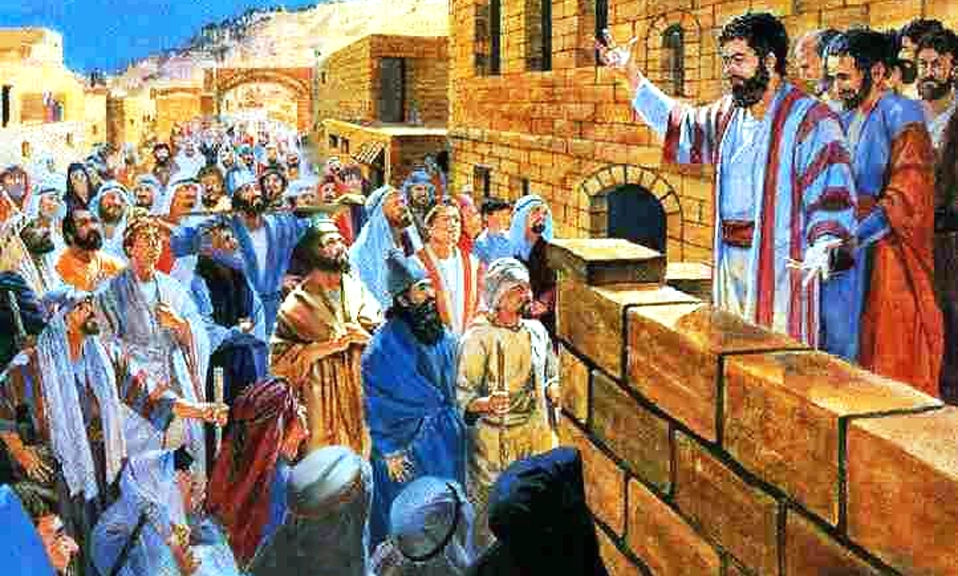
Historians may debate the nature of these experiences, but they do not debate the result: this belief completely transformed the disciples. The men who had fled in terror suddenly stepped back into the public square, boldly proclaiming the very message that had just gotten their leader killed.
🏛️ Phase 2: The Key Players and Their Fates
The early church was not a monolith. It was led by a dynamic, sometimes clashing, group of individuals who took the message in different directions. Here is what history and early church tradition tell us about the “Big Four”:
1. Peter: The Denier Who Became the Rock
Peter was the undisputed leader of the early Jerusalem church. The man who had once denied Jesus three times became the bold spokesman at Pentecost, preaching to thousands.
- His Fate: According to early church historians like Eusebius, Peter eventually left Jerusalem and traveled to Rome, the heart of the empire. During Emperor Nero’s persecution of Christians in 64 AD, Peter was arrested. Tradition holds that he requested to be crucified upside down, feeling unworthy to die in the same manner as his teacher.
2. James the Just: The Bridge Builder
Often overlooked in pop culture, James (the brother of Jesus or a close relative) was arguably the most important leader of the early Jewish-Christian community in Jerusalem. He was known for his extreme piety, earning him the nickname “James the Just.”
- His Fate: James tried to maintain peace between the new Christian movement and traditional Judaism. However, as tensions rose, the high priest Ananus took advantage of a gap in Roman governance. In 62 AD, James was illegally brought before the Sanhedrin, accused of breaking the law, and thrown from the pinnacle of the Temple. When the fall didn’t kill him, he was stoned to death.
3. Paul (Saul of Tarsus): The Game-Changer
Paul was not one of the original twelve. In fact, he was a devout Pharisee who actively persecuted the early Christians, approving of their executions. Then, he had a radical, life-altering experience on the road to Damascus.
- His Fate: Paul became the “Apostle to the Gentiles.” He realized that the message of Jesus wasn’t just for Jews, but for the entire world. He embarked on three massive missionary journeys across the Mediterranean, planting churches in modern-day Turkey, Greece, and beyond. He also wrote letters (epistles) to these churches to settle disputes and explain theology. These letters make up a massive portion of the New Testament. Paul was eventually arrested in Jerusalem, appealed to Caesar, and was taken to Rome, where he was beheaded around 64–67 AD.
4. John: The Survivor
John, the “beloved disciple,” had a different trajectory. While the others were martyred, tradition holds that John lived a remarkably long life.
- His Fate: He is believed to have relocated to Ephesus (in modern-day Turkey) to care for Jesus’ mother, Mary. During the reign of Emperor Domitian (around 95 AD), John was allegedly exiled to the barren island of Patmos, where he wrote the Book of Revelation. He was later released and is the only apostle traditionally believed to have died of old age, passing away peacefully in Ephesus around 100 AD.
⚔️ Phase 3: Growing Pains and Persecution
The journey from a Jewish sect to a global religion was fraught with massive challenges:
- The Identity Crisis (49 AD): The early followers were all Jewish and followed Jewish law (circumcision, dietary restrictions). But as non-Jews (Gentiles) began joining, a massive debate erupted: Do Gentiles have to become Jewish first? The Council of Jerusalem (led by Peter, James, and Paul) made the historic decision that they did not. This was the moment Christianity began to separate from Judaism.
- The Roman Crackdown (64 AD): When a massive fire devastated Rome, Emperor Nero needed a scapegoat. He blamed the Christians, a strange, secretive new cult. This marked the first official, state-sponsored persecution. Christians were arrested, thrown to wild beasts, and burned alive as human torches.
- The Destruction of the Temple (70 AD): When the Romans crushed the Jewish revolt and destroyed the Second Temple in Jerusalem, the center of Jewish life was obliterated. The Jewish-Christian community in Jerusalem was scattered. This event permanently cemented the split between Judaism and Christianity, forcing the followers of Jesus to fully establish their own distinct identity, scriptures, and leadership structures.
🌍The Paradox of Martyrdom
In the ancient world, when a charismatic leader was killed, their movement died with them. The followers would either disband or find a new leader.
The followers of Jesus did neither. They doubled down.
The Roman historian Tacitus noted with bewilderment that punishing Christians only seemed to make their movement grow. The 2nd-century Christian writer Tertullian famously summarized this historical phenomenon: “The blood of the martyrs is the seed of the church.”
The willingness of these early followers to face poverty, exile, torture, and death for their beliefs is one of the most heavily studied aspects of early history. Skeptics and believers alike agree on one thing: people do not willingly die for a lie they know they invented. The disciples’ absolute conviction that they had encountered the resurrected Jesus gave them a courage that outlasted the Roman Empire itself.
From a handful of terrified fishermen hiding behind locked doors to the architects of a faith that would define the next two millennia, the story of Jesus’ followers is one of the most remarkable transformations in human history.