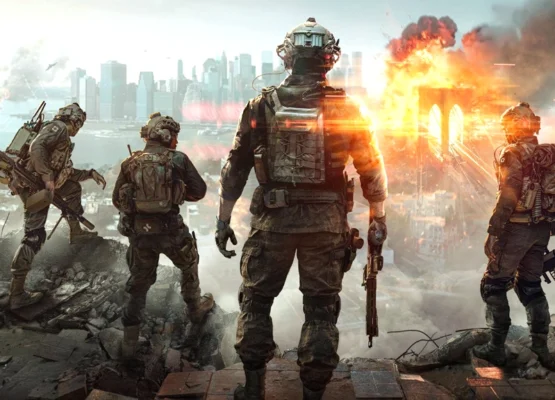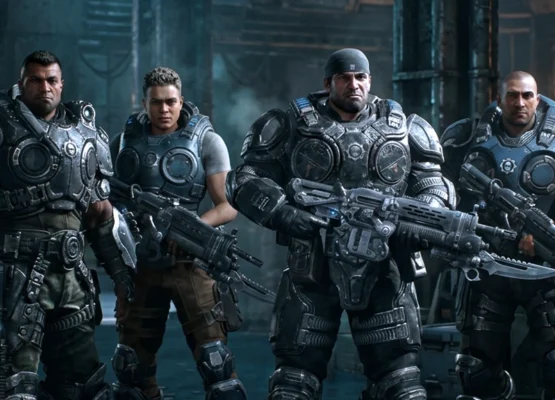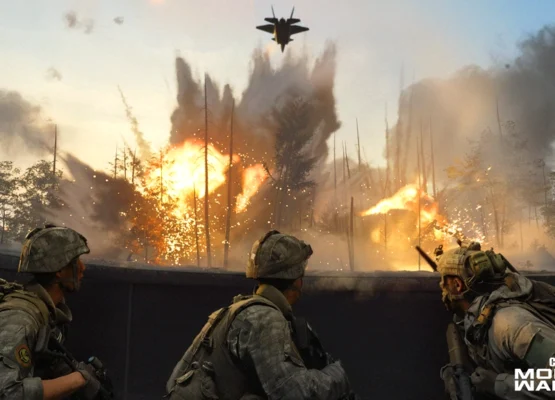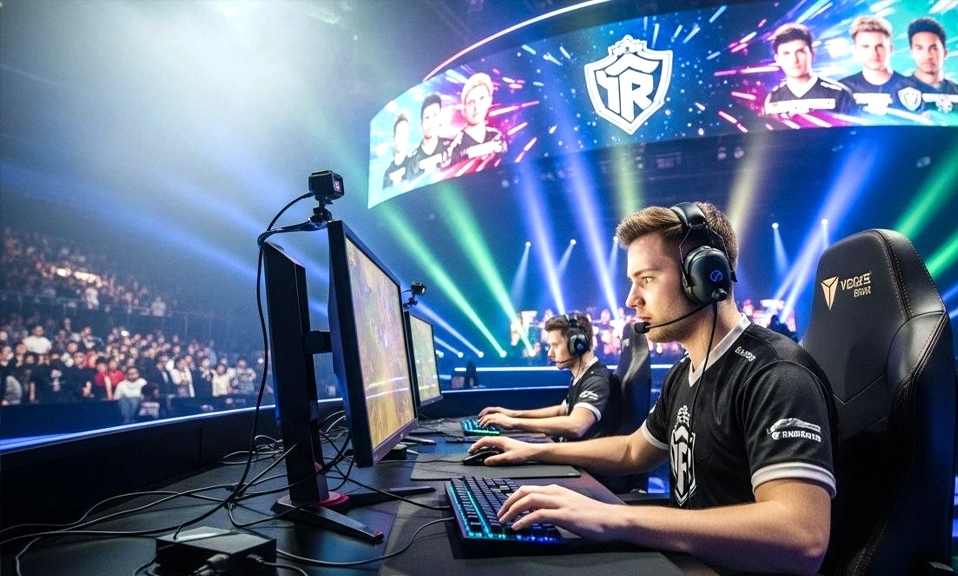
Picture this: It’s a Saturday night in 2026. A stadium in Seoul, Paris, or Riyadh is sold out. 80,000 fans are screaming so loudly the floor is vibrating. On a massive, multi-tiered LED stage, ten players sit in soundproof glass booths, their faces illuminated by the glow of their monitors.
Over 100 million more people are watching live on Twitch, YouTube, and global television broadcasts. The prize pool for the tournament? A staggering $20 million.
This isn’t the Super Bowl. It isn’t the World Cup. It’s the League of Legends World Championship, or perhaps the grand finals of the Olympic Esports Games.
For decades, the cultural stereotype of the “competitive gamer” was a guy in a dark basement, drinking soda, and shouting at a CRT television. Today, esports is a multi-billion-dollar global industry, complete with franchised leagues, university scholarships, mainstream celebrity owners, and Olympic recognition.
How did we get from Space Invaders high-score contests to sold-out arenas and billion-dollar valuations? Here is the story of how video gaming became the biggest competitive sport of the 21st century.
🕹️ Phase 1: The Humble Beginnings (Arcades and LAN Parties)
The seeds of competitive gaming were planted long before the internet. In 1980, Atari hosted the Space Invaders Championship, drawing 10,000 participants across the US. It was the first time playing a video game was treated as a legitimate competition.
But the true birth of modern esports happened in the late 1990s, in the PC cafes (PC bangs) of South Korea. When the Asian financial crisis hit, the Korean government heavily invested in broadband internet infrastructure. Combined with a massive youth population and a cultural affinity for competitive gaming, this created the perfect storm.
Games like StarCraft: Brood War became a national phenomenon. Professional leagues were formed, matches were broadcast on dedicated television channels, and players like Lim Yo-hwan became millionaires and national celebrities. While the rest of the world was still playing Quake and Counter-Strike in damp community halls at LAN parties, Korea had already built the blueprint for professional esports.
📡 Phase 2: The Twitch Revolution and the Rise of the “Gamer Celebrity”
For a long time, esports had a massive distribution problem. If you weren’t in Korea, or if you didn’t catch a niche cable TV broadcast, you couldn’t watch the pros play.
Then came 2011, and the launch of Twitch.
Live streaming completely democratized esports. Suddenly, anyone with an internet connection could watch the world’s best Dota 2 or League of Legends players in real-time. But more importantly, streaming turned gamers into personalities.
Fans didn’t just tune in for the high-level gameplay; they tuned in for the casters, the analysts, and the players themselves. Figures like League of Legends’ “Faker” Lee Sang-hyeok, or Counter-Strike’s Oleksandr “s1mple” Kostyliev, transcended the games they played. They became global icons, signing million-dollar contracts and securing endorsements from brands like Nike, Red Bull, and Louis Vuitton.
Streaming proved that people didn’t just want to play games; they wanted to watch other people play them.
💰 Phase 3: The Money Moves (Franchises and Billion-Dollar Pools)
Once the audience was there, the money followed. But esports had one unique advantage over traditional sports: The publishers owned the game.
In basketball, nobody owns the concept of a ball and a hoop. In esports, Riot Games owns League of Legends, and Valve owns Counter-Strike 2. This allowed game developers to act as both the rule-makers and the league commissioners.
Publishers quickly realized they could build highly lucrative, closed-ecosystem franchise leagues (like the Overwatch League and the League of Legends Championship Series). They sold franchise slots for $20 million to $30 million each to traditional sports team owners and billionaires.
Then came the prize pools.
- Dota 2’s “The International” utilized a crowdfunding model for its prize pool, peaking at over $40 million, making it the highest-paying esports tournament in history.
- The Fortnite World Cup in 2019 shocked the world by handing out $30 million in a single weekend, with a 16-year-old kid walking away with $3 million.
- The Esports World Cup in Riyadh, Saudi Arabia, has recently injected hundreds of millions of dollars into the ecosystem, hosting multi-game festivals with prize pools that dwarf traditional sporting events.
🎓 Phase 4: Institutionalization (Varsity Teams and the Olympics)
The final hurdle for esports was legitimacy. To shake the “it’s just a game” stigma, the industry had to integrate into traditional institutions.
1. The College Pipeline: Today, there are over 200 colleges and universities in the US alone offering official varsity esports programs, complete with dedicated gaming arenas and millions of dollars in scholarships. Kids are no longer just playing games in their dorms; they are playing for their university, with coaches, analysts, and sports psychologists.
2. The Olympic Stamp of Approval: The ultimate validation came when the International Olympic Committee (IOC) officially announced the creation of the Olympic Esports Games. After years of hesitation, the IOC recognized that competitive gaming is the most effective way to engage younger demographics. By 2026, the Olympic Esports movement has fully integrated virtual and physical sports, bridging the gap between the digital and the physical worlds.
🌍 The 2026 Reality Check: Where Are We Now?
As we navigate 2026, the esports industry has matured past its initial “gold rush” hype cycle.
We’ve seen a necessary market correction. The unsustainable, multi-million-dollar franchise buy-ins of the late 2010s have pivoted toward more open, sustainable circuit models. The industry has realized that you can’t just burn venture capital; you need sustainable revenue through media rights, sponsorships, and in-game item sales.
Furthermore, the definition of “esports” has gone global and mobile. While PC and console games dominate in North America and Europe, mobile esports (like PUBG Mobile, Honor of Kings, and Free Fire) are the undisputed kings in Asia, Latin America, and the Middle East, bringing in billions of players and viewers who don’t own a gaming PC.
A New Era of Competition
The journey from a high-score contest in a 1980s arcade to a billion-dollar global industry is one of the most remarkable cultural shifts of the modern era.
Esports has proven that competition, strategy, teamwork, and elite human reflexes don’t require a physical ball or a grass field. They just require a screen, a controller or mouse, and an unrelenting desire to be the best in the world.
Whether you view it as the future of sports or just the evolution of play, one thing is undeniable: the kids who were once told to “turn off that game and go outside” have built an empire. And the rest of the world is finally watching.