We live in an era of unprecedented safety. Most of us work in climate-controlled offices, our biggest daily hazard being a paper cut or a lukewarm cup of coffee. We’ve engineered the danger out of modern life.
But the world doesn’t run itself.
The lights stay on, the buildings go up, the food is harvested, and the skies remain safe because of a specific group of people who willingly step into the crosshairs of danger every single day. They work in environments where the margin for error isn’t just slim—it’s non-existent.
Based on global fatality rates, occupational hazards, and the sheer unforgiving nature of their environments, here are the 15 most dangerous jobs in the world. These are the careers where a single lapse in concentration, a frayed wire, or a sudden shift in the weather can cost a life.
🪵 1. Logging Worker
The Danger: Consistently ranked as the deadliest profession in the United States and many other countries, logging is a brutal, unforgiving job. Workers operate massive, heavy machinery on steep, uneven, and often muddy terrain while felling multi-ton trees. The “One Mistake”: A miscalculated cut on a tree can cause it to “barber chair” (splitting vertically and kicking back) or fall in the wrong direction. A snapped winch cable or a slip on a steep incline can be instantly fatal. There is no margin for error when dealing with thousands of pounds of falling timber.
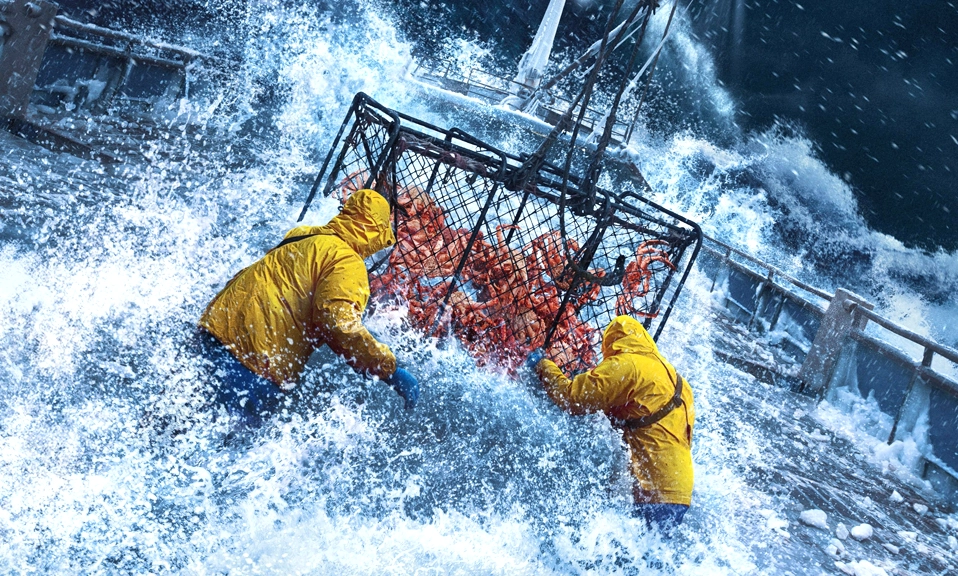
🌊 2. Commercial Fisherman (Deep Sea / Alaskan Crab)
The Danger: The ocean is an inherently hostile environment, and commercial fishing takes place in the worst of it. Fishermen work 20-hour shifts in freezing temperatures, hurricane-force winds, and massive swells on decks covered in ice and slippery fish. The “One Mistake”: Falling overboard in freezing water means you have minutes before hypothermia sets in. But the bigger threat is the gear. Getting a boot caught in a rope attached to a massive, hydraulically powered winch will pull a human being under the water in a fraction of a second.
🤿 3. Underwater Welder (Saturation Diver)
The Danger: This job combines the extreme hazards of commercial diving with the dangers of high-voltage electricity. Saturation divers live in pressurized chambers for weeks, descending to crushing depths to weld oil rigs, pipelines, and ship hulls in zero visibility. The “One Mistake”: The risks are staggering: drowning, hypothermia, and attacks by marine life. But the most unique threat is “Delta P” (differential pressure)—a powerful, invisible underwater vacuum created by a difference in water levels on either side of a dam or pipe. If a diver gets too close to a Delta P zone, they will be sucked in and pinned to the grate with hundreds of pounds of force, from which there is no rescue.
🏗️ 4. Structural Ironworker
The Danger: Ironworkers are the people who build the skeletons of our skyscrapers and bridges. They walk along narrow steel beams hundreds, sometimes thousands, of feet in the air, often in high winds. The “One Mistake”: Gravity. A slip on a wet beam, a moment of dizziness, or a failure to properly clip a safety harness is a fatal mistake. Furthermore, they are guiding massive steel beams into place; a miscalculated signal to the crane operator can result in a crushed limb or worse.
⚡ 5. Electrical Power-Line Installer and Repairer (Lineman)
The Danger: Linemen keep the grid alive, working in rain, snow, and ice storms to restore power. They work at extreme heights on wooden poles, handling cables that carry tens of thousands of volts. The “One Mistake”: Electrocution. If a lineman accidentally bridges the gap between a live high-voltage line and a grounded surface (or another line), the resulting “arc flash” can reach temperatures hotter than the surface of the sun. A single frayed glove, a dropped tool, or a misjudged distance can be the end.
🔥 6. Wildland Firefighter / Smokejumper
The Danger: These men and women fight wildfires in some of the most remote, rugged, and inaccessible terrain on earth. Smokejumpers literally parachute out of planes directly onto the fire line. The “One Mistake”: Fire behavior is notoriously unpredictable. A sudden shift in wind direction can cause a “blow-up,” turning a slow-burning fire into a 100-foot wall of flame in seconds. A misjudged escape route, or failing to deploy their fire shelter in time, means being overtaken by a fire that burns at 1,000 degrees.
🌾 7. Farmer / Agricultural Worker
The Danger: While logging and fishing have higher fatality rates, farming has one of the highest absolute numbers of deaths. The family farm is a heavy industrial workplace filled with massive machinery, chemicals, and livestock. The “One Mistake”: The most terrifying hazard is the grain bin. If a farmer enters a bin to unclog grain and the auger is accidentally turned on (or the grain shifts), they will be engulfed in seconds. It takes only a few inches of grain to trap a person, and the weight of the grain pulling them down makes it impossible to breathe or escape. It is a terrifying, silent killer.
🗑️ 8. Refuse and Recyclable Material Collector (Garbage Collector)
The Danger: It’s an unglamorous job that is surprisingly deadly. Garbage collectors are constantly on and off the truck in busy traffic, dealing with heavy, compacting machinery and hazardous waste. The “One Mistake”: Many fatalities occur when a worker falls off the back of the moving truck, or when they are struck by a passing vehicle while walking between houses. Inside the truck, reaching into the hopper to clear a jam while the compactor is running is a fatal mistake that results in crush injuries.
📡 9. Telecom Tower Climber
The Danger: Every time you get a good cell signal, it’s because a tower climber risked their life to maintain the antenna. These workers scale latticework towers that can be over 1,000 feet tall, often in high winds and extreme weather. The “One Mistake”: At 1,000 feet, the wind speeds are significantly higher than at ground level. A dropped wrench becomes a lethal missile. But the primary danger is the climb itself. A failed carabiner, an unclipped safety line during a transition, or a sudden gust of wind can result in a fatal fall.
🚁 10. Offshore Helicopter Pilot / Bush Pilot
The Danger: While commercial airline pilots have incredibly safe records, pilots who fly small helicopters to offshore oil rigs, or bush planes into remote Alaskan/Canadian wilderness, face a vastly different reality. They fly in marginal weather, over unforgiving terrain, with minimal margins for mechanical error. The “One Mistake”: Flying into “whiteout” conditions in a helicopter or experiencing a sudden engine failure over a dense, mountainous forest leaves the pilot with seconds to react. A single misjudgment of the weather or a missed maintenance check can turn a routine flight into a disaster.
💣 11. Explosive Ordnance Disposal (EOD) Technician
The Danger: Bomb squad technicians are called when unexploded military ordnance, improvised explosive devices (IEDs), or suspicious packages are found. They work in a state of hyper-focus, knowing the object in front of them was designed to kill. The “One Mistake”: This is the literal definition of the prompt. Cutting the wrong wire, misinterpreting the trigger mechanism, or a slight miscalculation in the placement of a disruptor charge means the device detonates. There are no second chances in EOD.
✈️ 12. Flight Test Pilot
The Danger: Before a new aircraft (military or commercial) is cleared for public use, a test pilot has to fly it to its absolute limits to see how it behaves. They fly with experimental software, unproven engines, and modified airframes. The “One Mistake”: Test pilots push aircraft past their design limits to find the “redline.” If they push a new fighter jet too hard into a maneuver and it experiences an unrecoverable flat spin, or if an experimental engine ingests a bird and shatters, the pilot has only seconds to eject. They literally trade their lives for data.
🏔️ 13. High-Altitude Mountaineering Guide (Himalayan Sherpa)
The Danger: The Sherpas and high-altitude porters who guide climbers up peaks like Mount Everest face the most lethal environment on the planet. They carry the heaviest loads, make the most trips through the most dangerous areas (like the Khumbu Icefall), and spend the most time in the “Death Zone” (above 8,000 meters). The “One Mistake”: At 26,000 feet, the human body is literally dying. Oxygen deprivation impairs judgment. A single misstep on an icy ridge, a failed anchor point, or a moment of exhaustion while fixing ropes over a bottomless crevasse can result in a fatal fall or fatal altitude sickness.
🏭 14. Boilermaker / Confined Space Worker
The Danger: Boilermakers build and repair the massive boilers, tanks, and vats used in power plants and factories. Much of this work takes place inside “confined spaces”—enclosed areas with limited entry and exit. The “One Mistake”: Confined spaces are deadly traps. A mistake in ventilation can lead to a buildup of toxic gases (like hydrogen sulfide) or a lack of oxygen. If a welder inside a tank accidentally ignites a residual chemical vapor, the resulting explosion has nowhere to go but outward, and the worker has nowhere to run.
🧪 15. Hazardous Waste Removal Worker
The Danger: These workers clean up toxic spills, handle nuclear waste, and remediate contaminated sites. They wear heavy, restrictive hazmat suits while dealing with unknown, highly volatile chemicals. The “One Mistake”: A tear in a hazmat suit, a mislabeled chemical drum, or accidentally mixing two incompatible toxic substances can result in immediate chemical burns, asphyxiation, or a catastrophic chemical explosion. They are dealing with the invisible, toxic byproducts of modern industry.
🫡 The Hidden Cost of Modern Comfort
It is easy to read a list like this and feel a sense of morbid fascination. But it’s crucial to remember that these aren’t just statistics; they are fathers, mothers, sons, and daughters.
They are the people who climb the icy rigging in the Bering Sea so we can have crab at the grocery store. They are the linemen hanging from a pole in a sleet storm so we can charge our phones. They are the ironworkers walking a steel beam in the clouds so we have offices to work in.
The safety and convenience of the modern world are built on the backs of these incredibly brave men and women. They accept the risk, they do the training, and they do the job, day in and day out.
The next time you flip a light switch, look at a skyscraper, or enjoy a meal, take a brief second to think about the people who risked their lives to make it possible.