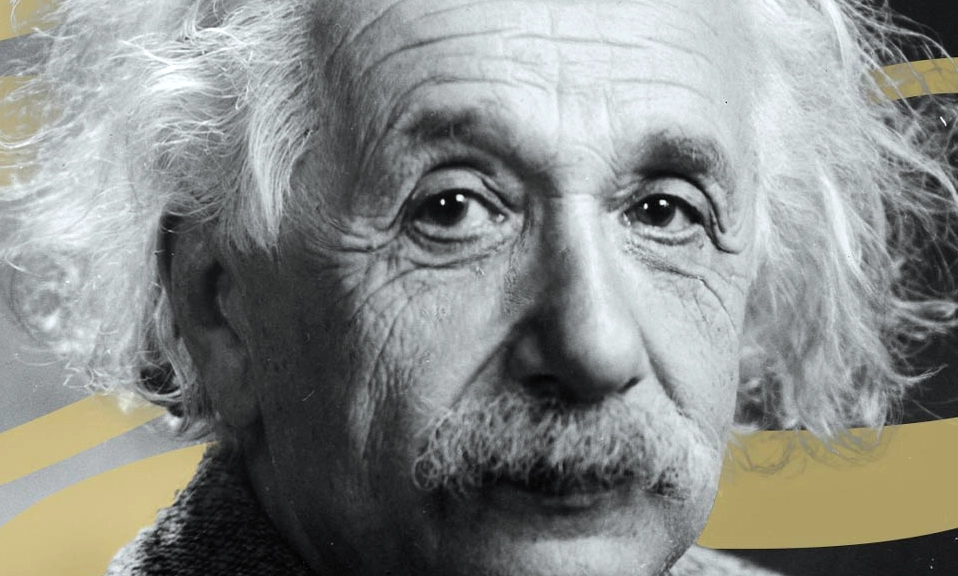
When we picture Albert Einstein, a very specific image comes to mind: the wild, unkempt white hair, the warm, crinkled eyes, the iconic photograph of him sticking his tongue out at the camera. He is the universal poster child for genius, a symbol of intellectual brilliance, and widely remembered as a gentle, pacifist sage who championed human rights.
But history is rarely as tidy as the myths we build around it.
In recent years, the publication of his personal letters, travel diaries, and family records has peeled back the layers of the “Einstein myth.” What emerges is not a monster, but a deeply flawed, contradictory, and often cold human being. His brilliance in physics was matched only by his profound blind spots in his personal life.
To truly understand the man who reshaped our understanding of the universe, we have to be willing to look at the shadows he cast. Here is the uncomfortable, unvarnished truth about the dark side of Albert Einstein.
💔 1. The “Cruel Conditions” Imposed on His First Wife
Einstein’s first marriage to Mileva Marić, a fellow physicist and the only woman in his university classes, ended in a bitter, painful divorce. But the true darkness of their relationship was revealed in a letter Einstein wrote to her in 1914, before they officially separated.
He presented her with a list of “conditions” she must meet if she wanted to remain in his home. The demands were shockingly cold and controlling:
- “You will make sure my clothes and laundry are kept in good order.”
- “You will renounce all personal relations with me insofar as they are not completely necessary for social reasons.”
- “You will not expect any intimacy from me, nor will you reproach me in any way.”
He essentially demanded she serve as his maid and intellectual assistant while stripping her of any wifely rights or emotional connection. It was a deeply patriarchal and emotionally abusive dynamic that contributed to the tragic unraveling of their marriage.
👨👦 2. The Absent and Dismissive Father
Einstein’s relationship with his children was fraught with neglect and emotional distance.
His eldest son, Hans Albert, felt deeply abandoned by his father, who left the family to move to Berlin. Though they eventually reconciled somewhat in adulthood, the early years were marked by profound estrangement.
The tragedy deepened with his younger son, Eduard. A brilliant and sensitive young man, Eduard was diagnosed with schizophrenia in his early twenties and spent much of his life in psychiatric institutions. Einstein, who had moved to the United States, rarely visited him. In a particularly cruel letter, Einstein blamed Eduard’s illness on Mileva’s “tainted” genetics, writing that the boy was “burdened” by her family’s mental health history. He largely washed his hands of his suffering son, leaving Mileva to bear the emotional and financial burden alone.
📓 3. The Troubling Travel Diaries (Early Racial Prejudices)
In 2018, the Hebrew University of Jerusalem published Einstein’s private travel diaries from his 1922–1923 trip to Asia. The entries contained deeply racist, xenophobic, and derogatory remarks that shocked the modern world.
Regarding Chinese people, he wrote that they were “industrious, filthy, obtuse people,” and made dehumanizing comments about Chinese children, noting that it was a “pity” that these “robust and diligent” people were reproducing instead of the “intellectual” white race. He made similarly dismissive and prejudiced remarks about Indian and Sri Lankan people.
The Nuance: It is crucial to note that Einstein’s views on race evolved. Decades later, after emigrating to the United States and witnessing the horrors of Jim Crow segregation, he became a staunch civil rights activist. He befriended W.E.B. Du Bois, joined the NAACP, and famously called racism “a disease of white people” in a 1946 speech at Lincoln University. However, this later enlightenment does not erase the ugly, prejudiced beliefs he held and wrote down in his youth.
☢️ 4. The Reluctant Architect of the Atomic Age
Einstein was a lifelong, committed pacifist. Yet, his name is inextricably linked to the most destructive weapon in human history.
In 1939, fearing that Nazi Germany was developing an atomic bomb, fellow physicist Leo Szilard convinced Einstein to sign a letter to President Franklin D. Roosevelt. This “Szilard-Einstein letter” warned FDR of the danger and directly spurred the creation of the Manhattan Project.
Although Einstein did not work on the bomb himself (he was denied security clearance due to his pacifist leanings), he carried the moral weight of his signature for the rest of his life. After the devastation of Hiroshima and Nagasaki, he called signing that letter his “one great mistake.” In his final years, he became a vocal advocate for nuclear disarmament, desperately trying to put the genie back in the bottle.
🎭 5. The Hypocrisy of the “Gentle Sage”
The public image of Einstein was that of a kind, absent-minded professor who loved humanity. In private, he could be incredibly arrogant, dismissive of his peers, and emotionally unavailable to those closest to him.
He had multiple extramarital affairs (including one with his cousin Elsa, whom he later married, while still married to Mileva). He often used his towering intellect to belittle others, and his letters reveal a man who was frequently impatient, demanding, and deeply self-absorbed. The “gentle sage” was, in many ways, a carefully curated public relations persona that masked a highly self-centered man.
The Danger of the “Halo Effect”
Why does it matter that Einstein was a flawed husband, a distant father, and a man who once held prejudiced views?
Because of the Halo Effect—our psychological tendency to assume that if someone is extraordinarily good at one thing (like theoretical physics), they must be extraordinarily good at everything (like morality, kindness, and wisdom).
When we turn historical figures into flawless saints, we do two things: we set an impossible standard for human beings, and we blind ourselves to the reality that genius and profound personal flaws can coexist in the exact same person.
Acknowledging Einstein’s dark side doesn’t diminish the staggering brilliance of the Theory of Relativity. E=mc² remains true regardless of how he treated his wife. But stripping away the myth allows us to see him as he truly was: a deeply complex, contradictory, and ultimately human figure.
He gave us the keys to the universe, but he never quite figured out how to navigate the complexities of his own heart.