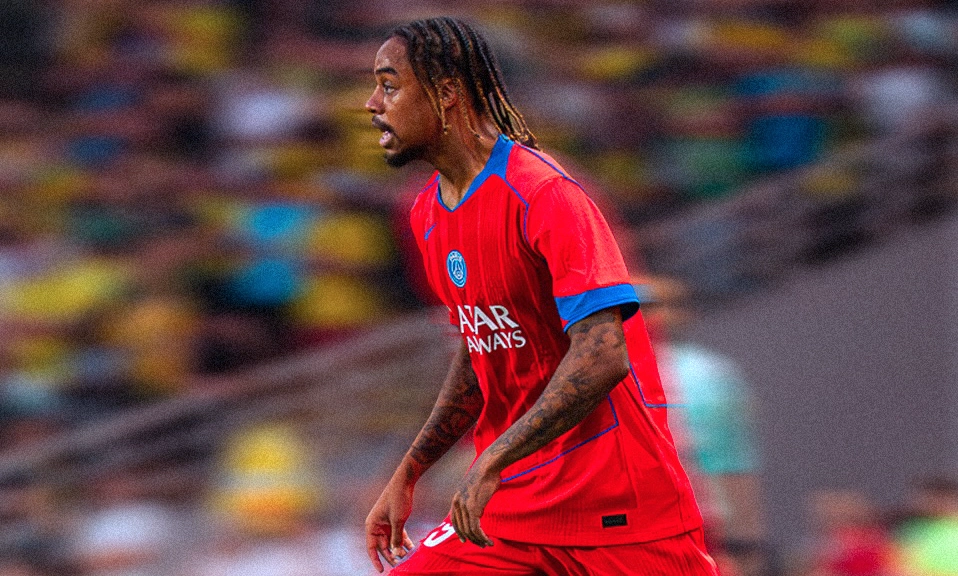
The Reds have landed their man. After weeks of negotiations, Liverpool have reportedly agreed a £120m fee with Paris Saint-Germain for France international Bradley Barcola — a transfer that signals the club’s most ambitious attacking rebuild in a generation.
The Deal in Context
Let’s be clear about the scale of what Liverpool are doing this summer. With Florian Wirtz arriving from Bayer Leverkusen for a fee that could reach £116m and Alexander Isak joining from Newcastle for a club-record £125m, the addition of Barcola at £120m brings Liverpool’s attacking investment alone to somewhere in the region of £360m in a single window .
This is not normal. This is not even close to normal.
But then, the circumstances are not normal either. Mohamed Salah’s departure on a free transfer at the end of last season left a 257-goal void in Liverpool’s forward line . Hugo Ekitike’s devastating Achilles tendon rupture in April — with fears he may not play again until 2027 — compounded the crisis further . Liverpool finished fifth in the Premier League, 25 points behind champions Arsenal, and lost 17 matches across all competitions .
Something had to give. And it has.
Why Barcola?
The question isn’t really whether Liverpool need a player like Barcola. The question is whether anyone else in European football fits what they need quite so precisely.
The Profile
Bradley Jean-Manuel Essolisam Addo Barcola is 23 years old, stands 1.82m tall, and plays with the kind of explosive directness that makes defenders lose sleep . He is right-footed but prefers operating on the left wing — a combination that allows him to either stretch play wide or cut inside onto his stronger foot to shoot .
What makes Barcola unusual for a winger is that he doesn’t really play like one. He started his youth career as a centre-forward and didn’t transition to the wing until he was 17, and that striker’s instinct has never left him . Last season in Ligue 1, he averaged 3.5 shots per 90 minutes and posted an expected goals figure of 9.83 — placing him in the 95th percentile among wingers across Europe’s top five leagues . Only around 5% of wide players consistently found themselves in better goalscoring positions.
He converted those chances into 11 league goals, outperforming his xG, and no PSG player or Ligue 1 winger recorded a higher xG total during the 2025-26 campaign . His 8.69 touches in the opposition penalty area per 90 minutes ranked seventh among more than 1,500 eligible players across Europe’s top five leagues .
The Salah Succession
Opta’s player similarity model rated Barcola as the winger whose output most closely resembled Luis Diaz’s across Europe’s top five leagues last season, at 78% similarity . Mohamed Salah himself came in at 65%. That comparison matters. Liverpool didn’t sign a direct replacement when Diaz departed, and the underlying data suggests Barcola could fill that void while offering something distinctly his own.
Stephen Warnock, the former Liverpool defender, put it plainly: “The one thing that Liverpool were desperately missing last year was a player that can take people on, and that can change games on their own, single-handedly. I think we know Barcola can do that” .
The Tactical Fit
Under the expected appointment of Andoni Iraola as head coach, Liverpool are looking to play “a more front foot, aggressive and urgent style of football” . Barcola’s profile — elite pace, direct ball-carrying, relentless pressing from the front — fits that vision almost perfectly.
He was the only player across Europe’s top five leagues to average more than two shot-ending carries per 90 minutes (2.06), illustrating his ability to drive at defenders before creating shooting opportunities for himself . That kind of self-sufficient attacking threat is exactly what Liverpool need when they can no longer rely on Salah to conjure something from nothing.
A detailed scout report from July 2026 placed Barcola’s Final Third Impact Score in the 98th percentile among wingers and attacking midfielders in Europe’s top five leagues, with strong Progression and Creativity scores to complement it .
Why PSG Let Him Go
This is the part of the deal that makes it work.
PSG’s forward line is absurdly stacked. Khvicha Kvaratskhelia, Ousmane Dembele, Desire Doue, and now Maghnes Akliouche — a £43m signing from Monaco who can play out wide . The French champions have also agreed a £42.75m deal with Barcelona for Ferran Torres and are in discussions with Ajax over Mika Godts, a right-footed winger who plays off the left .
With that level of competition, Barcola simply doesn’t play 90 minutes every match. Despite helping PSG retain the Champions League — coming on as a second-half substitute in both the 2024-25 and 2025-26 finals — his game time was limited by the depth around him . At the World Cup, France manager Didier Deschamps rotated Barcola and Doue, with both starting four of France’s eight matches but never in the same starting XI .
Barcola’s contract has only two years remaining, and if he rejects an extension, PSG risk losing him for a significantly lower fee next summer . The financial logic of selling now at £120m rather than accepting a depreciated fee in 12 months is compelling for a club that has already reinvested heavily in alternatives.
Arsenal had been interested earlier in the window but pivoted towards Christos Tzolis and Morgan Rogers after PSG’s asking price became clear . Liverpool, having been “handed a red light” by Yan Diomande — their other primary target — found themselves as the sole serious bidder for Barcola .
What Happens Next?
1. The Medical and Announcement
Assuming personal terms are agreed — and multiple reports suggest Barcola’s representatives gave Liverpool “encouraging signs” following preliminary talks — the formalities should move quickly. Liverpool will want this wrapped up before pre-season begins in earnest under the new coaching staff.
2. Tactical Integration
The immediate question is how Barcola, Wirtz, and Isak coexist in the same attack. On paper, it’s a devastating front three: Isak as the central striker, Barcola on the left, and Wirtz operating in the half-spaces or as a number 10. But integration takes time.
Warnock’s concern is worth noting: “The big question around Barcola is if he can score the goals” at the level Liverpool need . His 11 Ligue 1 goals last season were impressive for a winger, but the Premier League is a different beast. The counter-argument is that with Isak and Wirtz also contributing, Liverpool won’t need Barcola to be a 20-goal player — they need him to be a chaos agent, a player who terrifies full-backs and creates the kind of disorganisation that others can exploit.
Iraola’s system at Bournemouth was built on aggressive pressing, rapid transitions, and wide players who could carry the ball at speed. Barcola ticks every one of those boxes. The question is how quickly he adapts to the physical demands of English football.
3. The Financial Picture
Liverpool’s spending this summer is extraordinary, but it’s not reckless. The club raised approximately £224m from sales last summer and have been operating under a model that Michael Edwards and Richard Hughes describe as “buying well and selling well to buy again” .
The departures of Salah, Robertson, and Konate as free agents removed significant wage obligations. Federico Chiesa is expected to leave, and fringe players like Calvin Ramsay will be moved on . Liverpool’s net spend, while substantial, is being managed within a framework that FSG views as sustainable — even if the gross figures are eye-watering.
4. The Statement of Intent
Beyond the tactical and financial analysis, this deal sends a message. Liverpool finished 25 points off the title last season. They lost their greatest ever Premier League goalscorer for nothing. Their record signing spent four months injured. Their new head coach is inheriting a squad in transition.
And yet, by committing upwards of £350m to Wirtz, Isak, and Barcola, Liverpool are telling the rest of the Premier League that they intend to compete immediately — not in two or three years, not after a gradual rebuild, but now.
Barcola himself has won the Champions League in each of the last two seasons, three Ligue 1 titles, the French Cup twice, the UEFA Super Cup, and the FIFA Intercontinental Cup . He scored three goals at the 2026 World Cup, including one in France’s 6-4 loss to England in the third-place play-off . He is a winner, and Liverpool need winners.
The Risk
No £120m transfer is without risk. Barcola has never played in the Premier League. He has spent his entire career in France. He is 23, which means he is still developing but also means there is no guarantee that his Ligue 1 production translates directly to English football.
There is also the question of whether Liverpool can accommodate three elite attacking signings alongside existing players like Cody Gakpo — who has been linked with Tottenham but whom Liverpool say they do not want to sell — Victor Munoz, and the promising 17-year-old Rio Ngumoha .
But these are good problems to have. Liverpool’s problem last season wasn’t an excess of attacking talent. It was a desperate shortage of it.
The Verdict
If this deal goes through — and all signs point to it being close — Liverpool will have pulled off one of the most transformative transfer windows in Premier League history. Barcola brings pace, directness, goalscoring instinct, and Champions League pedigree to a squad that was crying out for all four.
The £120m fee is enormous. But in a summer where Liverpool have already committed record-breaking sums to Wirtz and Isak, it is entirely consistent with the scale of the rebuild underway at Anfield.
Mohamed Salah’s boots are, in many ways, impossible to fill. Liverpool aren’t asking Barcola to fill them. They’re asking him to lace up his own — and run.