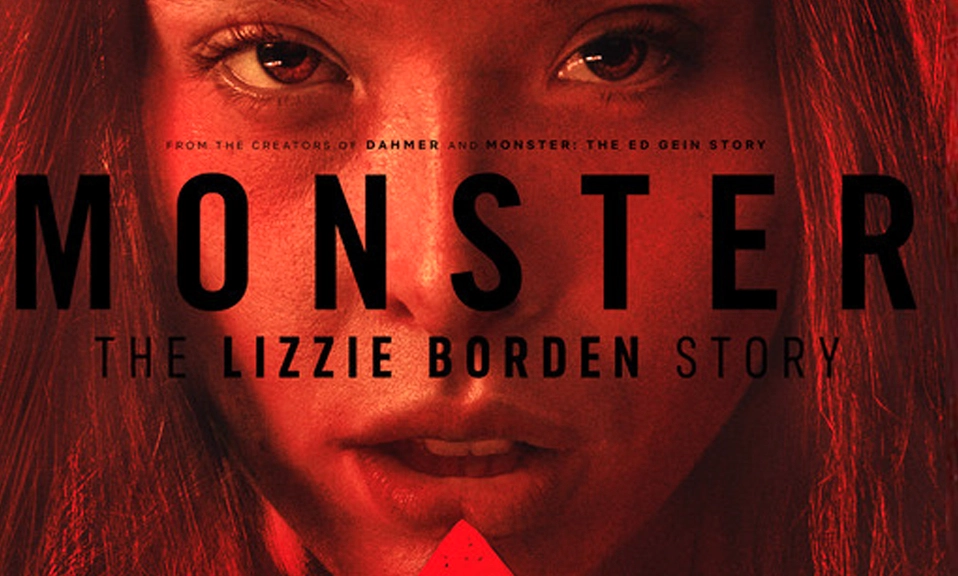
Why Everyone Is Talking About the Lizzie Borden Story
Ryan Murphy’s true-crime anthology is back. This time, it’s tackling America’s most famous axe murder — and the reaction is as brutal as the crime itself.
Netflix’s Monster franchise has never been a critical darling. Dahmer was accused of exploiting victims’ families. The Menendez Brothers was called gratuitous. The Ed Gein Story was widely panned. But none of that has stopped millions of people from watching. And this season, the numbers are bigger than ever.
Monster: The Lizzie Borden Story has taken the No. 1 spot on Netflix’s English TV list for the second consecutive week, collecting 14.5 million views and increasing its viewership week-over-week by 20%. In less than two weeks of release, it’s the most-watched title on the platform.
The question isn’t whether people are watching. It’s why a show this controversial keeps winning.
The Numbers: A Record-Breaking Run
The 20% week-over-week increase is significant. For most Netflix titles, viewership peaks in the first week and declines from there. Monster: The Lizzie Borden Story is doing the opposite — growing its audience as word spreads.
That growth is happening despite the reviews. On Rotten Tomatoes, the season holds a 50% critics score and a 27% audience score — a franchise-low on the audience side. The Miami Herald called the scores “shockingly bad”. ComingSoon described the reception as “trashed”.
And yet, 14.5 million people watched. And then 20% more watched the following week.
Who Is Lizzie Borden? The Story Behind the Axe Murders
For anyone who grew up outside the United States, the name might not carry the same weight. But in America, Lizzie Borden is a cultural obsession.
In 1892, Borden was accused of murdering her father, Andrew, and her stepmother, Abby, with an axe in their Fall River, Massachusetts home. She was arrested, tried, and acquitted. No one else was ever charged. The case remains one of the most debated unsolved murders in American history — the subject of books, films, operas, and the famous schoolyard rhyme: “Lizzie Borden took an axe / And gave her mother forty whacks”.
The fourth season of Monster stars Ella Beatty as Lizzie — a young woman “ahead of her time — constrained by her stepmother, ignored by her father, and ultimately primed for an explosion of violence”. Beatty describes her character as “the perfect example of a creature of their time”.
She’s joined by an all-star cast: Vicky Krieps as the household maid Bridget “Maggie” Sullivan, Charlie Hunnam as Andrew Borden, Rebecca Hall as Abby Borden, and Sarah Paulson as Aileen Wuornos in a present-day framing device.
Why Everyone Is Talking About It (And Not All for the Right Reasons)
The viewership numbers are impressive. The conversation around the show is even bigger — and almost entirely negative.
The “Lesbian Romance” Backlash
The most widely criticized element of the season is the portrayal of a romantic relationship between Lizzie Borden and the household maid, Bridget “Maggie” Sullivan. Viewers and historians alike have pointed out that there is no concrete evidence this relationship ever existed.
“Can somebody explain to me why they made Lizzie Borden a lesbian in the Netflix show?” one viewer wrote on X. “Because, as far as I know, that is not actually the case”. Another added: “Why have they sexualised her in the Netflix series?”
The criticism isn’t just about historical accuracy. It’s about tone. Collider’s Gabrielle Moss described the season as “campy” and “frustrating,” arguing that “the show’s weakest moments are when it tries to make a political argument for revenge murder as a kind of feminist project”.
The “Sexualising True Crime” Problem
A broader backlash has emerged around the show’s marketing and content. A promotional campaign for the season sparked backlash on X, with thousands of users expressing disgust at what they considered “the pure and simple fetishization of real monsters”. Some viewers accused Netflix of transforming historical dramas and family trauma into entertainment spectacle.
A dance sequence in the series — details of which have been widely discussed online — sparked further backlash, with some viewers calling for those involved to be blacklisted.
The Historical Inaccuracies
The show’s final episode features Sarah Paulson as Aileen Wuornos, who was arrested in January 1991. In one scene, Wuornos says: “They’re treating me like some f****** Jeffrey Dahmer which I’m not.” The problem? Dahmer wasn’t arrested until July 1991 — six months after Wuornos.
Viewers on Reddit pointed out the error, with one writing: “Ryan Murphy and his inaccuracies again”. Others noted that the line might have been delivered later during Wuornos’ trial in 1992, but there’s no evidence of it.
What the Critics Are Saying
The critical reception has been mixed to negative, but not universally hostile.
Variety’s Aramide Tinubu praised the season for offering “something refreshing and wholly unique” to the anthology. Decider’s Joel Keller highlighted the chemistry between Beatty and Krieps, as well as the show’s “gruesome visuals”. The Guardian’s Lucy Mangan acknowledged that the season “is absolutely full of great performances” — but criticized the direction and the decision not to devote enough time to Lizzie’s story.
Collider’s Gabrielle Moss was less generous, describing the season as “a romantic melodrama” rather than a crime story, and arguing it “is a mess”.
Why the Show Still Works (For Some)
There’s a reason 14.5 million people are watching a show with a 27% audience score. Ryan Murphy understands something fundamental about the true-crime genre: audiences are drawn to the monstrous. They want to understand what makes someone kill. They want to see the darkness that exists in ordinary people.
Monster has always been less interested in accuracy than in psychology. The show’s creators have described each season as an exercise in understanding “the reasons why women kill, specifically”. Beatty said of her role as the first female “monster”: “I felt incredibly lucky to be the first woman monster”.
The show isn’t trying to be a documentary. It’s trying to be a character study — a horror story rooted in real events. Whether it succeeds is a matter of taste. Whether it’s ethical is a different question entirely.
Monster: The Lizzie Borden Story
is the most-watched show on Netflix right now. It’s also one of the most criticized. The gap between those two facts is the story of modern entertainment: controversy drives clicks, outrage drives views, and accuracy is often the first casualty.
Ryan Murphy has built an empire on the premise that true crime is entertainment. His critics say he exploits tragedy. His defenders say he’s exploring the human condition. The truth is probably somewhere in between.
What’s clear is that 14.5 million people tuned in. And 20% more came back for more.
The question now isn’t whether Monster will get a fifth season. It’s what Murphy will do next — and whether audiences will still be watching when he does.
Monster: The Lizzie Borden Story is streaming now on Netflix.