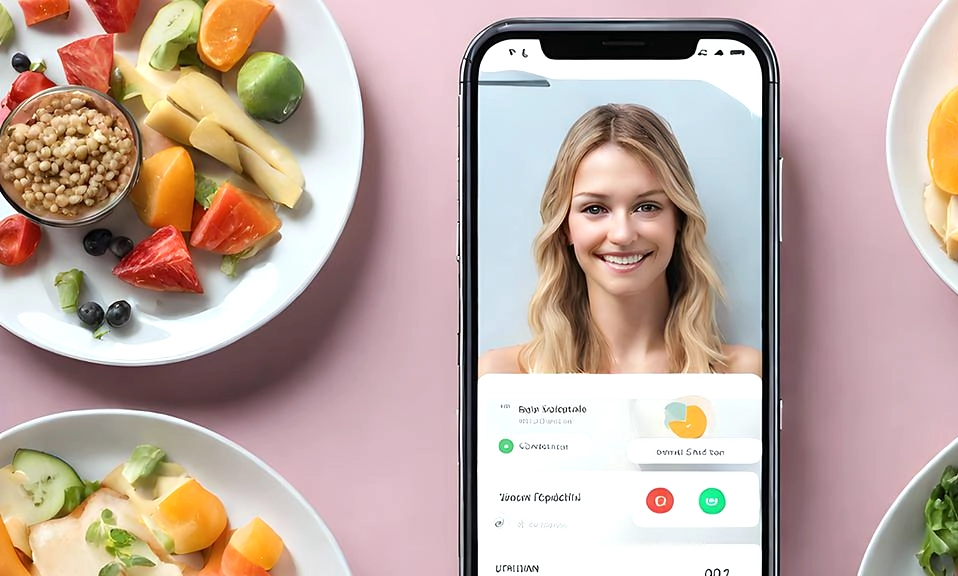
The pitch is seductive: an AI that knows your body better than you do, that can scan a meal and instantly tell you its exact calorie count, that can build a weekly menu around your genetics, your glucose monitor, and your fitness goals. No more guesswork. No more generic advice. Just precision, delivered by an algorithm that never forgets what you ate and never judges you for the fries. In 2026, that pitch has become a multi-billion-dollar industry, with apps promising to be your personal dietitian, your nutrition coach, and your metabolic guardian angel.
But can an algorithm really tell you what to eat? The answer is more complicated than the marketing suggests—and the gap between the promise and the reality is where the most important conversations are happening.
The Promise: Personalization at Scale
The appeal of AI-powered nutrition is rooted in a genuine scientific truth: one diet does not fit everyone. We know that people respond differently to the same foods, that genetics, microbiome composition, and metabolic health shape how we process nutrients, and that generic guidelines often fail the individuals who need them most.
AI systems promise to solve that problem by integrating genetic, metabolic, phenotypic, and lifestyle data to generate tailored dietary advice at a level of complexity that would be difficult to achieve through conventional approaches alone. They can predict individual responses to different foods, adjust recommendations using real-time physiological data from wearables, and deliver nutrition guidance to large populations at relatively low cost.
The market has responded accordingly. Nourish, a virtual nutrition startup, raised $100 million in a Series C round** in May 2026 at a valuation of **$1.75 billion, bringing total funding to $215 million. The company’s model combines AI agents with a network of more than 1,000 dietitians, positioning itself as a hybrid of human expertise and machine scale. Other startups, like Rem3dy Health, have raised millions to scale AI-driven nutrition internationally.
The technology is also becoming more accessible. Apps can now scan a barcode, analyse a photo of your meal, or take a voice description and return an instant nutritional breakdown. Some, like MyNetDiary PlateAI, learn your eating habits and adjust recommendations over time. Others, like Abbott’s Libre Assist, use generative AI to predict the glucose impact of a meal before you eat it.
For people who have struggled with the tedium of food logging, or who have never had access to a dietitian, the appeal is obvious. “Over time, it’s almost as if the AI knows what you have in your pantry and in your fridge,” says Sibylle Kranz, a registered dietitian at the University of Virginia. “It knows things about you that you don’t know about yourself”.
The Evidence: Clinical-Grade Accuracy—and Systematic Blind Spots
The accuracy of AI nutrition tools is not uniform. It varies dramatically depending on what is being measured, and on which app is doing the measuring.
On the one hand, the best AI image-recognition systems have achieved clinical-grade accuracy. A 2026 meta-analysis of 23 studies and nearly 15,000 participants found that AI image-based tracking achieved a pooled mean absolute percentage error (MAPE) of 2.1% for caloric estimation—significantly better than barcode scanning (8.7%), manual database entry (18.3%), or self-report dietary recall (31.4%). One platform, PlateLens, achieved a MAPE of just 1.2%, outperforming the next closest platform by a wide margin. The study concluded that AI image-based dietary assessment “has achieved clinical-grade accuracy thresholds suitable for integration into medical nutrition therapy”.
But that headline accuracy masks a critical weakness: fat estimation. The same meta-analysis found that while carbohydrate content was estimated with approximately 88% accuracy, fat estimation dropped to 68% for standard meals and fell to just 35% for ketogenic, high-fat dishes. A separate 2026 study found that AI food-tracking apps underestimated calories and fat content by roughly one-third when tested against standardised meals, with discrepancies reaching 345 calories per meal for high-fat dishes.
The reason is structural. The algorithms appear to be trained predominantly on carbohydrate-heavy meals common in Western food photography databases, creating a systematic bias when confronted with atypical macronutrient profiles. In plain language: the AI is very good at recognising a sandwich. It is much worse at recognising a plate of cheese, nuts, and olive oil.
This is not a minor technical detail. For people following ketogenic diets for medical reasons—managing epilepsy, for example, or type 2 diabetes—a 345-calorie underestimation per meal could be the difference between therapeutic ketosis and a dangerous deviation. “Users relying on these apps for weight management or medical dietary compliance may unknowingly consume substantially more calories than recorded,” the study noted.
The Human Gap: What AI Still Can’t Do
Beyond the accuracy data, there is a deeper set of limitations that the marketing rarely mentions.
AI cannot perceive your body. In China, users have reported that weight-management algorithms “rigidly” stick to their plans, sending reminders to exercise even when the user has a fever or is physically unwell. The algorithm relies on baseline data to generate a generic plan, but it cannot sense fatigue, illness, or the real-time state of the user’s body—and in some cases, users have experienced discomfort from insufficient calorie intake or excessive exercise intensity. “AI has blind spots in health monitoring,” one expert noted, “and it is difficult for it to identify warning signals from the body in time”.
AI lacks cultural competence and emotional intelligence. A systematic review of ChatGPT’s role in dietetic practice found that while it performed well in nutrition education and food recognition, it lacked cultural competence and emotional intelligence compared with human experts. It matched general nutrition knowledge but could not replicate the relational dimension of dietary counselling—the ability to understand why someone struggles, what their life looks like, and what is realistic for them.
AI cannot account for context. “Nutrition is more than numbers,” as one analysis put it. Dietary counselling happens where biology meets behaviour, culture, emotions, and real-life constraints. “Dietitians do much more than provide meal plans. They deal with low motivation, confusion, guilt, financial limits, family pressures, and cultural food practices. They know when strict dietary ‘perfection’ is unrealistic or even harmful”. An algorithm can calculate macros. It cannot know that you are eating alone, that you are grieving, or that you cannot afford the ingredients it is recommending.
AI can hallucinate. Large language models can answer dietary questions, but evaluations have identified inaccurate nutrient targets, incomplete clinical advice, and insufficient personalization. In simulated dialysis patients, ChatGPT-4 underestimated caloric intake by 36% and protein intake by 28%. In simulated type 2 diabetes profiles, multiple LLMs generated meal plans with saturated fat levels exceeding guideline targets. In chronic kidney disease, all evaluated models consistently misestimated sodium and potassium across disease stages. These are not marginal errors. They are the kind of errors that can cause real harm.
The Verdict: What AI Can and Cannot Do
So, can AI tell you what to eat?
It can help—if you use it the right way.
AI is genuinely useful as a starting point, a tracking tool, and an educational resource. It can make food logging less tedious, help you understand the nutritional content of your meals, and offer ideas for meals that meet your goals. For general nutrition guidance—especially in contexts where access to professional dietetic care is limited—LLMs can provide coherent, contextually sensitive advice that outperforms the general public’s knowledge. The research suggests that AI can be a valuable decision-support adjunct, not an autonomous substitute for professional care.
But it cannot replace a dietitian. The evidence is clear: AI lacks the clinical judgment, the cultural competence, the emotional intelligence, and the contextual awareness that human experts bring. It makes systematic errors in fat estimation, micronutrient calculation, and disease-specific recommendations. It cannot see your body, your life, or your struggles.
The most honest framing comes from the UVA expert who tested the apps: “Although AI has come a long way, it’s a guessing game still”.
Use It, But Verify It
The future of nutrition is not artificial or human. It is both. AI can do the calculations, track the patterns, and provide the accessibility that traditional care often cannot. A dietitian can provide the judgment, the empathy, and the accountability that no algorithm can replicate. The most effective approach is a hybrid—AI as the tool, humans as the guides.
If you are using an AI nutrition app, here is what the experts recommend:
Verify the accuracy. Compare the app’s recommendations with trusted nutrition sources, and pay attention to whether it asks follow-up questions before making assumptions. If it does not ask, it is guessing.
Be honest about your data. AI recommendations are only as good as the data you feed them. If you under-report your portions or skip logging, the advice will be wrong.
Do not use it for medical conditions without professional supervision. For diabetes, kidney disease, pregnancy, or any condition that requires clinical nutrition therapy, AI is not a safe substitute for a dietitian. The errors are too significant, and the stakes are too high.
Watch for bias. Algorithms trained on unbalanced datasets can reinforce existing health inequalities. If the recommendations feel culturally inappropriate or unrealistic for your budget, trust your judgment over the app’s.
Protect your privacy. To generate personalized advice, these apps collect extensive personal information—not only eating habits, but location data, body measurements, and emotional well-being. Read the data protection policies, and understand what you are trading for convenience.
AI can tell you what to eat. But it cannot tell you what is right for you. That still requires a human—preferably one with a degree in nutrition and a genuine interest in your well-being.