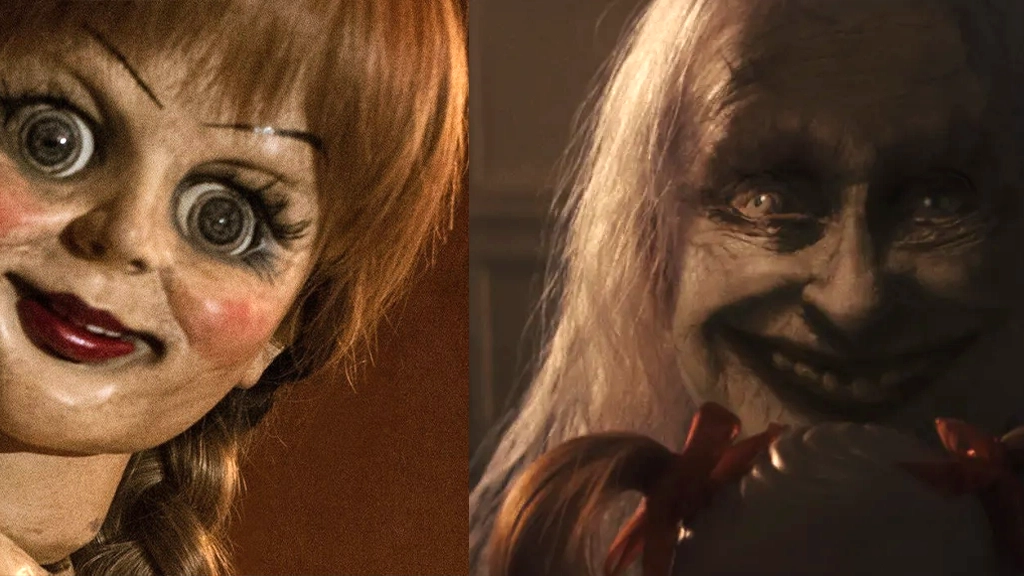
The Conjuring Universe has become one of the most successful horror franchises in modern cinema, and it all started with James Wan’s The Conjuring (2013). The film’s breakout success led to spin-offs, including Annabelle (2014), which explored the terrifying origins of the possessed doll introduced in The Conjuring. While both films share a connected universe, they offer very different horror experiences. So, which one is scarier, more impactful, and ultimately better? Let’s dive in.
📖 Overview & Background
Annabelle
- Director: John R. Leonetti (cinematographer of The Conjuring).
- Release Date: October 3, 2014.
- Budget: $6.5 million (one of the lowest-budget films in the franchise).
- Box Office: $257 million worldwide (40x its budget, one of the most profitable horror films ever).
- Genre: Supernatural horror, prequel/spin-off.
- Main Cast: Annabelle Wallis (Mia), Ward Horton (John), Alfre Woodard (Evelyn).
- Connection to The Conjuring: A prequel explaining the origins of the Annabelle doll, which first appeared in The Conjuring.
The Conjuring
- Director: James Wan.
- Release Date: July 19, 2013.
- Budget: $20 million.
- Box Office: $320 million worldwide (one of the most profitable horror films of all time.
- Genre: Supernatural horror, based on real-life cases of paranormal investigators Ed and Lorraine Warren.
- Main Cast: Patrick Wilson (Ed Warren), Vera Farmiga (Lorraine Warren), Ron Livingston (Roger Perron), Lili Taylor (Carolyn Perron).
- Legacy: Launched The Conjuring Universe, inspiring multiple sequels and spin-offs.
🏆 Winner: The Conjuring – Higher budget, bigger box office, and the film that started it all.
📜 Plot & Storylines
Annabelle
- Setting: 1967, Los Angeles suburb.
- Plot: Newlyweds Mia and John Form are expecting their first child. John gifts Mia a vintage doll (Annabelle) to add to her collection. Their joy turns to terror when satanic cultists invade their home, attacking the couple and spilling blood on the doll. The doll becomes a conduit for a malevolent demonic entity, which begins to torment Mia and John with supernatural occurrences—moving on its own, operating household objects, and escalating its attacks as Mia’s pregnancy progresses.
- Climax: The couple seeks help from a priest and a neighbor, but the entity’s power grows, leading to a brutal and terrifying finale.
- Ending: The doll is contained, but the evil lingers—setting up its appearance in The Conjuring.
Themes:
- Demonic possession and the power of evil.
- Faith vs. fear (Mia’s struggle with belief).
- Vulnerability of innocence (the unborn child as a target).
The Conjuring
- Setting: 1971, Rhode Island farmhouse.
- Plot: Paranormal investigators Ed and Lorraine Warren are called to help the Perron family, who are experiencing terrifying supernatural events in their new home. The Warrens uncover a dark, demonic presence tied to the property’s history, including witchcraft, a tragic past, and a malevolent entity that seeks to possess Carolyn Perron. The film blends investigation, exorcism, and psychological horror as the Warrens risk their own lives to save the family.
- Climax: A high-stakes exorcism where Lorraine Warren confronts the demon, leading to a tense and satisfying resolution.
- Ending: The entity is temporarily defeated, but the Warrens take the Annabelle doll into their possession, setting up future films.
Themes:
- Good vs. evil (the Warrens as symbols of light).
- Family bonds (the Perrons’ struggle to stay together).
- The cost of faith (Lorraine’s visions and sacrifices).
🏆 Winner: The Conjuring – More layered storytelling, emotional depth, and a stronger narrative.
🎭 Characters & Performances
Annabelle
| Character | Actor/Actress | Performance Highlights |
|---|---|---|
| Mia Form | Annabelle Wallis | Strong lead—portrays fear, desperation, and resilience well. |
| John Form | Ward Horton | Supportive but skeptical—grounds the story. |
| Evelyn | Alfre Woodard | Scene-stealer—brings warmth and wisdom. |
| Annabelle Doll | (Puppeteered/CGI) | Unsettling presence—effective in its silence. |
- Criticism: Some found the characters underdeveloped, with thin backstories and predictable arcs
The Conjuring
| Character | Actor/Actress | Performance Highlights |
|---|---|---|
| Ed Warren | Patrick Wilson | Charismatic and determined—the heart of the film. |
| Lorraine Warren | Vera Farmiga | Oscar-worthy—conveys fear, empathy, and strength. |
| Carolyn Perron | Lili Taylor | Emotionally raw—her descent into terror is gripping. |
| Roger Perron | Ron Livingston | Relatable everyman—grounds the supernatural in reality. |
- Praise: Patrick Wilson and Vera Farmiga’s chemistry was widely lauded, making the Warrens one of horror’s most beloved duos.
🏆 Winner: The Conjuring – More compelling characters and standout performances.
👻 Scare Factor & Horror Elements
Annabelle
- Scare Tactics:
- Jump scares (loud noises, sudden movements).
- Creepy doll (Annabelle’s uncanny, lifelike movements).
- Psychological horror (Mia’s paranoia, isolation).
- Atmosphere: Dark, claustrophobic—uses shadows, silence, and eerie sound design to build tension.
- Weaknesses:
- Relies heavily on jump scares (some critics called it derivative).
- Lacks the emotional depth of The Conjuring
The Conjuring
- Scare Tactics:
- Slow-burn tension (gradual buildup of dread).
- Supernatural phenomena (ghostly apparitions, moving objects, the iconic “clap game” scene).
- Psychological horror (Lorraine’s visions, Carolyn’s possession).
- Atmosphere: Haunting, immersive—uses lighting, sound, and cinematography to create a constant sense of unease.
- Strengths:
- More than just scares—focuses on character development and suspense.
- Balances horror with heart—the Perron family’s struggle makes the terror more personal.
🏆 Winner: The Conjuring – More effective, well-rounded scares that linger with the audience.
🎥 Direction & Cinematography
Annabelle
- Director: John R. Leonetti (first-time director, previously cinematographer for The Conjuring).
- Style: Gritty, low-budget aesthetic—uses practical effects and tight framing to maximize fear.
- Pacing: Uneven—some scenes drag, while others feel rushed.
The Conjuring
- Director: James Wan (Saw, Insidious).
- Style: Masterful, atmospheric—uses long takes, steady camerawork, and natural lighting to create tension.
- Pacing: Perfectly balanced—builds dread methodically, with no wasted moments.
🏆 Winner: The Conjuring – James Wan’s direction is a masterclass in horror filmmaking.
📊 Reception & Critical Response
Annabelle
- Critics:
- IMDb: 5.5/10.
- Rotten Tomatoes: 29% (Critics) | 57% (Audience).
- Praise: Effective jump scares, creepy doll, and strong box office performance.
- Criticism: Thin plot, underdeveloped characters, lacks originality.
- Audience: Mixed reactions—some loved the pure horror vibe, while others found it too reliant on clichés.
The Conjuring
- Critics:
- IMDb: 7.5/10.
- Rotten Tomatoes: 86% (Critics) | 86% (Audience).
- Praise: “A modern horror classic”—lauded for its atmosphere, performances, and storytelling.
- Criticism: Some found it too formulaic (haunted house tropes).
- Audience: Overwhelmingly positive—considered one of the best horror films of the 2010s.
🏆 Winner: The Conjuring – Far better reviews and a stronger legacy.
💰 Box Office & Profitability
| Film | Budget | Worldwide Gross | Profit Margin | Return on Investment |
|---|---|---|---|---|
| Annabelle | $6.5 million | $257 million | ~3,850% | 40x budget |
| The Conjuring | $20 million | $320 million | ~1,500% | 16x budget |
🏆 Winner: Annabelle – More profitable relative to its budget, but The Conjuring had a bigger cultural impact.
🌍 Legacy & Franchise Impact
Annabelle
- Franchise Role: Launched the Annabelle sub-series (Annabelle: Creation, Annabelle Comes Home).
- Cultural Impact: Proved spin-offs could be profitable—inspired more Conjuring Universe films.
- Sequels: Two direct sequels and three total Annabelle films (so far).
The Conjuring
- Franchise Role: Started The Conjuring Universe—now 10+ films (including The Nun, The Curse of La Llorona, and The Conjuring 2 & 3).
- Cultural Impact: Revitalized supernatural horror—inspired a new wave of demonic possession films.
- Awards: Nominated for multiple awards, including Best Horror Film at the Saturn Awards.
🏆 Winner: The Conjuring – The foundation of a horror empire.
🔍 Key Differences
| Aspect | Annabelle (2014) | The Conjuring (2013) |
|---|---|---|
| Story Depth | Simple, straightforward | Layered, emotional, and complex |
| Scare Style | Jump scares, creepy doll | Slow-burn tension, psychological horror |
| Character Development | Weak | Strong |
| Atmosphere | Dark, claustrophobic | Haunting, immersive |
| Reception | Mixed (29% RT) | Acclaimed (86% RT) |
| Box Office ROI | 40x budget | 16x budget |
| Franchise Role | Spin-off origin | Franchise starter |
🏆 Verdict: Which Film is Better?
Pick Annabelle (2014) if you:
✅ Love pure, unfiltered horror (jump scares, creepy dolls).
✅ Enjoy low-budget, high-impact films.
✅ Want a quick, terrifying experience without deep storytelling.
Pick The Conjuring (2013) if you:
✅ Prefer slow-burn, atmospheric horror with emotional depth.
✅ Value strong characters and performances.
✅ Want a film that redefined modern horror and launched a franchise.
🎤 Miss Me?
While Annabelle delivers effective scares and a terrifying villain, The Conjuring is the clear winner—better storytelling, stronger characters, and a more immersive horror experience. It’s not just a great horror film; it’s a modern classic that revived the genre and inspired an entire universe.
Which one scared you more? Let me know if you’d like a deeper dive into the lore or sequels! 👻🎥