A Masterpiece of Romance and Tragedy
Titanic, directed by James Cameron, is more than just a movie—it’s a cultural phenomenon that captured the hearts of millions and redefined the epic romance genre. Released in 1997, it became the highest-grossing film of all time (until Avatar, also by Cameron, surpassed it in 2009) and won 11 Academy Awards, including Best Picture and Best Director.
With its sweeping romance, breathtaking visuals, and heart-wrenching tragedy, Titanic remains a timeless classic that continues to resonate with audiences over 25 years later. Let’s dive into why this film is still a masterpiece.
📖 Plot Summary: Love and Loss on the Doomed Ship
Act 1: A Chance Encounter
- Setting: April 1912. The RMS Titanic, the “unsinkable” luxury liner, sets sail on its maiden voyage from Southampton to New York.
- Protagonists:
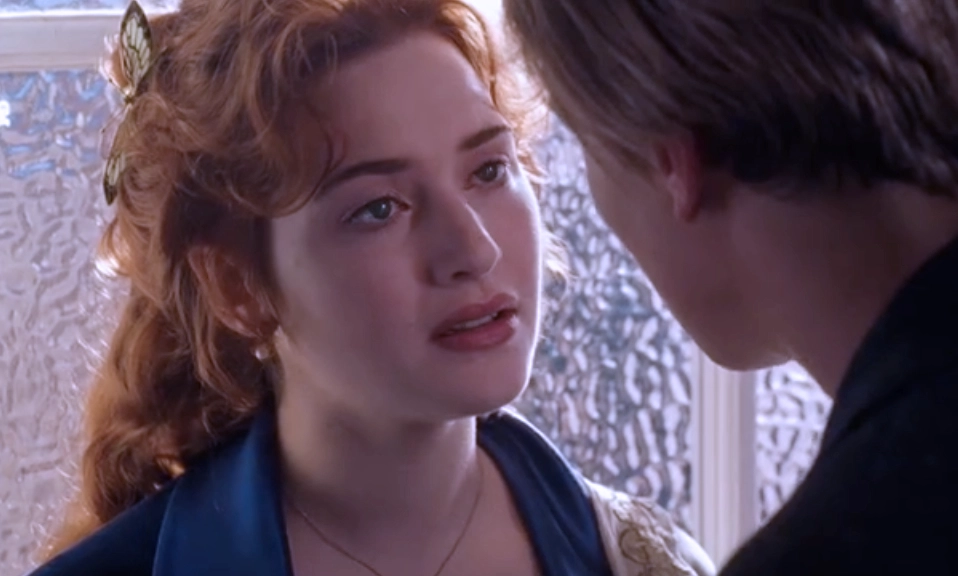
- Rose DeWitt Bukater (Kate Winslet): A 17-year-old aristocrat engaged to Cal Hockley (Billy Zane), a wealthy but arrogant steel magnate. Rose feels trapped by her gilded cage and longs for freedom and adventure.
- Jack Dawson (Leonardo DiCaprio): A penniless artist who wins a third-class ticket in a poker game. Jack is charismatic, free-spirited, and kind-hearted.
- Fateful Meeting: Jack saves Rose from suicide after she attempts to jump off the ship. As a reward, Cal invites Jack to dine with them in first class, where Rose and Jack instantly connect.
Act 2: A Forbidden Love
- Rose’s Dilemma: Torn between her duty to marry Cal (to save her family from financial ruin) and her growing feelings for Jack.
- Jack’s Charm: He opens Rose’s eyes to the beauty of life beyond wealth and status. Their whirlwind romance blossoms as Jack sketches Rose nude (the iconic “Draw me like one of your French girls” scene) and they explore the ship together.
- Class Divide: The strict class divisions of the Titanic’s society create tension—Cal and his snobbish mother, Ruth (Frances Fisher), disapprove of Jack, while Rose defies their expectations.
- “I’m the King of the World!”: Jack and Rose stand at the bow of the ship, embracing the wind in their faces in one of the most iconic scenes in cinema history.
Act 3: The Sinking and Sacrifice
- The Iceberg Hits: On April 14, 1912, the Titanic strikes an iceberg and begins to sink rapidly. The chaos and panic that follow expose the class disparities—first-class passengers are prioritized for lifeboats, while third-class passengers are locked below deck.
- Jack’s Heroism: Jack helps Rose escape the sinking ship but is handcuffed below deck by Cal’s bodyguard, Lovejoy (David Warner). Rose frees him, and they fight their way to the deck.
- The Lifeboat Dilemma: With only one spot left on a collapsible lifeboat, Jack sacrifices himself so Rose can survive. As the ship sinks into the freezing Atlantic, Jack freezes to death while Rose clings to a piece of debris.
- The Promise: As Jack slips beneath the waves, he makes Rose promise to “never let go” and to live a full life. Rose fulfills her promise, surviving the disaster and going on to live a long, independent life.
Epilogue: A Life Well-Lived
- Old Rose (Gloria Stuart): The film frames the story as a flashback told by 101-year-old Rose to her granddaughter and a treasure hunter, Brock Lovett (Bill Paxton).
- The Heart of the Ocean: Rose reveals she had the legendary diamond necklace all along but threw it into the ocean after Jack’s death, symbolizing her letting go of the past.
- Reunion in Death: The film ends with Rose dying in her sleep and reuniting with Jack in the afterlife, where they embrace beneath the Titanic’s grand staircase, now restored to its former glory.
🎭 Characters & Performances
| Character | Actor/Actress | Role & Impact |
|---|---|---|
| Rose DeWitt Bukater | Kate Winslet | Strong-willed, independent heroine who defies societal expectations. Oscar-nominated. |
| Jack Dawson | Leonardo DiCaprio | Charismatic, kind-hearted artist who gives Rose a new perspective on life. |
| Cal Hockley | Billy Zane | Arrogant, possessive fiancé who represents the old-world elitism Rose rejects. |
| Ruth DeWitt Bukater | Frances Fisher | Rose’s manipulative mother, who prioritizes wealth over her daughter’s happiness. |
| Thomas Andrews | Victor Garber | Titanic’s designer, who realizes the ship’s flaws too late and helps passengers escape. |
| Brock Lovett | Bill Paxton | Treasure hunter who seeks the Heart of the Ocean diamond in the modern-day framing. |
| Old Rose | Gloria Stuart | 101-year-old Rose, who shares her story with Brock and her granddaughter. |
🏆 Standout Performances:
- Kate Winslet – Oscar-nominated for her emotional depth and transformation from a sheltered aristocrat to a strong, independent woman.
- Leonardo DiCaprio – Charismatic and heartbreaking as Jack, a role that cemented his status as a leading man.
- Billy Zane – Perfectly despicable as Cal, making him one of the most hateable villains in romance history.
🌊 Themes & Social Commentary
Titanic is far more than a love story—it’s a rich exploration of human nature, society, and tragedy:
1. Love vs. Duty
- Rose’s struggle between her heart (Jack) and her duty (Cal) mirrors the eternal conflict between love and obligation.
- The film asks: Is it better to follow your heart or fulfill your responsibilities?
2. Class Struggle & Inequality
- The Titanic’s rigid class system is a microcosm of early 20th-century society.
- First-class passengers (like Rose and Cal) enjoy luxury and privilege.
- Third-class passengers (like Jack) are treated as second-class citizens.
- The sinking exposes these disparities—first-class passengers are saved first, while third-class passengers are left to drown.
3. Freedom & Independence
- Rose’s journey is one of liberation—from her oppressive fiancé, her controlling mother, and the constraints of high society.
- Jack represents freedom and adventure, showing Rose a world beyond wealth and status.
4. Sacrifice & Selflessness
- Jack’s ultimate sacrifice—giving up his life so Rose can live—is the emotional core of the film.
- The film celebrates selflessness and condemns selfishness (embodied by Cal).
5. Fate & Destiny
- The inevitability of the Titanic’s sinking mirrors the fate of Rose and Jack’s love—doomed from the start but beautiful while it lasted.
- The heart-wrenching tragedy of their love story resonates because it feels destined yet impossible.
6. The Power of Memory
- The framing device of Old Rose’s storytelling highlights how memories shape our lives.
- The film celebrates the power of love to endure beyond death.
🎨 Visuals & Technical Innovations
Titanic was a pioneer in filmmaking, pushing the boundaries of visual effects, set design, and practical filmmaking:
1. Groundbreaking Special Effects
- The Sinking Sequence: Cameron used a combination of miniatures, CGI, and practical effects to recreate the Titanic’s sinking in stunning detail.
- A 1:8 scale model of the Titanic was built and sunk in a massive water tank.
- CGI was used to enhance the realism of the ship breaking in half and sinking.
- Water Effects: The freezing Atlantic water was recreated using real water and digital enhancements to make it look terrifyingly real.
2. Set Design & Practical Filmmaking
- The Titanic Set: A 90% scale replica of the Titanic was built in Rosarito, Mexico, complete with lavish interiors (the Grand Staircase, First-Class Dining Room, etc.).
- Cost: The $200 million budget (the most expensive film ever at the time) was mostly spent on the set and effects.
- Realism: Cameron insisted on historical accuracy, down to the furniture, dishware, and even the ship’s rivets.
3. Cinematography
- DP: Russell Carpenter (won Oscar for Best Cinematography).
- Use of Lighting: The film contrasts the warm, golden hues of the Titanic’s interiors with the cold, blue tones of the Atlantic Ocean.
- Iconic Shots:
- Jack and Rose at the bow (“I’m the king of the world!”).
- The ship’s grand staircase (a symbol of opulence and doom).
- The sinking sequence (one of the most realistic and terrifying depictions in cinema).
4. Costumes & Historical Accuracy
- Costume Designer: Deborah L. Scott (won Oscar for Best Costume Design).
- Rose’s Wardrobe: Her elegant gowns (like the red dress in the “Flying” scene) contrast with her casual, free-spirited outfits when with Jack.
- Class Differences: The extravagant first-class attire vs. the simple third-class clothing visually reinforces the film’s themes.
🏆 Winner: Titanic – A technical masterpiece that set a new standard for period films.
🎵 Music & Soundtrack
- Composer: James Horner (legendary composer of Braveheart, Aliens, Avatar).
- Soundtrack Highlights:
- “My Heart Will Go On” (Céline Dion) – The iconic theme song that became one of the best-selling singles of all time (over 20 million copies sold).
- “Rose’s Theme” – A haunting, emotional melody that plays during key romantic moments.
- “The Sinking” – A tense, dramatic score that heightens the tragedy of the ship’s demise.
- Legacy: The soundtrack won an Oscar and remains one of the most beloved in film history.
📊 Reception & Critical Response
Titanic received widespread acclaim from critics and audiences alike:
✅ Praise:
✔ Visual Spectacle: Critics praised the film’s breathtaking visuals, set design, and special effects.
✔ Emotional Impact: The love story and tragedy resonated deeply with audiences.
✔ James Cameron’s Direction: Cameron was lauded for his attention to detail and ability to blend romance, action, and historical drama.
✔ Kate Winslet & Leonardo DiCaprio: Their chemistry was electric, and both received Oscar nominations (Winslet for Best Actress).
❌ Criticism:
✖ Overlong Runtime: Some critics felt the 3-hour runtime was too long.
✖ Predictable Plot: The love story was seen as formulaic by some.
✖ Dialogue: Some lines were criticized as cheesy (e.g., “I’m the king of the world!”).
📊 Ratings & Box Office
| Metric | Titanic (1997) |
|---|---|
| IMDb | 7.9/10 |
| Rotten Tomatoes | 89% (Critics) / 90% (Audience) |
| Metacritic | 75/100 |
| Box Office (Worldwide) | $2.26 billion (original release + re-releases) |
| Budget | $200 million |
| Oscars | 11 Wins (including Best Picture, Best Director, Best Visual Effects, Best Cinematography) |
🏆 Verdict: A critical and commercial triumph that transcended its genre.
🌍 Cultural Impact & Legacy
Titanic didn’t just break box office records—it became a cultural touchstone that defined a generation:
1. Box Office Dominance
- Highest-Grossing Film of All Time (1997–2009): Titanic held the #1 spot for 12 years until Avatar (also by Cameron) surpassed it.
- Re-Releases: The film was re-released in 2012 (3D) and 2023 (4K) to celebrate its 25th anniversary, each time earning millions more.
- Global Phenomenon: It became a worldwide sensation, with repeat viewings driving its record-breaking earnings.
2. Influence on Romance & Disaster Films
- Revival of Epic Romances: Titanic proved that romance films could be blockbusters, paving the way for movies like The Notebook (2004) and La La Land (2016).
- Disaster Movie Renaissance: The sinking sequence set a new standard for disaster films, influencing movies like 2012 (2009) and San Andreas (2015).
- James Cameron’s Legacy: The film cemented Cameron as a master of epic filmmaking, leading to Avatar and other high-budget, visually stunning projects.
3. Fashion & Pop Culture
- Rose’s Red Dress: The iconic red gown worn by Rose in the “Flying” scene became a fashion sensation, inspiring countless replicas and Halloween costumes.
- “My Heart Will Go On”: The theme song became a global hit, topping charts in over 20 countries and winning an Oscar for Best Original Song.
- Leonardo DiCaprio’s Stardom: Titanic launched DiCaprio into superstar status, making him a household name and heartthrob for a generation.
- Kate Winslet’s Breakthrough: Winslet’s Oscar-nominated performance solidified her as a leading lady in Hollywood.
4. Memes & Internet Culture
- “I’m the King of the World!” became a popular meme and catchphrase.
- The Door Debate: One of the most hotly contested movie debates—Could Jack have fit on the door? (Spoiler: Yes, but it wouldn’t have been as dramatic).
- Rose Could Have Saved Jack: Fans still argue over whether Rose could have made room for Jack on the floating debris.
5. Historical & Educational Impact
- Renewed Interest in the Titanic: The film sparked a global fascination with the real-life Titanic disaster, leading to documentaries, books, and museum exhibits.
- Titanic Tourism: Visits to Titanic museums (like the Titanic Belfast in Northern Ireland) and the wreck site increased dramatically after the movie’s release.
- Myth vs. Reality: The film blended historical accuracy with fictional drama, leading to discussions about what was real and what was Hollywood.
🏆 Winner: Titanic – A cultural juggernaut that transcended cinema.
🎬 Behind the Scenes & Fun Facts
- James Cameron’s Obsession: Cameron wrote the script in 1995 but waited for technology to catch up to his vision. He personally oversaw every detail, from the ship’s design to the Na’vi language (just kidding—that’s Avatar).
- Budget Overruns: The film went massively over budget, with costs ballooning to $200 million (originally estimated at $110 million). 20th Century Fox executives were so concerned they nearly shut down production.
- Real Titanic Artifacts: Cameron visited the Titanic wreck in a submersible to study its condition for the film.
- Leonardo DiCaprio’s Age: DiCaprio was only 22 years old during filming, while Winslet was 21. Their youthful energy added to the film’s romantic appeal.
- The Door Scene: The controversial door scene was filmed in a freezing cold water tank, with Winslet and DiCaprio enduring real hypothermia-like conditions.
- Céline Dion’s Song: James Horner initially wanted to score the film without songs, but Cameron insisted on a power ballad. “My Heart Will Go On” was written in one night by Horner and Will Jennings.
- Oscar Snub for DiCaprio: Despite his iconic performance, DiCaprio wasn’t nominated for Best Actor (Winslet was, but lost to Helen Hunt for As Good as It Gets).
- Old Rose’s Hands: Gloria Stuart’s hands were digitally de-aged in post-production to match Kate Winslet’s in flashback scenes.
🎯 Why Titanic Still Matters Today
Titanic is more than just a romantic drama—it’s a timeless story about love, sacrifice, and the human spirit. It redefined what a blockbuster could be, blending epic romance, historical drama, and disaster thriller into one unforgettable experience.
Even 25+ years later, Titanic remains:
✅ One of the highest-grossing films ever (adjusted for inflation, it’s still in the top 5).
✅ A defining film for a generation of moviegoers.
✅ A masterclass in blending romance, tragedy, and spectacle.
✅ A cultural touchstone that inspired countless films, songs, and discussions.
🏆 Is Titanic Worth Watching in 2026?
✅ Watch It If You:
- Love epic romance and heart-wrenching tragedy.
- Appreciate stunning visuals and immersive storytelling.
- Enjoy historical dramas with deep emotional themes.
- Want to experience a film that defined a generation.
❌ Skip It If You:
- Prefer fast-paced, action-driven plots (the film is slow and dialogue-heavy at times).
- Dislike long runtimes (3 hours and 14 minutes).
- Are not a fan of romance or period dramas.
🎤A Masterpiece That Stands the Test of Time
Titanic (1997) is a cinematic masterpiece that blends romance, tragedy, and spectacle into an unforgettable experience. It’s a testament to James Cameron’s vision, the power of love and sacrifice, and the enduring appeal of a well-told story.
Whether you’re rewatching it for the 10th time or experiencing it for the first, Titanic remains a timeless classic that continues to captivate audiences around the world.