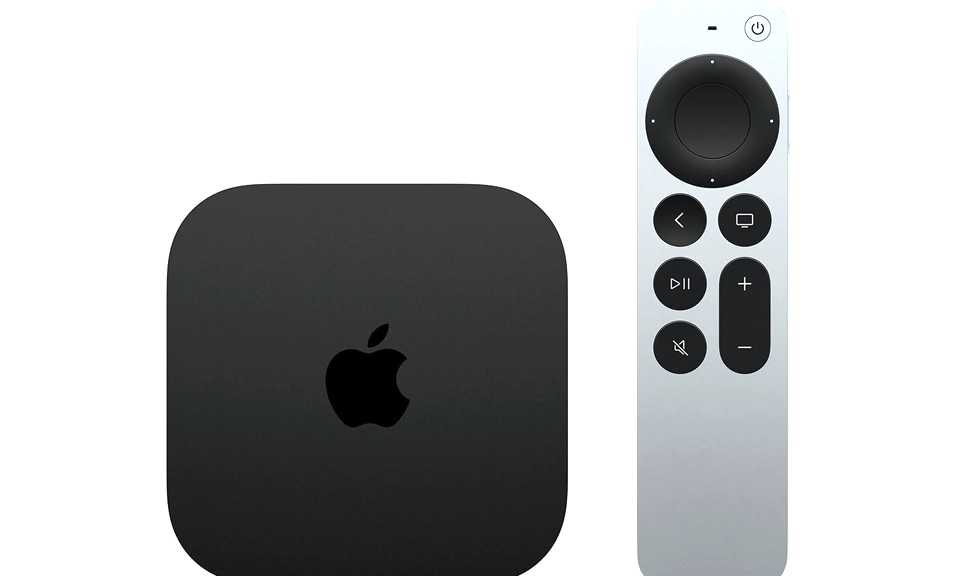
The streaming box market has a new pricing paradox. Apple’s fourth-generation Apple TV 4K arrived on November 13, 2026, carrying a $299 price tag — more than double what its predecessor cost at launch. Google’s TV Streamer, meanwhile, raised its own price by 50% to $149.99. Neither device is the bargain it once was. But the $149 gap between them forces a question that’s harder to answer than a simple spec sheet: what does “value” actually mean when you’re buying a streaming box in 2026?
The answer depends entirely on what you already own, what you watch, and how much you care about the things that don’t show up on a resolution spec sheet — speed, privacy, and the quiet frustration of a stuttering interface.
The Specs at a Glance: A $149 Question
| Feature | Apple TV 4K (4th Gen, 2026) | Google TV Streamer (4K) |
|---|---|---|
| US Price | $299 | $149.99 |
| Processor | Apple A19 | MediaTek MT8696 (not officially listed) |
| RAM | Not disclosed | 4GB |
| Storage | 128GB | 32GB |
| Video | 4K, dedicated AV1 decoder | 4K HDR up to 60fps |
| HDR Formats | Dolby Vision, HDR10, HDR10+, HLG | Dolby Vision, HDR10, HDR10+, HLG |
| Audio | Four-speaker HomePod surround support | Dolby Digital, Dolby Digital Plus, Dolby Atmos |
| Wi-Fi | Wi-Fi 7 | Wi-Fi 5 (802.11ac) |
| Ethernet | Gigabit | Gigabit |
| Voice Assistant | Siri AI (hands-free, built-in mics) | Gemini for TV (remote mic) |
| Smart Home | Apple Home, Thread | Google Home, Matter, Thread border router |
| Hands-Free Voice | Yes (three-microphone array) | No |
| Weight | 7.6 oz | 5.7 oz |
Sources: TechRepublic, MacObserver, ZDNET
The headline is obvious: Apple charges twice as much for four times the storage, a dramatically faster chip, newer wireless standards, and hands-free Siri. Google counters with a lower price, a more open smart home ecosystem, and a form factor that disappears behind your TV.
But the spec sheet doesn’t tell you which one feels better to use every day. That’s where the real comparison begins.
Performance: The Stutter You Can’t Unsee
The most important difference between these two devices isn’t on the box. It’s in the experience of using them.
Apple’s A19 chip is genuinely overkill for a streaming box. It delivers up to 50% faster CPU performance and twice the GPU performance compared to the previous generation. The dedicated AV1 decoder is designed to use less bandwidth for smoother streaming — a direct response to one of the most persistent complaints about Google’s device.
Google TV Streamer runs on a MediaTek MT8696 with 4GB of RAM. That’s enough memory to keep the interface reasonably responsive, but it’s not enough to eliminate the stutter that users have reported since launch. The Google TV interface is also more cluttered, with content recommendations and promotional rows that can make navigation feel slower and more ad-heavy than Apple’s cleaner tvOS.
If you’ve ever used a streaming device that hesitates when you press a button — a half-second delay that makes every interaction feel slightly broken — you know why this matters. The Apple TV 4K feels instant. The Google TV Streamer mostly feels fine, but “mostly” is not the same as “always.”
For pure performance, Apple wins without qualification. The question is whether that performance is worth $149 more.
Streaming Quality: A Tie on Paper, a Gap in Practice
Both devices support 4K HDR with Dolby Vision, HDR10, HDR10+, and HLG, and both offer Dolby Atmos audio. On paper, the picture and sound quality are identical.
In practice, the differences are subtle but real. The Apple TV 4K’s AV1 decoder can deliver smoother playback at lower bandwidth, which matters if your internet connection is inconsistent. Its Wi-Fi 7 support and Gigabit Ethernet provide more headroom for high-bitrate streaming than Google’s Wi-Fi 5 and Gigabit Ethernet. And Apple’s four-speaker HomePod surround support opens up a home theater configuration that Google’s device cannot match.
Google’s advantage is Dolby Atmos support, which the Apple TV 4K’s audio specification is less clear about in early documentation. If you have a Dolby Atmos soundbar or speaker system, Google’s device is a safer bet for guaranteed compatibility.
Verdict: A tie for most people, with Apple offering more headroom for future-proofing and Google offering more certainty on Atmos.
Smart Home: Apple’s Walled Garden vs. Google’s Open Ecosystem
This is where the two devices diverge most sharply, and where the “value” calculation becomes deeply personal.
The Google TV Streamer is a smart home hub first and a streaming box second. It supports Matter and Thread, acting as a Thread border router that connects your smart home devices to your network. It integrates with Google Home, displays camera feeds, and controls lights, thermostats, and locks from your TV screen. If you’re already invested in Google’s ecosystem — Nest cameras, Google Home speakers, Android phones — the Streamer is a natural extension of that world.
The Apple TV 4K is a smart home hub for Apple’s ecosystem. It supports Thread and works with Apple Home, letting you control smart lights, view security camera feeds, and use the box as a home hub for automation. Hands-free Siri makes it possible to issue commands without reaching for the remote, and the Precision Finding feature on the Siri Remote helps you locate it when it inevitably slips between the couch cushions.
The trade-off is compatibility. Apple TV 4K does not work with Google Nest cameras or Ring doorbells — two of the most popular smart home products on the market. If you have a mixed smart home, Google’s device is more accommodating. If you’re all-in on Apple, the Apple TV 4K is the better hub.
Verdict: Google wins for openness and compatibility. Apple wins for integration and privacy within its own ecosystem.
Voice Assistants: Hands-Free Siri vs. Gemini on the Remote
Apple’s biggest addition to the 2026 Apple TV 4K is hands-free Siri, enabled by a three-microphone array built into the box itself. You can talk to Siri without touching the remote, and with Siri AI, you can have more natural, conversational interactions — asking for movie recommendations, following up on questions, and controlling your smart home without lifting a finger.
The catch: Siri AI requires an Apple Intelligence-compatible iPhone or iPad to function fully. If you don’t have one, the hands-free Siri experience is more limited.
Google’s Gemini for TV is accessed through the Voice Remote, not hands-free. It’s capable and deeply integrated with Google’s services, but it requires you to pick up the remote. For people who are used to barking commands at a smart speaker, this feels like a step backward.
Verdict: Apple wins on the voice experience, with a significant caveat about iPhone/iPad requirements.
Privacy: The Quiet Advantage
Apple has made privacy a core part of its pitch for the Apple TV 4K. The device does not use Automatic Content Recognition (ACR) — the technology that monitors what you watch and uses that data for targeted advertising. Google TV, by contrast, is built on an advertising-supported model, and while ACR can often be turned off, it is enabled by default on many Google TV devices.
For some people, this is a minor detail. For others, it is the deciding factor. If you are uncomfortable with your streaming device monitoring your viewing habits to serve you ads, Apple’s approach is a meaningful difference.
Verdict: Apple wins, clearly and unambiguously.
The Value Calculation: Who Should Buy What
Buy the Apple TV 4K (2026) if:
You own an iPhone or iPad. The hands-free Siri experience is genuinely excellent, but it depends on Apple Intelligence compatibility. Without it, you’re paying a premium for features you can’t fully use.
You value performance and longevity. The A19 chip and 128GB of storage mean this box will feel fast for years. The 2022 Apple TV 4K is still snappy four years after launch; the 2026 model should age even better.
You care about privacy. The lack of ACR and Apple’s broader privacy posture are meaningful advantages.
You’re already in the Apple ecosystem. The integration with Apple Home, HomePod surround sound, and the Find My-enabled remote makes the whole experience feel cohesive.
You play Apple Arcade games. The 128GB of storage and faster GPU make this a competent casual gaming device.
Buy the Google TV Streamer if:
You want the best value for basic streaming. At $149.99, it does everything most people need: 4K HDR, Dolby Vision, Dolby Atmos, and a clean enough interface.
You have a Google-centric smart home. Matter and Thread support, Google Home integration, and Nest camera compatibility make it the natural hub for your connected home.
You don’t want to spend $299 on a streaming box. The performance gap is real, but for casual viewing, the Google TV Streamer is more than adequate.
You use an Android phone. The ecosystem integration is smoother, and you won’t be paying for Apple features you can’t access.
Value Is Not the Same as Price
The Apple TV 4K is the better streaming device. It’s faster, it’s more private, it has hands-free Siri, and it will likely last longer without feeling sluggish. But “better” is not the same as “better value.”
At $299, the Apple TV 4K is a premium purchase for people who already own Apple devices and care about the things Apple does well. At $149.99, the Google TV Streamer is a competent, capable device that does the basics well and integrates deeply with Google’s smart home ecosystem.
The $149 gap is not a rounding error. It’s the price of a decent soundbar, a year of a streaming subscription, or a month’s worth of groceries. Whether the Apple TV 4K’s advantages are worth that premium depends entirely on what you value.
If you want the best experience and you’re in the Apple ecosystem, the Apple TV 4K is worth the money. If you want a good streaming box at a fair price, the Google TV Streamer is the smarter buy.
The streaming box wars are no longer about who has the most apps or the sharpest picture. They’re about who understands what you actually need — and charges you accordingly.