The next time you pick up a budget smartphone, there is a small but growing chance that the memory chip inside it has lived a previous life in someone else’s device. It is a quiet, controversial shift that the industry would rather not advertise, but it is happening—and it raises uncomfortable questions about what “new” actually means.
The Cause: An AI-Fueled Memory Crisis
The root of this trend is a global memory shortage driven by the AI boom. Samsung, SK hynix, and other major memory manufacturers have shifted their production capacity toward high-margin AI server memory, particularly High-Bandwidth Memory (HBM) and server DRAM, leaving less capacity for the consumer smartphone market.
The consequence has been a surge in memory prices. By early 2026, DRAM and NAND flash prices had reached their highest levels since records began in 2016. For budget smartphones, this is existential. Counterpoint Research analyst Jan Stryjak found that combined DRAM and NAND now account for as much as 54% of component costs in ultra-low-end models, a dramatic increase from just 20% in the third quarter of 2025. With margins already razor-thin, manufacturers faced a stark choice: raise prices, cut specifications, or find a cheaper source of memory.
The Solution: “Reballed” Memory
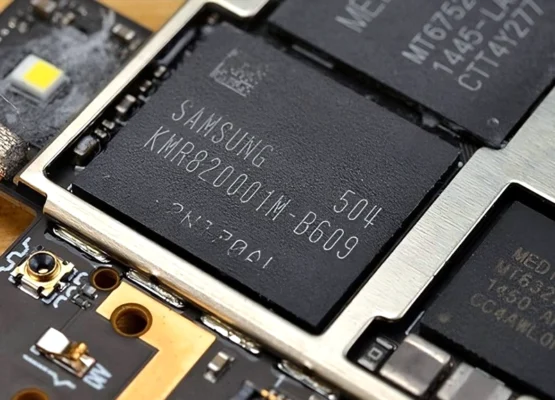
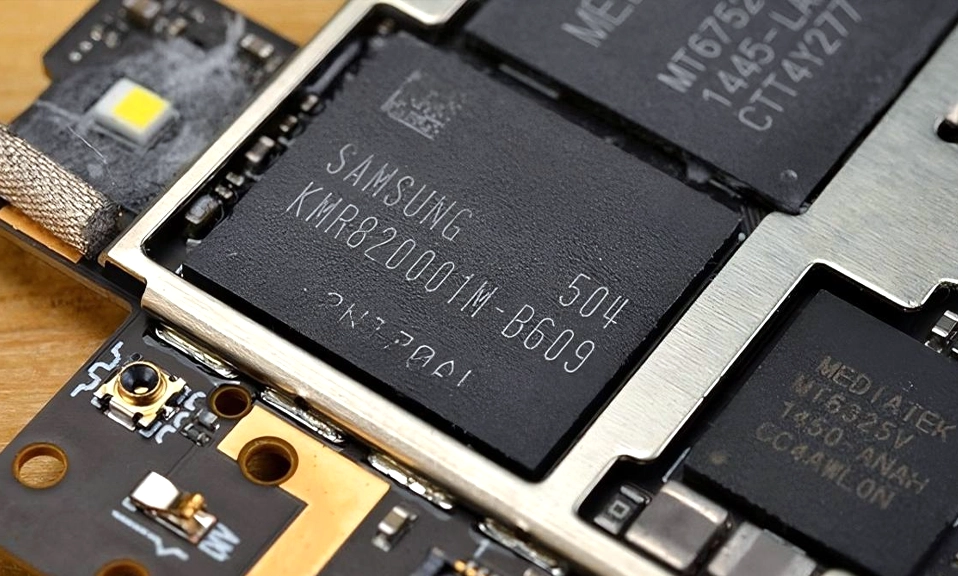
The cheaper source, it turns out, is old phones. The process is called reballing. Memory chips are desoldered from used or discarded devices, cleaned, tested, and fitted with new solder balls before being mounted onto new circuit boards. The chip itself is not melted; it is the solder joints that are renewed.
Market research firm TrendForce estimates that recycled memory will account for 3% to 4% of all smartphones in 2026, and that share could climb to 7% to 9% in 2027. The chips in question are overwhelmingly 4GB LPDDR4X, an older standard that is still common in entry-level 4G phones. The primary target is devices priced below 1,299 yuan (around $190) in China, or under €200 in Europe. Some reports suggest that if DRAM prices continue to rise, the practice could spread to mid-range phones as well.
The Quality Question: What You Don’t Know Can Hurt You
The appeal of recycled memory is obvious: it is significantly cheaper. In some channels, reprocessed chips have been reported to sell for up to 60% less than new ones. But the cost savings come with a set of risks that the industry is only beginning to grapple with.
The core problem is uncertainty. Unlike a new chip, a recycled chip has a history that the manufacturer cannot fully verify. An engineer at a South Korean semiconductor reliability-testing company explained the challenge: “Just because a DRAM chip has been used for five years doesn’t mean it only has five years left. The problem is that you don’t know what it’s been through”.
That uncertainty manifests in several ways. TrendForce warns that sloppy recycling can lead to higher failure rates, affecting device reliability and potentially shortening the lifespan of the phone. Aging memory chips have weaker data retention capability and a higher risk of errors. The reballing process itself, which involves applying intense heat to detach the chip from its original board, can cause microscopic cracks or damage to internal connections, according to the South Korean engineer.
For NAND flash storage, the risks are even more pronounced. NAND has a limited number of rewrite cycles, and each memory cell degrades over time. A refurbished NAND chip that passes factory testing may still have a remaining lifespan that is far shorter than a new one, potentially leading to slower storage speeds, errors, or total failure down the road. This is why recyclers mostly target DRAM rather than NAND—NAND simply wears out from heavy write cycles in a way that makes reuse riskier.
The Industry Response: Silence and Scale
The most unsettling aspect of this trend is its opacity. No major brand has officially confirmed that it is using recycled memory chips in its new devices, and vendors are unlikely to advertise the practice. The sourcing often happens through gray-market recycling channels, and consumers have no way of knowing whether the chip inside their new phone is fresh or refurbished without tearing the device open.
Meanwhile, the tier-one players are taking a different approach. Samsung, which manufactures its own memory, has been able to rely on its production scale and stable component supply to maintain market share without resorting to recycled chips. Counterpoint reported that while global smartphone shipments fell 20% year-on-year in the third quarter of 2026, Samsung’s shipments declined by just 3%, lifting its market share from 19% to 23%. The company’s semiconductor division posted a record operating profit, but its mobile division still recorded an operating loss due to higher component costs—a reminder that even scale does not make the cost pressure disappear entirely.
A Short-Term Fix with Long-Term Consequences
The use of recycled memory in new smartphones is a symptom of a broken market, not a sustainable solution. TrendForce and Counterpoint both characterize it as a short-term expedient rather than a permanent answer to the memory crisis. As one analyst put it, “Saving a few dollars means little if you end up spending more on repairs and defective units”.
For consumers, the implications are clear. A budget phone with recycled memory may be the only way to keep prices affordable in an era of soaring component costs—but it is a phone with a shorter expected lifespan, a higher risk of failure, and an uncertain pedigree. The industry’s silence on the practice is a problem in itself. If manufacturers are going to use secondhand chips, they should be transparent about it. Consumers deserve to know what they are buying, even if the answer is uncomfortable.
The memory crisis is not going away anytime soon. TrendForce expects the shortage to persist beyond 2027, and the AI boom shows no sign of slowing. The question is not whether recycled memory will become more common—it will. The question is whether the industry will develop the standards, testing protocols, and transparency to make it safe, or whether it will remain a quiet compromise that shifts the risk from manufacturers to the people who buy their phones.