Two phones, one camera bump screen, and a question that could define the next two years of smartphone design: is the rear display a gimmick, or is it the feature nobody knew they needed?
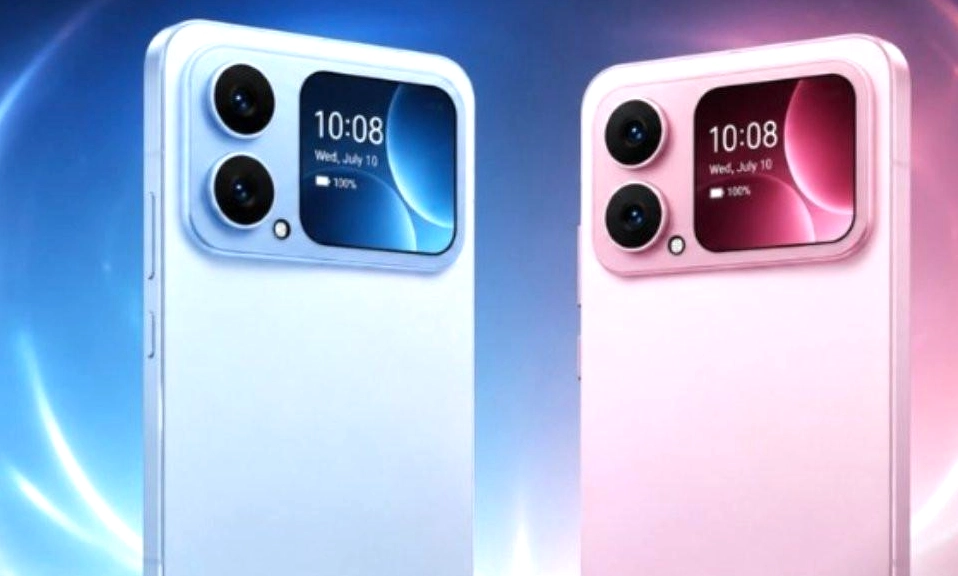
Honor’s new 700 series arrives with a deliberate provocation. All three models—the 700S, the standard 700, and the 700 Pro—carry a square secondary display embedded inside the rear camera module. It is not a flagship exclusive. It is not an accessory you clip on. It is standard across the entire lineup, including the entry-level model. That decision tells you everything about where Honor thinks the market is heading.
The question is whether the market agrees. And the early evidence is surprisingly clear.
The Honor 700 vs. 700 Pro: What Actually Separates Them
The rear display is the headline, but it is not the only difference between the two mainstream models.
| Feature | Honor 700 | Honor 700 Pro |
|---|---|---|
| Processor | Snapdragon 8s Gen 4 | Snapdragon 8 Gen 5 |
| Main display | 6.57-inch AMOLED, 1.5K | 6.57-inch AMOLED, 1.5K |
| Main camera | 200 MP | 200 MP |
| Telephoto | 50 MP periscope (rumoured) | 50 MP periscope + teleconverter support |
| Rear display | Yes, square, ~1.72 inches | Yes, square, ~1.72 inches |
| Battery | Rumoured 9,000 mAh (China) / possibly smaller globally | 9,000 mAh |
| RAM / Storage | Up to 16GB / 512GB | Up to 16GB / 512GB |
| Estimated price | ~€699 / ~¥2,999 | ~€899 / ~¥3,799 |
Sources: Notebookcheck, ANTARA, Gizmodo, PhoneArena, 36Kr
The Pro justifies its premium through raw performance and camera versatility. The Snapdragon 8 Gen 5 is a generation ahead of the 8s Gen 4, and the Pro’s telephoto system is more capable—it supports teleconverter accessories that extend its reach further. The battery is also larger on paper, though regional variants may differ: the China version of the 700 is tipped to pack 6,000mAh with 100W charging, while the international model may drop to 5,500mAh and 80W to meet different safety standards.
But here is the crucial point: the rear display is identical on both. Honor did not use it as a differentiator between tiers. It used it as the defining characteristic of the entire series. That is not how you treat a gimmick. That is how you treat a platform.
What the Rear Display Actually Does
The screen is small—roughly 1.72 inches—and square, sitting inside the wide camera island. It is not designed to compete with the main display. It is designed for what the industry calls “weak notification display”: the quick, one-way glance that does not require unlocking your phone or engaging with an app.
Honor has built out a surprisingly practical feature set:
Health monitoring. The rear screen can display heart rate and blood oxygen readings, according to official teasers. Tipster FixedFocus reports that both the standard 700 and the 700 Pro support this, though the 700S may not. It is a small but meaningful addition—a health check without opening an app or waking the main screen.
Selfie viewfinder. This is the most immediately useful function. The rear cameras are almost always better than the front-facing camera, but framing a selfie with them has always been awkward. The rear display acts as a live viewfinder, letting you compose shots with the 200MP main sensor instead of the punch-hole selfie camera. When you are taking photos of other people, they can see themselves in the frame and adjust their posture or expression.
Glanceable notifications. Time, date, incoming alerts, flight reminders, and music controls can all appear on the rear screen without lighting up the main display. It is the same logic as a flip phone’s cover screen, applied to a slab phone.
AI-powered personalization. Honor calls it an “AI Dynamic Rear Screen” , and it supports custom themes and an AI-driven electronic pet that responds to interaction without interrupting whatever is happening on the main screen. It is playful, but it also signals that Honor sees the rear display as a platform for expression, not just utility.
Is the Rear Display the Next Big Trend?
The poll data suggests the answer is yes—with a caveat.
PhoneArena ran a survey of nearly 1,000 readers asking whether they wanted a rear display on their phone. More than half said they loved the idea. Another 33% said they would want it only if it came with useful features. Only about 15% said they did not want any more displays on their phones.
That is not a niche curiosity. That is a mainstream appetite. The caveat is the 33% in the middle—the people who are open to the idea but not yet convinced. They are the ones Honor has to win over with features like the selfie viewfinder and health monitoring.
The trend is also being driven by forces beyond Honor. Xiaomi’s 18 Pro Max already features a rear display, and the concept has been tested intermittently by the industry for nearly a decade—from the YotaPhone’s E-ink back screen in 2013 to Meizu’s early attempts and Xiaomi’s decorative Mi 11 Ultra panel. What is different in 2026 is that the technology has caught up: AMOLED panels are thin, efficient, and cheap enough to embed in a camera bump without compromising the phone’s design or battery life.
Honor’s decision to make the rear display standard across the entire 700 series—not just the Pro—is the strongest signal yet that this is not a flagship experiment. It is a bet that the feature will become an expected part of the mid-range smartphone experience.
The Caveats: What Could Hold It Back
The rear display is not a guaranteed success. There are real reasons to be skeptical.
It is still a solution in search of a problem. The main display can do everything the rear display can do, and it does it better. The value of the rear screen depends entirely on whether the convenience of a glance—without unlocking, without waking the main screen, without interrupting what you are doing—is worth the added complexity and cost.
Durability is an open question. A screen inside the camera bump is exposed to the same scratches, drops, and pocket lint as the rest of the phone’s back. Honor has not detailed how the panel is protected, and early units are only just arriving in retail stores. If the rear display scratches easily or fails over time, the feature becomes a liability rather than an asset.
The ecosystem is thin. As one analysis put it: “A smartphone’s back screen without a supporting ecosystem is no better than a smart band” . The rear display needs apps, integrations, and developer support to be more than a clock and a notification ticker. Honor has built some first-party features, but third-party adoption will determine whether the screen becomes genuinely useful or remains a novelty.
Regional pricing and specification differences could dilute the pitch. The international versions of the 700 series may have smaller batteries and slower charging than the China models. If the rear display is the headline feature, the rest of the package needs to hold up—especially at the rumoured €699 and €899 price points, which put the 700 and 700 Pro in direct competition with established mid-range and upper-mid-range rivals.
A Trend Worth Watching, a Phone Worth Considering
The Honor 700 and 700 Pro are not the first phones with rear displays. They are the first phones to treat the rear display as a standard feature across an entire lineup, including the entry-level model. That is the difference between a gimmick and a trend.
The Pro is the better phone—faster chip, better telephoto, bigger battery. But the standard 700 is the more interesting device, because it brings the rear display to a lower price point and proves that Honor is serious about making it mainstream. If the trend takes off, it will be because phones like the 700 made the feature accessible, not because flagships like the Pro made it aspirational.
The rear display is not the next foldable. It will not reshape the industry overnight. But it is a genuine, practical, and increasingly affordable addition to the smartphone formula—one that answers a real question about how we use our phones in the moments between the big interactions.
The poll says people want it. Honor is betting they will pay for it. The next twelve months will tell us whether that bet pays off.
The rear display era has begun. The question is whether it lasts.