For most of human history, the question of whether we are alone in the universe was the stuff of philosophy, religion, and late-night speculation. In 2026, it has become something else entirely: a mainstream cultural obsession, a government policy issue, and a genuinely open scientific question. The search for extraterrestrial life is no longer a fringe pursuit. It is one of the defining conversations of the decade—and the reasons why are as surprising as the question itself.
Three forces have converged to push the search for aliens back into the global spotlight: a wave of government disclosures about unidentified anomalous phenomena (UAPs), a string of scientific discoveries that have made extraterrestrial life seem more plausible than ever, and a cultural moment in which the question of our cosmic solitude has become a way of processing a much more earthly anxiety. Together, they have created a moment in which the oldest question in the book feels urgent again.
The Disclosure Wave: UFOs Become UAPs
The most visible driver of the current obsession is the slow, steady drip of government disclosures about UAPs—the rebranded, less stigmatized term for what used to be called UFOs.
Since 2017, when The New York Times revealed the Pentagon’s secret Advanced Aerospace Threat Identification Program, the U.S. government has gradually acknowledged that its pilots and sensors have encountered objects in the sky that they cannot easily explain. In 2026, that acknowledgment has accelerated. The Pentagon has released multiple batches of declassified files through the Presidential Unsealing and Reporting System for UAP Encounters (PURSUE), including reports of a silent, matte-black triangle that climbed vertically, hovered, and accelerated to supersonic speed without a sound or exhaust plume.
Crucially, the disclosures have not confirmed extraterrestrial visitation. Most released documents are labeled “unresolved”—a statement that investigators lack enough information to make a determination, not that the objects are alien. Many cases have mundane explanations: drones, balloons, sensor artifacts, or misidentification. But the sheer volume of reports, the credibility of some witnesses, and the government’s willingness to discuss them publicly have changed the cultural conversation. The question has shifted from “Are UFOs real?” to “What are they, and who is responsible for finding out?”
The political dimension has intensified as well. In October 2026, President Trump announced the creation of a federal task force on artificial intelligence, partly in response to concerns about AI agents acting beyond their instructions—and the same administration has overseen the UAP disclosure process. Members of Congress have held hearings. Scientists have called for better data. And the public, long accustomed to secrecy and stigma, has begun to demand answers.
The Scientific Revolution: Exoplanets, Biosignatures, and Ocean Worlds
At the same time, the scientific case for extraterrestrial life has never been stronger.
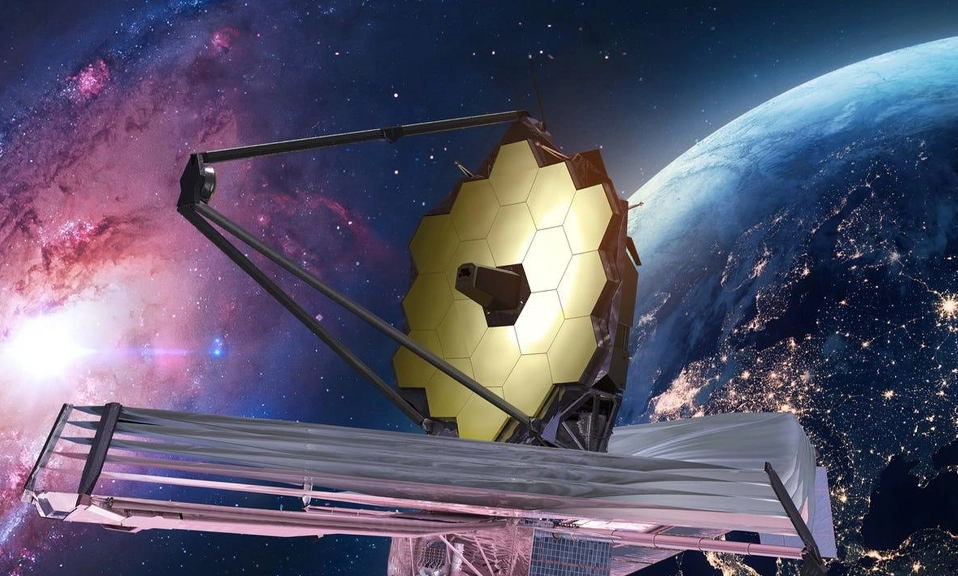
When the first exoplanet was confirmed in 1992, we knew of only a handful of worlds beyond our solar system. Today, we know of more than 6,000, and the count is rising. The James Webb Space Telescope has begun characterizing the atmospheres of some of these worlds, looking for biosignatures—gases like oxygen and methane that, in combination, might indicate biological activity. In 2026, Webb spotted signs of planets smashing together around other stars, offering a glimpse into the violent processes that may have shaped Earth and its Moon.
Closer to home, the search for life has expanded to ocean worlds: Jupiter’s moon Europa, Saturn’s moon Enceladus, and the dwarf planet Ceres. These bodies harbor vast subsurface oceans, and missions are being planned to explore them. The discovery of a ghostly, eyeless creature in a Chinese cave, or the strange life forms found in deep-sea hydrothermal vents, has reminded us that life can thrive in environments we once considered uninhabitable.
Meanwhile, the search for extraterrestrial intelligence (SETI) has entered a new phase. Traditional SETI listens for radio signals from civilizations that are alive now—a long shot given the vastness of time. New approaches are expanding the search: looking for technosignatures like artificial light, industrial pollution, or megastructures; searching for “microscopic technosignatures” in lunar dust; and using AI to sift through enormous datasets for patterns that human researchers might miss.
The cumulative effect is a shift in scientific consensus. Few scientists today are willing to say that life beyond Earth is unlikely. The question has moved from “Is there life out there?” to “Where is it, and how would we recognize it?”
The Cultural Moment: Why Now?
If the scientific and political drivers explain what is happening, the cultural dimension explains why now.
The search for aliens has always been a mirror for human anxieties. In the Cold War, UFO sightings reflected fears of Soviet technology and nuclear annihilation. In the 1990s, The X-Files captured a post-Cold War paranoia about government secrecy. Today, the alien question is a way of processing a different set of fears: climate change, AI, pandemics, geopolitical instability. The idea that we might not be alone—that there might be others out there, more advanced or simply different—offers both a distraction and a perspective. It makes our problems feel both smaller and more urgent.
There is also a spiritual dimension. As traditional religious affiliation declines in many parts of the world, the question of our place in the cosmos has become a source of meaning for people who no longer find it in organized religion. The search for aliens is, in part, a search for meaning—a way of asking who we are by imagining who else might be out there.
And then there is the sheer entertainment value. Blockbuster films like Steven Spielberg’s Disclosure Day, which has sparked conspiracy theories about a “soft launch” of alien disclosure, and the endless stream of UFO documentaries and podcasts, have turned the question into a cultural event. The line between serious inquiry and spectacle has blurred, and that blurring has only increased public interest.
The Skeptics’ Case
Not everyone is convinced that the current moment represents a genuine breakthrough. Skeptics point out that the evidence for extraterrestrial visitation remains thin: sketches rather than sensors, testimony rather than data, “unresolved” cases rather than confirmed anomalies. The scientific search for life, while more rigorous, has not yet found a single confirmed biosignature beyond Earth. The Fermi Paradox—the contradiction between the high probability of extraterrestrial life and the lack of evidence for it—remains unresolved.
These skeptics are not killjoys. They are essential to the process. The search for aliens will only be credible if it is conducted with rigor, transparency, and a willingness to accept that the answer might be “no.” The current moment is exciting precisely because it is uncertain. The question is genuinely open, and that is what makes it compelling.
Are we really alone? Nobody knows.
But the question has never felt more alive. The convergence of government disclosures, scientific discovery, and cultural fascination has created a moment in which the search for extraterrestrial life is no longer a fringe pursuit but a central question of our time.
What happens next depends on what we find—and on how honestly we are willing to look. The universe may be silent. It may be teeming with life. Or it may be something in between: a cosmos in which life is rare but not unique, and in which the search itself is a profound act of self-discovery.
Either way, the search is capturing the world’s attention again. And that, in itself, tells us something important about who we are: a species that cannot stop looking up.