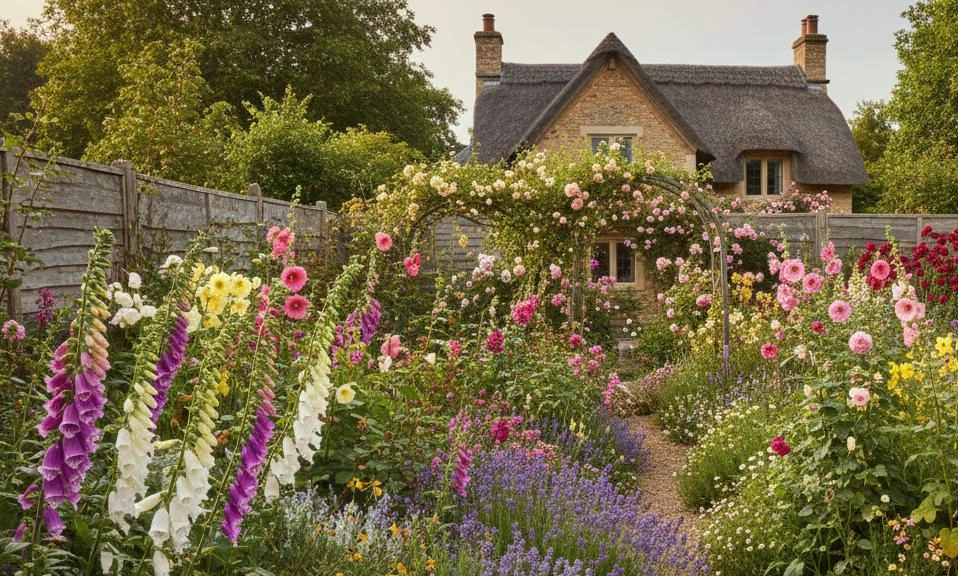
For the last decade, the gardening world has been dominated by a very specific aesthetic: restraint.
Minimalist lawns. Monochromatic plantings. Carefully curated “white gardens.” Architectural grasses standing alone in gravel. The message was clear: less is more. If you could see the sky between your plants, you were doing it right.
But in 2026, something has shifted.
Walk through any garden show, scroll through Instagram, or visit a cutting-edge nursery, and you’ll notice a radical new energy. The gardens are loud. They’re overflowing. They’re clashing, layering, and unapologetically abundant. Dahlias are planted next to ornamental grasses. Bright orange marigolds are mixed with deep purple salvia. Every surface is covered in something blooming, trailing, or climbing.
Welcome to Maximalist Gardening—the rebellion against restraint, and the most joyful trend to hit the horticultural world in years.
If you’ve ever felt that a “tidy” garden left you cold, or that you wanted your outdoor space to feel like an immersive, sensory-rich experience rather than a minimalist art installation, this is your moment. Here’s why maximalist gardening is exploding, and how you can embrace the beautiful chaos.
🎨 What Is Maximalist Gardening (And What It Isn’t)?
Let’s be clear: maximalist gardening is not the same as “messy” gardening.
It’s not about letting weeds take over or planting random seeds and hoping for the best. Maximalism is intentional abundance. It’s a design philosophy that says: more is more.
Maximalist gardening is:
- Layering plants at different heights, textures, and bloom times
- Using bold, saturated colours and high-contrast combinations
- Filling every available space—ground, vertical, hanging, trailing
- Mixing ornamentals with edibles, annuals with perennials, and “rules-breaking” combinations
- Creating immersive, sensory-rich environments that feel lush and alive
Maximalist gardening is NOT:
- Randomly throwing seeds and calling it a “meadow”
- Ignoring basic plant care and design principles
- Planting invasive species that will take over your neighbourhood
- Creating visual chaos without any underlying structure
Think of it this way: minimalism is a haiku. Maximalism is a sprawling, epic novel. Both are valid art forms. But maximalism is about density, richness, and sensory overload in the best possible way.
🌍 Why Maximalism Is Having a Moment Now
Trends don’t happen in a vacuum. The shift toward maximalist gardening reflects deeper cultural currents:
1. The Post-Pandemic “More Life” Mentality After years of restriction, isolation, and stripped-down living, people are craving abundance. We want our spaces to feel generous, celebratory, and overflowing with life. A maximalist garden is a visual feast—a rejection of scarcity and a declaration of more.
2. The Backlash Against “Sad Beige” Culture For years, interior design and fashion were dominated by neutral tones, muted palettes, and “quiet luxury.” Maximalism is the pendulum swinging back. People want colour. They want pattern. They want personality. And that desire has spilled over into the garden.
3. The Rise of “Cottagecore” and “Grandmillennial” Aesthetics The romanticisation of traditional, abundant, “lived-in” gardens—think English cottage gardens, Victorian bedding schemes, and overflowing window boxes—has created a hunger for the lush, layered look that maximalism delivers.
4. Climate Change and Biodiversity Awareness Ironically, the maximalist approach aligns with ecological goals. Dense, diverse plantings support more pollinators, create microclimates, and build resilient ecosystems. A maximalist garden isn’t just pretty—it’s often more ecologically functional than a sparse, minimalist one.
🏗️ The 5 Core Principles of Maximalist Design
If you want to embrace maximalism without creating visual chaos, follow these principles:
1. Layer Like a Forest (The “Three-Tier” Rule)
Minimalist gardens often plant in flat, single-height blocks. Maximalist gardens create depth by layering:
- Canopy: Tall trees or large shrubs (even in small spaces, use tall grasses or climbers)
- Mid-layer: Perennials, shrubs, and mid-height annuals
- Ground cover: Low-growing plants, trailing vines, and self-seeding annuals that fill every gap
This creates a sense of abundance and ensures something is always blooming at every level.
2. Repeat, Repeat, Repeat (The “Drift” Technique)
Maximalism isn’t about planting one of everything. It’s about planting drifts of the same plant in large groups, then repeating those drifts throughout the space.
Instead of one red salvia here and one blue lobelia there, plant a massive swath of red salvia, then repeat it on the other side of the path. This creates rhythm and cohesion, even when you’re using bold colours and diverse textures.
3. Mix Textures Relentlessly
Maximalist gardens are tactile. They invite you to reach out and touch. Combine:
- Fine textures: Ornamental grasses, ferns, baby’s breath
- Bold textures: Hostas, elephant ears, dahlias
- Glossy textures: Sedums, succulents, glossy-leaved shrubs
- Fuzzy textures: Lamb’s ear, stachys, dusty miller
The contrast between these textures creates visual interest even when nothing is in bloom.
4. Embrace Colour Clashes (On Purpose)
Traditional design rules say “don’t mix orange and pink” or “keep cool colours together.” Maximalism throws those rules out.
Try:
- Hot pink dahlias with bright orange marigolds
- Purple salvia with yellow coreopsis
- Red roses with blue delphiniums
The key is to use saturated, bold colours rather than pastels. When colours are intense enough, they create energy rather than discord. And if a combination truly doesn’t work? You can always move a plant. That’s the beauty of gardening.
5. Fill Every Gap (The “No Bare Soil” Rule)
In a minimalist garden, you might see mulch or gravel between plants. In a maximalist garden, every inch is planted.
Use low-growing annuals (alyssum, lobelia, creeping thyme) or perennials (geraniums, ajuga, sedum) to fill the spaces between taller plants. This suppresses weeds, retains moisture, and creates the sense of overflowing abundance that defines maximalism.
🌸 The Maximalist Plant Roster: Go Big or Go Home
Here are the plants that embody the maximalist spirit—bold, abundant, and unapologetically colourful.
🌺 The Bold Blooms (Focal Points)
- Dahlias: The undisputed queens of maximalism. Giant, saturated blooms in every colour. Plant in groups of 3–5 for maximum impact.
- Canna lilies: Tropical, architectural, with bold foliage and bright flowers. They scream “abundance.”
- Hollyhocks: Tall, dramatic spires of colour that self-seed generously. Perfect for creating vertical layers.
- Sunflowers: Choose branching varieties for multiple blooms per plant. They’re joyful, bold, and impossible to ignore.
- Zinnias: The workhorses of the maximalist garden. Cut them constantly, and they’ll bloom non-stop in every colour except blue.
🌿 The Texture Kings (Foliage & Structure)
- Ornamental grasses: Miscanthus, pennisetum, and stipa add movement, sound, and fine texture. Plant in large drifts.
- Elephant ears (Colocasia): Massive, dramatic leaves that create instant tropical abundance.
- Hostas: Bold, glossy foliage in shades of green, blue, and variegated white. Perfect for filling shady gaps.
- Ferns: Fine, delicate texture that contrasts beautifully with bold-leaved plants.
🌼 The Fillers (Abundance & Continuity)
- Cosmos: Airy, delicate flowers that self-seed and fill gaps effortlessly.
- Alyssum: Low-growing, honey-scented carpet that fills every space with tiny blooms.
- Nasturtiums: Trailing, edible, and endlessly cheerful. They spill over edges and cascade down walls.
- Calendula: Bright orange or yellow flowers that bloom non-stop and self-seed generously.
- Sweet alyssum: Tiny, fragrant flowers that create a haze of colour at ground level.
🌿 The Climbers (Vertical Abundance)
- Clematis: Endless varieties in every colour. Train them up trellises, through shrubs, or along fences.
- Morning glory: Fast-growing, vibrant blooms that cover structures in weeks.
- Sweet peas: Fragrant, colourful, and endlessly productive. The more you pick, the more they bloom.
- Trumpet vine: Bold, tropical flowers that attract hummingbirds and cover large structures.
🌱 The Self-Seeders (Controlled Chaos)
Maximalist gardens often include plants that self-seed, creating a sense of natural abundance. But “controlled” is the key word—let them seed in designated areas, and thin them if they become overwhelming.
- Nigella (Love-in-a-mist): Delicate blue flowers and interesting seed pods.
- Verbena bonariensis: Tall, airy purple flowers that self-seed lightly.
- Foxgloves: Dramatic spires that self-seed in shady spots.
- Poppy: Annual varieties that create drifts of colour and self-seed generously.
🛠️ How to Create a Maximalist Garden (Step-by-Step)
Ready to embrace the abundance? Here’s how to get started:
Step 1: Start with Structure Even maximalist gardens need bones. Identify the permanent elements: paths, fences, trellises, large shrubs, or trees. These create the framework that holds the abundance together.
Step 2: Plant in Layers Start with your tallest plants (trees, tall grasses, hollyhocks). Then add mid-height perennials and shrubs. Finally, fill the ground layer with low-growing plants and self-seeders.
Step 3: Use the “Thriller, Filler, Spiller” Formula For containers and small spaces:
- Thriller: A bold, tall focal point (canna, dahlia, ornamental grass)
- Filler: Mid-height plants that add volume (zinnias, cosmos, salvia)
- Spiller: Trailing plants that cascade over edges (nasturtiums, lobelia, creeping jenny)
Step 4: Succession Plant Relentlessly Maximalist gardens bloom from spring to frost because you’re constantly adding new plants. Sow annuals every 2–3 weeks, and divide perennials to fill gaps.
Step 5: Edit Ruthlessly (Yes, Even in Maximalism) Maximalism doesn’t mean “never remove a plant.” If something isn’t working—too aggressive, wrong colour, or just not thriving—move it or compost it. The goal is abundant beauty, not chaos.
🚫 4 Maximalist Mistakes to Avoid
Mistake 1: Planting Too Many Different Species It’s tempting to buy one of everything. But maximalism works best when you plant in drifts (groups of 5–7 of the same plant). This creates rhythm and cohesion. One dahlia is a specimen. Twenty dahlias in a drift is maximalism.
Mistake 2: Ignoring Foliage Flowers come and go. If your garden only looks good when things are blooming, you’re missing half the picture. Bold foliage (hostas, elephant ears, grasses) provides structure and interest even when nothing is in flower.
Mistake 3: Not Planning for Continuous Bloom Maximalist gardens should feel abundant all season. Plan for spring bulbs, early perennials, summer annuals, and autumn bloomers. If your garden peaks in July and then dies, it’s not maximalist—it’s just a short-lived explosion.
Mistake 4: Forgetting About Maintenance Abundance requires care. Maximalist gardens need regular deadheading, dividing, and editing. If you don’t have time for that, simplify your approach or hire help. A well-maintained maximalist garden is beautiful. An overgrown, neglected one is just a mess.
💡 The Philosophy: Why Maximalism Feels So Good
At its core, maximalist gardening is about rejecting scarcity and embracing abundance.
In a world that often feels constrained—small apartments, limited budgets, climate anxiety—a maximalist garden is a declaration of plenty. It says: There is enough. Life is generous. Beauty can overflow.
It’s also deeply personal. Minimalism often follows rules. Maximalism invites you to break them. Plant the orange marigolds next to the pink roses. Mix the edibles with the ornamentals. Let the nasturtiums spill onto the path. Your garden becomes an expression of your personality, your joy, your refusal to conform.
And perhaps most importantly, maximalist gardens are ecologically generous. Dense, diverse plantings support more pollinators, create habitat, and build resilient ecosystems. A maximalist garden isn’t just beautiful—it’s alive in a way that sparse, minimalist gardens often aren’t.
More Is More
If you’ve ever looked at a minimalist garden and felt… nothing. If you’ve ever wanted your outdoor space to feel like an immersive, sensory-rich experience rather than a carefully curated art installation. If you’ve ever wanted to plant the bright orange marigolds next to the purple salvia just because it makes you happy.
Then maximalist gardening is for you.
Start small. Add a drift of dahlias. Layer in some ornamental grasses. Fill the gaps with alyssum. Let the nasturtiums spill over the edge. Watch how your garden transforms from a sparse, quiet space into a lush, vibrant, overflowing paradise.
Life is too short for sad beige gardens. Go bold. Go abundant. Go maximalist.