BMW’s message from China is not a rejection of electric vehicles. It is a warning about the cost of pretending the transition is a straight line.
The German automaker has made clear that petrol-powered cars will remain part of its lineup in the world’s largest auto market for the foreseeable future. But the full picture is far more complicated than a simple “BMW bets on combustion.” It is a story of a company caught between two shrinking certainties—an EV business that has failed to gain traction in China, and an ICE business that is itself contracting rapidly. The question it raises is not whether the world is moving too fast toward electric cars, but whether anyone—automaker, government, or consumer—has a clear picture of what “the right speed” actually looks like.
What BMW Actually Said (and What It Didn’t)
BMW’s position in China is best described as multi-power pragmatism, not a retreat from electrification. The company’s publicly stated strategy remains “pure electric, plug-in hybrid, combustion, and hydrogen” running in parallel. Its 2026–2028 China product plan is explicitly designed around both fuel and electric routes, with seven key new models arriving in 2027 spanning ICE and BEV across sedans and SUVs.
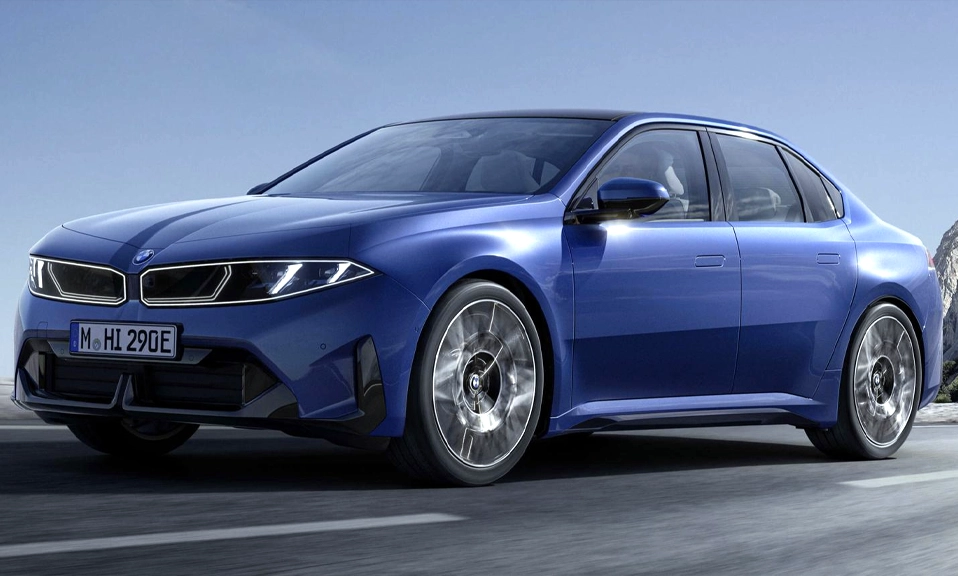
That includes the next-generation 3 Series long-wheelbase sedan alongside the i3 long-wheelbase EV, the 7 Series with both combustion and electric i7 variants, and the X5 with parallel ICE and iX5 BEV options. The message is not “petrol forever.” It is “we will build what the market buys, and the market is not buying enough EVs.”
The Dual Crisis: BMW’s Real Problem
The context for BMW’s caution is a collapse on both sides of its Chinese business. In the second quarter of 2026, BMW’s China deliveries fell 30.2%, dragging the automotive division’s operating profit down by more than 60% to €629 million. The company issued its third profit warning in less than three years, partly blaming China.
The EV side is the more alarming of the two. Between January and May 2026, BMW sold just over 10,000 electric cars in China—a 75% decline from nearly 42,000 in the same period the year before. In a market where EVs and plug-in hybrids accounted for more than 60% of new car sales at points in 2026, BMW’s new-energy vehicle penetration was just 6.2%. The i3, a 3 Series-based EV on sale since 2022, could not gain traction even with discounts of €10,000–14,000. The i5’s registrations more than halved, prompting BMW to pause production.
At the same time, the combustion market that still accounts for roughly 95% of BMW’s China sales is shrinking. ICE registrations in China fell 30% in May 2026 alone, driven by higher fuel prices and a consumer shift toward domestic high-end EVs. BMW is caught in a vice: it cannot gain ground in the growing EV segment, and it is losing ground in the shrinking segment where it still makes most of its money.
The Neue Klasse Gamble—and the Delay That Hurt
BMW’s answer to this crisis is the Neue Klasse, its next-generation electric platform. The first China-bound model, the iX3 SUV, is due to go on sale in November 2026. The long-wheelbase version is scheduled to begin production at the Shenyang plant in the second half of 2026, with at least six Neue Klasse models planned within 24 months.
The problem is timing. Chinese rivals are developing new EV models in as little as 18 months—roughly twice as fast as traditional automakers. Analysts say BMW “has moved too slowly” and that the Neue Klasse “could have been a game-changer” if it had launched two years earlier. Chinese buyers increasingly expect technology from homegrown brands like Nio, Zeekr, and Xiaomi, and the combustion-engine heritage that sells BMWs in Europe and the US “carries less weight” in China.
BMW’s response has been to cut its internal EV volume forecasts—in some cases by more than 20%—and raise forecasts for some combustion models, a correction designed to avoid repeating the price wars that eroded the i3 and iX3. This is not a company that believes the world is moving too fast. It is a company that overestimated how fast it could move, and is now adjusting to a market that moved faster than its product cycle.
Is the World Moving Too Quickly? The Evidence Is Mixed
The BMW story is a local expression of a global pattern. Outside China, EV momentum is slowing. Global carmakers have booked roughly $55 billion in writedowns** in the past year as they scale back EV ambitions. Ford took a **$19.5 billion charge, GM another $6 billion, and Stellantis €22.2 billion, with its CEO explicitly citing the “cost of over-estimating the pace of the energy transition”. Volkswagen—BMW’s German rival—has paused development of the electric Golf because it “simply can’t afford this work right now.”
These are not ideological reversals. They are financial corrections. The first wave of EV ambition was built on assumptions—about consumer appetite, infrastructure readiness, and cost curves—that have not held uniformly. The result is a more uneven, more expensive, and slower transition than the industry’s most optimistic forecasts predicted.
But “too quickly” is the wrong frame. The evidence does not suggest the world is moving too fast toward electric cars in aggregate. It suggests the transition is not linear, and that different markets are moving at radically different speeds. China’s EV penetration is above 60% in some months; BMW’s own EV share there is 6%. The problem is not speed. It is fit—between the products on offer and the consumers they are meant to convince.
BMW is not saying petrol
cars are the future. It is saying that in China, for now, petrol cars are still part of the present—and that pretending otherwise would be financially reckless. The company is hedging because it has to: its EVs are not selling, its ICEs are losing ground, and its next-generation platform is arriving later than the market demanded.
The broader lesson is that the EV transition is not a single global wave. It is a series of local races, each with its own pace, its own winners, and its own costs. BMW’s caution is a signal that the transition will be messier and more uneven than the industry promised. Whether that means the world is moving too quickly is a question each market—and each automaker—will have to answer for itself.