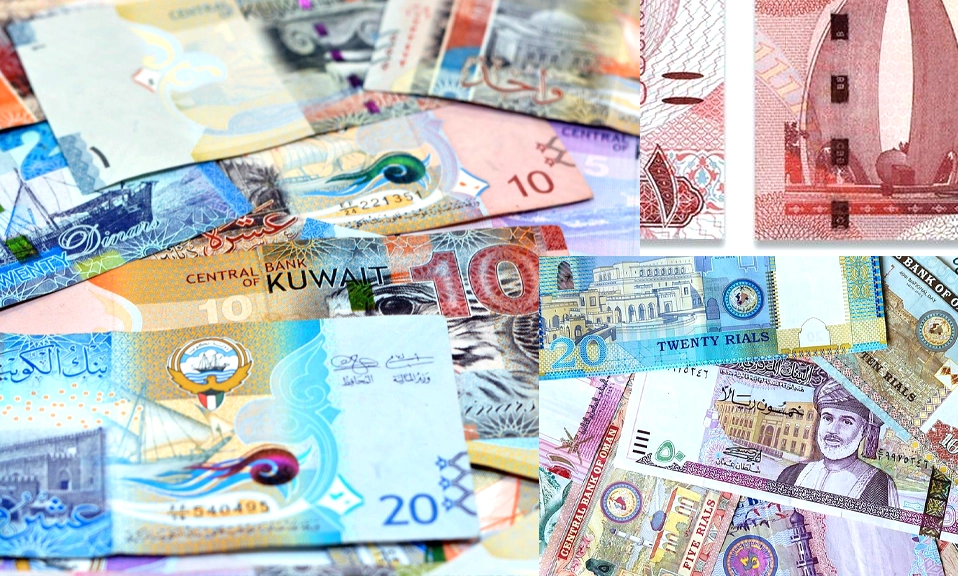
The world’s strongest currencies aren’t the ones you hear about most. The U.S. dollar is the world’s reserve currency and the most traded in global markets, yet it ranks 10th by face value against itself. The euro is the official currency of 20 nations, but it’s worth barely more than the dollar. The currencies that top the strength charts are, almost without exception, the currencies of small, resource-rich nations with tightly managed monetary policies—and their strength tells a very different story than the headlines suggest.
Here are the five strongest currencies in the world in 2026, ranked by exchange rate value against the U.S. dollar, and what actually drives their strength.
1. Kuwaiti Dinar (KWD) — ~USD 3.22
The undisputed champion.
The Kuwaiti dinar has held the title of the world’s highest-valued currency for decades, and 2026 is no exception. As of October 22, 2026, 1 KWD was worth approximately USD 3.22 . The SoFi analysis, using August 2026 data, put it at 1 KWD to 3.25 USD . The Tempo/Forbes Advisor ranking from May 2026 cited 1 KWD equaling USD 3.24 .
Why it’s strong: Kuwait is one of the world’s leading oil exporters, and the dinar is not pegged to the dollar alone but to an undisclosed basket of international currencies—a rare arrangement among Gulf states, most of which peg directly to the USD . The Central Bank of Kuwait maintains a disciplined monetary policy that limits depreciation, and the currency has historically been remarkably stable . The dinar is divided into 1,000 fils and circulates in denominations of 1/4, 1/2, 1, 5, 10, and 20 dinars .
The caveat: The dinar’s strength is largely a function of its exchange rate regime and oil wealth, not of global usage. It is rarely circulated outside Kuwait and plays no role in international reserves .
2. Bahraini Dinar (BHD) — ~USD 2.66
The Gulf’s second contender.
The Bahraini dinar ranks second globally, with 1 BHD worth approximately USD 2.66 as of October 2026 . Earlier 2026 figures put it at 2.65 USD (Axi) and 2.64 USD (Tempo) .
Why it’s strong: Bahrain is an island nation in the Persian Gulf with substantial oil and gas revenues, and its dinar has been pegged to the U.S. dollar since 1965 . The peg provides stability, while the country’s resource wealth supports the currency’s high nominal value. Like the Kuwaiti dinar, the Bahraini dinar is divided into 1,000 fils .
The caveat: Bahrain’s economy is smaller and less diversified than Kuwait’s, and its currency’s strength is almost entirely a product of the dollar peg and oil exports. It is not a significant reserve currency or trade currency outside the Gulf.
3. Omani Rial (OMR) — ~USD 2.60
The third Gulf heavyweight.
The Omani rial ranks third, with 1 OMR worth approximately USD 2.60 in October 2026 . Tempo’s May 2026 ranking also put it at 2.60 USD .
Why it’s strong: Oman is located at the eastern tip of the Arabian Peninsula and is a major exporter of oil and gas. The rial was introduced in the 1970s and is pegged to the U.S. dollar . It is divided into 1,000 baisa, a detail that reflects the Gulf region’s preference for high-value currency units .
The caveat: Like its neighbors, Oman’s currency strength is a function of its peg and its resource economy. The rial’s high face value does not translate into global influence—it is used almost exclusively within Oman.
4. Jordanian Dinar (JOD) — ~USD 1.41
The outlier.
The Jordanian dinar is the fourth-strongest currency in the world, with 1 JOD worth approximately USD 1.41 in October 2026 . Tempo’s May 2026 ranking put it at 1.41 USD as well .
Why it’s strong: Jordan is not a major oil exporter. It is largely landlocked, shares borders with Egypt, Syria, Iraq, and Saudi Arabia, and has grappled with sluggish economic growth and rising public debt . Its currency’s strength comes almost entirely from its peg to the U.S. dollar, which has been in place since 1950 . The peg provides stability and credibility, even as the underlying economy faces structural challenges.
The caveat: The Jordanian dinar is a case study in how a currency peg can create a high nominal value that masks underlying economic fragility. It is not a currency that reflects broad economic strength—it reflects a policy choice.
5. British Pound Sterling (GBP) — ~USD 1.34
The only major global currency on the list.
The British pound is the fifth-strongest currency in the world, with 1 GBP worth approximately USD 1.34 in October 2026 . Tempo’s May 2026 ranking put it at 1.35 USD , and Axi’s data showed 1.27 USD at an earlier point in the year .
Why it’s strong: Unlike the four currencies above, the pound is a floating currency and one of the world’s major reserve assets. Its strength reflects the size and sophistication of the UK economy, the depth of its financial markets, and its role in global trade and investment. The pound is the fourth-most-traded currency in the world and accounts for a significant share of global foreign exchange reserves.
The caveat: The pound’s strength is more “real” than the Gulf currencies’ in the sense that it is market-determined and reflects genuine global demand. But it is also more volatile—the pound has fluctuated significantly against the dollar in recent years, and its value is sensitive to UK political and economic developments.
What “Strongest” Actually Means—And What It Doesn’t
The rankings above measure nominal exchange rate value against the U.S. dollar. By that metric, the Kuwaiti dinar is the strongest currency in the world, followed by the Bahraini dinar and the Omani rial. But that metric tells you very little about a currency’s global importance.
The U.S. dollar, despite ranking 10th by face value against itself, remains the world’s most widely held and traded currency, accounting for about 56.70% of global foreign exchange reserves in Q2 2026 . The euro is the second-most-held reserve currency. The British pound, Japanese yen, and Chinese renminbi all play roles in global trade and finance that the Gulf currencies do not.
Currency strength and currency influence are two different things. The Kuwaiti dinar is strong because Kuwait is rich in oil and manages its exchange rate tightly. The U.S. dollar is influential because the entire architecture of global trade and finance is built around it. Confusing the two is a common mistake—and one that the rankings above, for all their precision, can inadvertently encourage.
The five strongest currencies
in the world in 2026 are the Kuwaiti dinar, the Bahraini dinar, the Omani rial, the Jordanian dinar, and the British pound. Four of the five are from the Middle East, and three of those four are pegged to the dollar or a basket of currencies. Their high face values reflect oil wealth, managed exchange rate regimes, and—in Jordan’s case—a policy choice that has outlasted the economic conditions that justified it.
The British pound is the outlier: a floating, globally traded currency whose strength reflects genuine market demand rather than a peg.
But the strongest currency in the world is not the most important one. The dollar, the euro, and the pound matter more to the global economy than the dinar ever will. Strength, in currency terms, is a number. Influence is a system. And the system still belongs to the majors.
What do you think—does a high exchange rate actually make a currency “strong,” or is global influence a better measure?