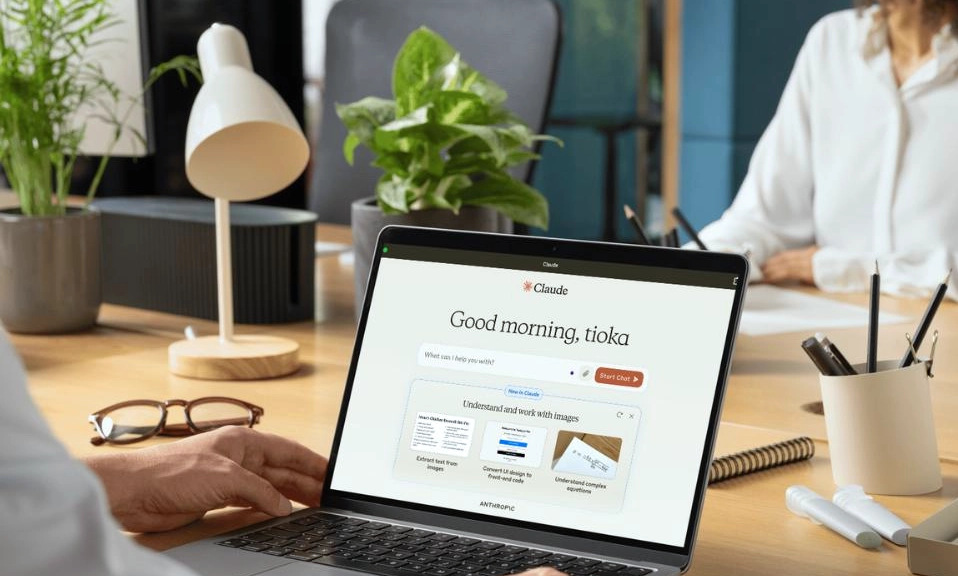
For as long as AI has been in the meeting room, it has played the same role: the quiet note-taker. It joins the call, records the conversation, produces a transcript, and summarizes the action items after everyone hangs up. Useful, but passive. Anthropic’s Claude Meetings, which entered beta on November 12, 2026, proposes something fundamentally different. Claude joins a Google Meet call as a visible participant and starts working while people are still talking—drafting the plan being discussed, building a timeline on a whiteboard, answering questions in the chat, and pulling figures from connected apps. The note-taker has been promoted to a colleague. The question is whether that is a genuine shift in how meetings work, or a clever feature that will struggle against the incumbents.
The short answer is that Claude Meetings is not a better note-taker. It is a different category of tool altogether. Traditional assistants like Otter, Fireflies, Zoom AI Companion, and Microsoft Copilot are built to document what happened. Claude Meetings is built to produce what should happen next. That distinction matters enormously—but it also comes with limitations that make it unsuitable for most teams today.
What Claude Meetings Actually Does
The product is best understood through its real-time capabilities. When Claude joins a call, it identifies itself and posts a notice in the meeting chat. It then follows the conversation and works in parallel: if the team is debating a launch plan, Claude can draft the plan as the discussion unfolds. If someone asks “what were last year’s figures?”, Claude can retrieve them from connected work apps and answer in the chat. It can map out a timeline on a whiteboard while the conversation continues, and after the call, the notes, action items, and materials it created are waiting in claude.ai.
This is not summarization. It is live co-creation. Anthropic’s own framing captures the shift: “The work that comes out of a meeting usually starts after everyone hangs up, but with this new feature, teams can turn discussions into actions in real time”.
The launch also includes adjacent tools that reinforce the same philosophy. Claude Whiteboards turns a discussion into a visual plan with timelines and deadlines, and it works inside Claude Meetings so the board builds as people talk. Claude Sheets generates working spreadsheets—with multiple tabs, formulas, formatting, and dropdowns—from a natural-language request, and Claude edits cells alongside the team while outlining each change. Claude Data connects to a data warehouse or CRM and produces dashboards, data stories, or narrated videos from a single question. Together, these tools position Claude as an execution layer that happens to sit inside a meeting, not a meeting tool that happens to do a little extra.
What Traditional Assistants Do—and Still Do Better
The incumbents are not standing still. Otter.ai, Fireflies.ai, Zoom AI Companion, Microsoft Copilot, Google Gemini, Fathom, and Granola have spent years refining the core meeting workflow, and they remain superior at several things that matter to most teams.
Platform coverage is the most obvious gap. Claude Meetings works only with Google Meet, and only for Team and Enterprise subscribers. It is not available on Pro, Max, or Ultra plans, and it does not support Zoom or Microsoft Teams—Anthropic says other platforms are “coming soon”. By contrast, Otter and Fireflies work across Zoom, Teams, and Meet; Zoom AI Companion and Copilot are native to their respective ecosystems; and Granola captures audio directly from your computer without a bot joining the call at all.
The bot problem is a genuine differentiator. Claude joins as a visible participant, which means it can be disruptive in client calls. On Team plans, outside guests are allowed by default, and Claude keeps taking notes but stops replying in the chat. On Enterprise plans, the default is internal-only: Claude stays out of any call with an outside invitee and leaves if one joins partway through. Anthropic counts another company’s notetaker bot as an outsider—so if a client’s Fireflies or Otter bot shows up, Claude exits. For consultants and sales teams whose calendars are mostly client calls, this is a significant limitation. Tools like Granola, which record without a visible bot, sidestep the problem entirely.
Privacy and compliance are unresolved. Claude Meetings is not available for organizations using zero data retention, HIPAA-ready configurations, or customer-managed encryption keys. The broader AI meeting assistant market has been grappling with exactly these concerns. Microsoft Teams began letting admins automatically block external AI bots from meetings in August 2026, and Otter.ai has faced a consolidated federal class-action lawsuit accusing its bot of recording conversations without participants’ consent. Claude’s visible-participant design and internal-only defaults are a thoughtful response to these concerns, but the restrictions on regulated configurations mean it is not yet a tool for healthcare, legal, or financial teams with strict compliance requirements.
The accountability gap is the deeper issue. AI can make a plan available sooner, but it cannot decide who owns it. As one enterprise analyst put it: “An AI can build the plan before a meeting ends. It cannot make five functions own the same decision”. The failure mode in complex organizations is rarely a missing meeting note—it is a shared action list with no named owner, no deadline for input, and no escalation path. Claude Meetings can accelerate documentation, but it does not solve the governance problem that makes meetings fail. That still requires humans to assign ownership, set deadlines, and define escalation triggers.
The Real Shift: From Documentation to Execution
The most important way to understand Claude Meetings is not as a competitor to Otter or Fireflies. It is as a signal of where the meeting assistant market is heading—and the incumbents are already moving in the same direction.
Zoom AI Companion now offers My Notes for Teams, Meet, and in-person conversations, agentic search across Salesforce, Workday, and ServiceNow, and an expanded MCP server for third-party AI tools. Microsoft Copilot’s Facilitator agent takes real-time, co-authored notes in Teams meetings and grounds answers in Outlook, SharePoint, and files. The market is shifting from “AI that summarizes a meeting” to “AI that turns the meeting into a trigger for downstream work”.
Claude Meetings is the most aggressive expression of that shift because it starts working during the meeting rather than after it. But the shift itself is industry-wide. The question is not whether AI will take over meetings. It is which parts of the meeting AI will own—and which parts must remain human.
Is AI Taking Over Meetings? A More Honest Framing
The phrase “taking over” implies replacement. What is actually happening is reallocation.
AI is taking over the documentation layer. Transcripts, summaries, action-item extraction, and the retrieval of context from past meetings are increasingly automated. This is unambiguously good. The hours spent writing up notes and chasing follow-ups are hours that can be spent on work that requires judgment.
AI is beginning to take over the production layer. Drafting plans, building timelines, generating spreadsheets, and assembling dashboards during the meeting itself is the new frontier. Claude Meetings is the most ambitious attempt to own this layer, and it is genuinely impressive in demos. But the limitations—platform lock-in, plan restrictions, bot etiquette, compliance exclusions—mean it is a tool for a specific kind of team: one that runs on Google Meet, pays for Claude Team or Enterprise, has internal-only calls, and does not operate under strict regulatory constraints.
AI is not taking over the judgment layer. Deciding what to build, who owns the outcome, which trade-off to accept, and when to escalate a blocked decision are still human responsibilities. The most valuable meeting is not the one with the best notes. It is the one where the right people make the right decision and leave with a shared understanding of who does what next. AI can accelerate the path from discussion to documentation. It cannot make the decision for you.
The teams that will benefit most from Claude Meetings are not the ones that want to replace their note-taker. They are the ones that already have clear ownership, defined decision rights, and a culture of follow-through—and want to compress the lag between talking and doing. For those teams, a live workspace that builds the plan while the conversation happens is a genuine advantage. For teams still struggling with basic accountability, no amount of real-time AI will fix the underlying problem.
A New Category, Not a Replacement
Claude Meetings is not a better Otter or a Fireflies killer. It is the first mainstream meeting tool designed around execution rather than documentation, and it is a clear signal that the meeting assistant market is splitting into two layers: the record-keepers and the work-doers.
Traditional assistants still win on platform coverage, bot-free capture, free tiers, and compliance flexibility. Claude Meetings wins on real-time production, integration with a broader workspace suite, and the ambition to turn a conversation into a working plan before the call ends. Neither is universally better. The right choice depends on whether your bottleneck is remembering what happened or starting the work that was discussed.
The deeper question—whether AI is taking over meetings—has a nuanced answer. AI is taking over the administrative overhead that made meetings feel like a tax on productivity. It is not taking over the human judgment that makes meetings worth having. The organizations that thrive in this new era will be the ones that use AI to eliminate the busywork while keeping the decisions, the ownership, and the accountability exactly where they belong: with people.