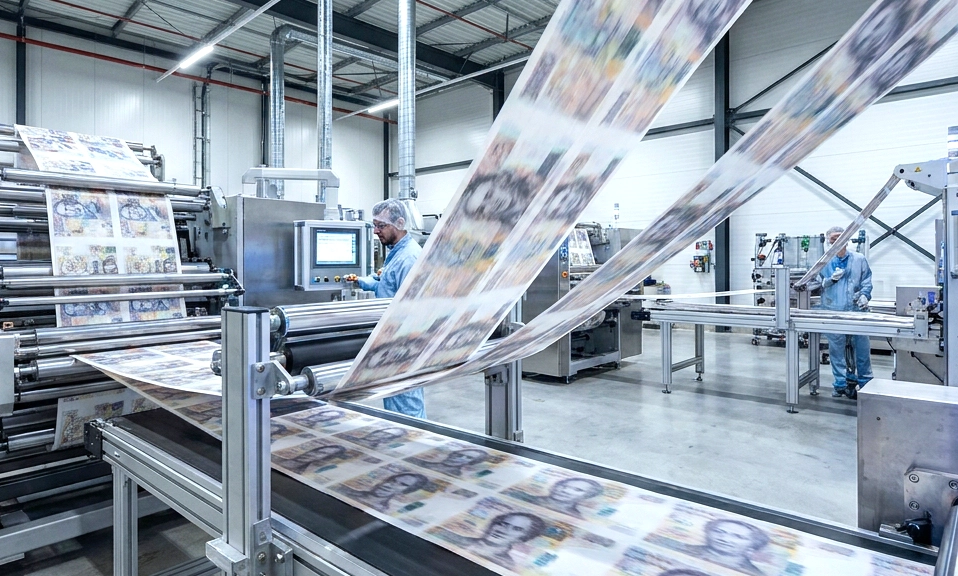
When we think of counterfeit money, we usually picture a lone criminal in a basement with a high-end color printer and a stack of paper.
But the reality of global counterfeiting is far more sinister. Throughout history, and continuing into the modern era, entire nations have been accused—or definitively caught—running state-sponsored counterfeiting operations.
For some, it’s a tool of economic warfare designed to destabilize an enemy. For others, it’s a desperate, illicit way to generate foreign currency and evade international sanctions. And for some, it’s a byproduct of total economic collapse, where criminal syndicates print fake money with the tacit tolerance of corrupt officials.
Here is a look at the countries most famously reported to print fake money, and the fascinating, shadowy world of geopolitical forgery.
🇰🇵 1. North Korea: The “Supernote” Factory
The Target: United States $100 Bills
The Motive: Evading sanctions and funding covert operations.
The Motive: Evading sanctions and funding covert operations.
If there is a gold medalist in modern state-sponsored counterfeiting, it is North Korea. For decades, the US Treasury and the United Nations have reported that the North Korean government, specifically through a clandestine organization known as Office 39, has operated sophisticated counterfeiting rings.
Their product? The infamous “Supernote.”
These are counterfeit US $100 bills of such astonishing quality that they reportedly use the same cotton-linen blend paper and intaglio printing techniques as the US Bureau of Engraving and Printing. They even replicate the microscopic security threads and color-shifting ink. At their peak in the 1990s and 2000s, Supernotes were so perfect that they occasionally passed through the Federal Reserve’s own screening systems.
Why do it? North Korea uses these operations to generate hard US currency to fund its nuclear program, purchase luxury goods for the elite, and bypass crippling international economic sanctions.
🇩🇪 2. Nazi Germany: Operation Bernhard (The Historical Blueprint)
The Target: British Pound Sterling
The Motive: Economic warfare and funding espionage.
The Motive: Economic warfare and funding espionage.
While not a modern example, no list is complete without the most ambitious counterfeiting operation in human history: Operation Bernhard.
During World War II, the Nazi SS launched a top-secret initiative to forge British banknotes. The goal was twofold: first, to flood the UK with fake money, triggering hyperinflation and collapsing the British economy. Second, to use the forged notes to pay spies and purchase black-market goods across Europe.
The operation was terrifyingly successful. Nazi forgers produced over 130 million fake banknotes, perfectly replicating the paper, watermarks, and serial numbers. The British economy didn’t collapse, but the sheer volume of fake notes caused long-term issues. In fact, so many Operation Bernhard notes survived the war that the Bank of England had to recall and redesign all of its banknotes in 1948 just to restore public trust.
🇨🇴 3. Colombia: The Cartel Mints
The Target: United States $20 and $100 Bills
The Motive: Laundering drug money and funding organized crime.
The Motive: Laundering drug money and funding organized crime.
While not necessarily a state-sponsored initiative, Colombia has historically been identified by the US Secret Service and the DEA as the global epicenter for high-quality counterfeit US currency.
Powerful drug cartels and organized crime syndicates in Colombia have invested millions into industrial-scale counterfeiting operations. Because these criminal empires already control vast smuggling routes into the United States, they have the perfect logistics network to smuggle the fake bills back north, mixing them with legitimate drug profits to “clean” their money.
The Gray Area: While the Colombian government actively fights these rings, the sheer power of the cartels, combined with localized corruption, has historically allowed these operations to thrive in remote jungles or urban underground facilities.
🇻🇪 4. Venezuela: The Hyperinflation Forgery Vacuum
The Target: Venezuelan Bolívar and US Dollars
The Motive: Survival in a collapsed economy.
The Motive: Survival in a collapsed economy.
Venezuela presents a different, more tragic type of counterfeiting. Following years of catastrophic hyperinflation, the official Venezuelan currency became practically worthless.
In this economic vacuum, massive criminal counterfeiting rings emerged. Initially, they printed fake US dollars to exploit the black market. But as the government printed higher and higher denominations of the Bolívar (including the absurd 1,000,000-bolívar note), counterfeiters began forging the official currency.
The Gray Area: In a country where the official money is losing value by the hour, the line between the government “printing money out of thin air” (which destroys its value) and criminals printing fake money becomes a bizarre, dystopian blur. Reports suggest that some corrupt border and banking officials have turned a blind eye to these operations in exchange for bribes.
🇷🇺 5. Russia: Allegations of Covert Economic Sabotage
The Target: Ukrainian Hryvnia and US Dollars
The Motive: Destabilization and funding proxy operations.
The Motive: Destabilization and funding proxy operations.
In recent years, Western intelligence agencies have repeatedly accused elements within the Russian state of tolerating or actively supporting the counterfeiting of Ukrainian currency.
The alleged strategy is classic economic warfare: flood a conflict zone with high-quality fake money to undermine public trust in the government, accelerate inflation, and create chaos. There have also been historical allegations (dating back to the Cold War and resurfacing in recent years) of Russian-linked syndicates producing high-grade counterfeit US dollars to fund covert intelligence operations abroad, though these are harder to definitively prove than North Korea’s operations.
🛡️ How the World Fights Back: The Cat-and-Mouse Game
The existence of state-sponsored counterfeiting has forced global financial institutions into a relentless, high-tech arms race.
- Next-Generation Security: Central banks have moved away from traditional paper. Countries like the UK, Canada, and Australia now use polymer (plastic) banknotes, which are incredibly difficult and expensive to forge. They feature transparent windows, holographic strips, and raised ink that is nearly impossible to replicate without industrial machinery.
- AI and Machine Learning: Modern bank-sorting machines and smartphone apps now use artificial intelligence to detect microscopic inconsistencies in ink reflectivity and paper density that the human eye cannot see.
- International Task Forces: The US Secret Service, Interpol, and Europol run joint operations specifically targeting transnational counterfeiting rings, freezing assets, and extraditing the “masterminds” behind the presses.
Money is Just a Shared Illusion
Counterfeiting, especially at the state level, exposes a fragile truth about our world: money only has value because we all agree it does.
When a nation-state prints fake money, they aren’t just committing a crime; they are weaponizing that shared illusion. They are trying to hack the global economic operating system for their own survival or gain.
As printing technology becomes more accessible and digital currencies rise, the methods of forgery will evolve. But the motive will remain the same: the pursuit of power, hidden in plain sight, one fake bill at a time.