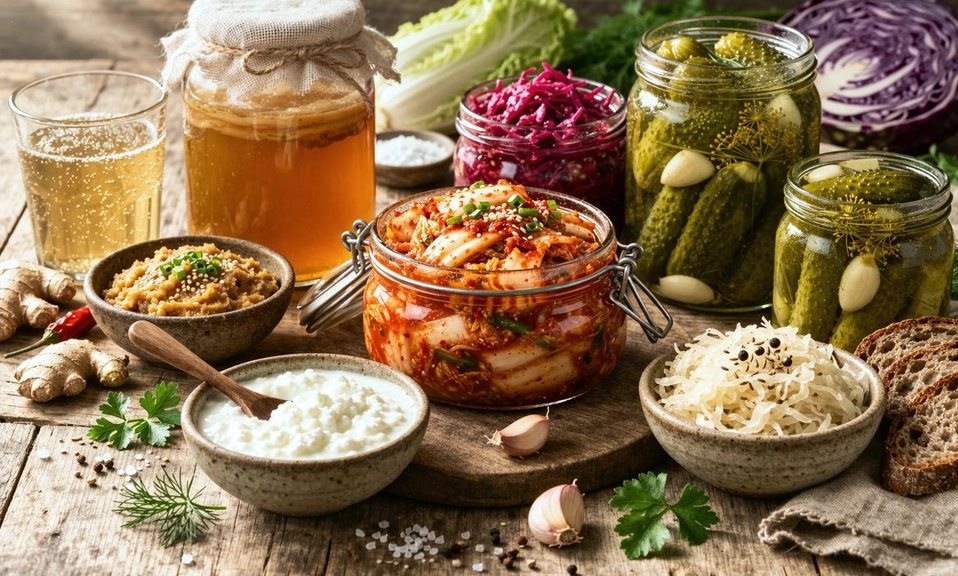
(The Science Behind the Trend)
Walk down the aisle of any modern grocery store, and you’ll see them: fizzy kombucha, tangy kefir, spicy kimchi, and rows of artisanal yogurts. Fermented foods have officially graduated from niche health-food stores to the mainstream dietary spotlight.
But with every massive wellness trend comes a wave of marketing hype. Are these sour, fizzy, pungent foods actually a magic bullet for your health, or are you just paying a premium for trendy bacteria?
The short answer: Yes, they are incredibly good for you—but with a few important caveats.
Ancient cultures didn’t ferment food just to make it tangy; they did it to preserve it and prevent illness. Today, modern science has caught up, revealing that this “controlled spoilage” is one of the most powerful, natural ways to support your gut microbiome, immune system, and overall longevity.
Let’s break down the science of fermentation, evaluate the “Big Three” (yogurt, kefir, and kimchi), and learn how to eat them without the dreaded post-fermentation bloat.
🧫 What Exactly Is Fermentation?
At its core, fermentation is a metabolic process where microorganisms (like bacteria and yeast) break down carbohydrates (sugars and starches) in an oxygen-free environment.
As these microbes feast, they produce byproducts like lactic acid, acetic acid, and alcohol. This acid is the magic ingredient: it acts as a natural preservative that stops harmful, disease-causing bacteria from growing, while giving fermented foods their signature tangy, complex flavour.
More importantly, this process creates probiotics (live, beneficial bacteria) and postbiotics (beneficial compounds like short-chain fatty acids that reduce inflammation and heal the gut lining).
🥛 1. Yogurt: The Classic Gut Guardian
The Science: Traditional yogurt is made by fermenting milk with two specific bacterial strains: Lactobacillus bulgaricus and Streptococcus thermophilus. These bacteria convert lactose (milk sugar) into lactic acid, making yogurt easier to digest for many people with mild lactose intolerance. The Benefits: It’s an excellent source of calcium, high-quality protein, and those two foundational probiotic strains, which support basic digestive regularity. The Catch: The supermarket yogurt aisle is a minefield. Many flavoured yogurts contain as much added sugar as a candy bar, which actively feeds bad gut bacteria and cancels out the probiotic benefits. Furthermore, some yogurts are heat-treated after fermentation, which kills the live cultures. The Fix: Always buy plain, unsweetened yogurt (Greek or regular) and look for the “Live and Active Cultures” seal. Sweeten it yourself at home with fresh berries and a drizzle of honey.
🥤 2. Kefir: The Probiotic Powerhouse
The Science: If yogurt is a bicycle, kefir is a freight train. Kefir is made using “kefir grains,” which are not actual grains, but gelatinous colonies of bacteria and yeast. While yogurt typically contains 2 to 3 bacterial strains, a single serving of kefir can contain 30 to 50 different strains of bacteria and yeast. The Benefits: This massive biodiversity makes kefar vastly superior for colonizing the gut. Studies show kefir has strong antimicrobial properties, can significantly improve lactose digestion, and may even help lower blood pressure and improve bone density. The Catch: It has a very distinct, sour, slightly fizzy taste that can be an acquired palate. It’s also dairy-based (though water kefir and coconut kefir alternatives exist). The Fix: Start with small amounts (a quarter cup) mixed into a smoothie with a banana or cocoa powder to mask the tang. Look for plain, refrigerated kefir, not the shelf-stable, sugary “kefir drinks” found in the juice aisle.
🌶️ 3. Kimchi: The Spicy Synbiotic Superstar
The Science: Kimchi is a traditional Korean side dish made from fermented napa cabbage, radishes, garlic, ginger, and gochugaru (Korean chili flakes). The fermentation is driven by Lactobacillus kimchii and other lactic acid bacteria. The Benefits: Kimchi is a “synbiotic” food, meaning it contains both probiotics (the live bugs from fermentation) and prebiotics (the fibre from the cabbage, garlic, and onions that feed the bugs). It’s also packed with vitamins A, B, and C, and the capsaicin from the chili flakes can give your metabolism a slight boost. The Catch: Kimchi is notoriously high in sodium due to the salt used in the brining process. It is also highly spiced, which can trigger heartburn or acid reflux in sensitive individuals. The Fix: Enjoy it as a condiment or side dish (1–2 tablespoons), not a main course. If you have hypertension, rinse it briefly or look for low-sodium versions, and balance it with potassium-rich foods like bananas or spinach.
⚠️ The Fine Print: Who Should Be Careful?
While fermented foods are fantastic for most people, they are not a one-size-fits-all solution.
- Histamine Intolerance: The fermentation process naturally produces histamine. If you suffer from histamine intolerance (symptoms include headaches, hives, or digestive issues after eating aged foods), fermented foods can trigger a flare-up.
- IBS and SIBO: For individuals with Irritable Bowel Syndrome (IBS) or Small Intestinal Bacterial Overgrowth (SIBO), introducing a massive dose of live bacteria and fermentable fibres (FODMAPs) can cause severe bloating, gas, and discomfort.
- The Pasteurization Trap: If a fermented food has been pasteurized (heated to kill bacteria for a longer shelf life), the probiotics are dead. Canned sauerkraut or shelf-stable pickles are often pasteurized. Always buy fermented foods from the refrigerated section.
🛠️ How to Eat Fermented Foods the Right Way
If you want to harness the power of fermentation without upsetting your stomach, follow these three rules:
- Start Low and Go Slow: Your gut microbiome needs time to adapt. Start with just 1 to 2 tablespoons of kimchi or a quarter-cup of kefir per day. Gradually increase the amount over a few weeks to allow your digestive system to adjust without bloating.
- Read the Ingredient List: The ingredient list should be short and recognizable. For sauerkraut or kimchi, it should just be cabbage, salt, water, and spices. If you see “vinegar” listed as the first ingredient, it’s a pickled product, not a fermented one (vinegar pickling does not create probiotics).
- Diversity is Key: Don’t just eat yogurt every day. Rotate between kefir, kimchi, sauerkraut, miso, and tempeh. Different foods contain different strains of bacteria, and a diverse diet leads to a diverse, resilient microbiome.
Ancient Wisdom, Modern Science
Fermented foods are not a magical cure-all, but they are one of the most scientifically validated, cost-effective ways to upgrade your health. They don’t just add beneficial bacteria to your gut; they provide the very compounds that reduce inflammation, train your immune system, and keep your digestion running smoothly.
You don’t need to drink a gallon of kombucha or eat a bowl of kimchi for breakfast to see the benefits. A small, consistent daily serving of high-quality, live-culture fermented foods is all it takes to give your gut the support it needs to thrive.