Picture this: Your friend texts you on a Friday night.
Option A: “Want to go see a movie?”
Option B: “Want to go see a film?”
Option B: “Want to go see a film?”
Even though both sentences are technically inviting you to do the exact same thing—sit in a dark room and watch moving pictures on a screen—your brain likely paints two very different pictures.
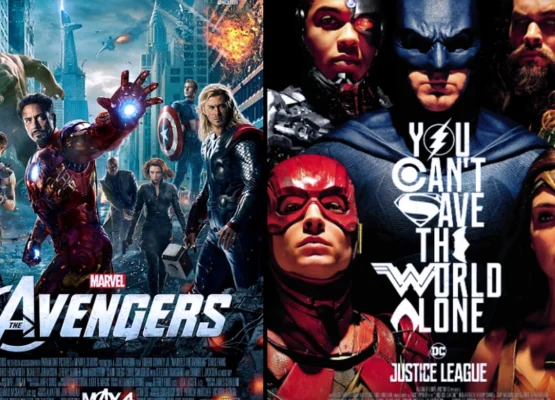
Option A sounds like popcorn, explosions, and a Marvel superhero. Option B sounds like black-and-white cinematography, subtitles, and a lingering, existential ending.
So, what’s the deal? Is there an actual, dictionary-defined difference between a “film” and a “movie,” or is it just a matter of cinematic snobbery?
The short answer is: Technically, no. Culturally, absolutely.
Let’s break down the history, the geography, and the subtle psychology behind the two most common words for the world’s favorite pastime.
🎞️ 1. The Etymology: Where the Words Come From
To understand the difference, we have to look at where the words originated.
- Film: This is the older, more technical term. It comes directly from the physical medium used to capture and project early cinema: a thin strip of celluloid film. In the early days of the medium, “film” was the literal material the art was made of.
- Movie: This is a distinctly American colloquialism that emerged in the early 20th century. It’s simply a shortened version of “moving picture” (or “moving picture show”).
So, historically, “film” was the scientific and industrial term, while “movie” was the casual, consumer-friendly slang.
🍿 2. The Connotation Gap: Popcorn vs. Pretension
Today, the physical celluloid strip is largely obsolete, replaced by digital files. Yet, the words have survived, carrying heavy cultural baggage. The difference now is almost entirely about connotation.
- A “Movie” is generally associated with mainstream, commercial entertainment. It implies mass appeal, big budgets, star power, and escapism. You watch a movie to be entertained. (e.g., “Summer movie,” “movie star,” “action movie”).
- A “Film” is generally associated with artistry, cinematic merit, and prestige. It implies a director’s distinct vision, thematic depth, and often (though not always) independent or foreign origins. You watch a film to be moved or challenged. (e.g., “Film festival,” “auteur filmmaker,” “foreign film”).
If you call Transformers a “masterpiece of modern film,” you will sound pretentious. If you call Schindler’s List a “fun summer movie,” you will sound deeply out of touch. The words set expectations.
🌍 3. The Regional Divide: The Atlantic Ocean of Semantics
Geography plays a massive role in this debate.
In the United States and Canada, “movie” is the dominant, everyday term. Americans go to the “movie theater” to see a “movie.” The word “film” is largely reserved for academic, artistic, or industry contexts (like “film school” or “the film industry”).
In the United Kingdom, Europe, and much of the Commonwealth, “film” is the standard, neutral term for all motion pictures, regardless of budget or genre. A British person is just as likely to say they are going to see the new superhero “film” as they are an arthouse drama. (Though, traditionally, they might also say they are going to “the pictures” or “the cinema”).
🎬 4. How the Industry Uses the Terms
If you work in Hollywood, the lines blur, but specific compound words are strictly enforced by tradition:
- You go to film school, not movie school.
- You are a filmmaker or a director, not a “moviemaker.”
- You study film theory and film criticism.
- However, you aspire to be a movie star, and you hope your project becomes a box-office hit (nobody says “box-office film”).
The industry uses “film” to denote the craft and the art form, and “movie” to denote the commercial product being sold to the public.
🧠 5. The Psychology of the Word Choice
Linguists point out that the word you choose reveals how you view the medium.
Using the word “film” elevates the medium to the level of literature or painting. It demands to be analyzed, discussed, and respected. Using the word “movie” embraces the medium as a populist, democratic form of entertainment meant to be consumed, enjoyed, and shared with a crowd.
Neither is wrong. In fact, the greatest cinematic achievements often manage to be both. The Godfather, Jaws, and The Dark Knight are undeniably “movies” that drive massive box-office revenue, but they are also studied and revered as masterful “films.”
It’s All Just Light on a Screen
At the end of the day, the difference between a film and a movie is entirely in the mind of the beholder.
A “movie” is a product you consume. A “film” is a piece of art you experience. But the beautiful truth of cinema is that a single project can be both at the same time.
So, the next time you’re debating what to watch on a Friday night, don’t worry too much about the semantics. Whether it’s a high-art foreign film or a goofy summer movie, the magic is the same: the lights go down, the screen lights up, and for two hours, you get to live somewhere else.