Europe has a winter problem. The sun disappears for months, the skies turn a stubborn shade of grey, and the idea of feeling warm again starts to feel like a distant memory. But just a four-hour flight from the UK, there is an island where the sun shines for six to seven hours a day even in the depths of December, the temperature hovers comfortably around 20°C, and the beaches stretch for miles without a single high-rise in sight. This is Fuerteventura—Europe’s most underrated winter-sun escape, and the island you should know about before everyone else does.
Fuerteventura is the second-largest of Spain’s Canary Islands, but it feels a world away from the bustling resorts of Tenerife and Gran Canaria. It is an island of vast, golden sands, volcanic landscapes, and a pace of life that is unhurried and unpretentious. It is also, according to recent research, the cheapest of the four main Canary Islands for a winter-sun family holiday, with an average seven-night stay priced at around £739 per person . EasyJet ranks it as one of the best-value winter-sun destinations, with typical temperatures of 20-22°C, 6-7 hours of sunshine per day, and just 10-15mm of rain across the winter months .
This is not a destination that relies on hype. It relies on the simple, reliable promise of winter warmth—and it delivers.
The Weather: Why Fuerteventura Works in Winter
The Canary Islands are often called the “Fortunate Islands” for good reason. Their location off the coast of North Africa gives them a subtropical climate that remains mild and sunny throughout the year, even when mainland Europe is shivering. Fuerteventura, the most easterly of the archipelago, is also one of the driest and sunniest.
In December, the month when the UK is at its darkest, Fuerteventura enjoys sunrises around 7:30am and sunsets around 6pm, with daytime temperatures that regularly reach the 20s Celsius . In January, the island’s coldest month, average highs are around 20°C (68°F) and lows rarely dip below 15°C (59°F) . By February, the mercury is climbing again, with temperatures hovering around 21°C .
This is not sunbathing-in-the-middle-of-the-day heat, though you will see people on the beach in swimwear. It is comfortable, gentle warmth—the kind that allows you to hike, cycle, explore, and sit outside for lunch without breaking a sweat. It is the kind of weather that makes winter feel like a distant memory.
The Beaches: Miles of Gold and White
Fuerteventura’s beaches are its crowning glory. The island boasts over 150 beaches, and 11 of them have been awarded Blue Flag status for their water quality and facilities . In winter, when the summer crowds have gone, these beaches become vast, quiet expanses where you can walk for miles without seeing another soul.
Sotavento Beach: The Nine-Kilometre Stretch
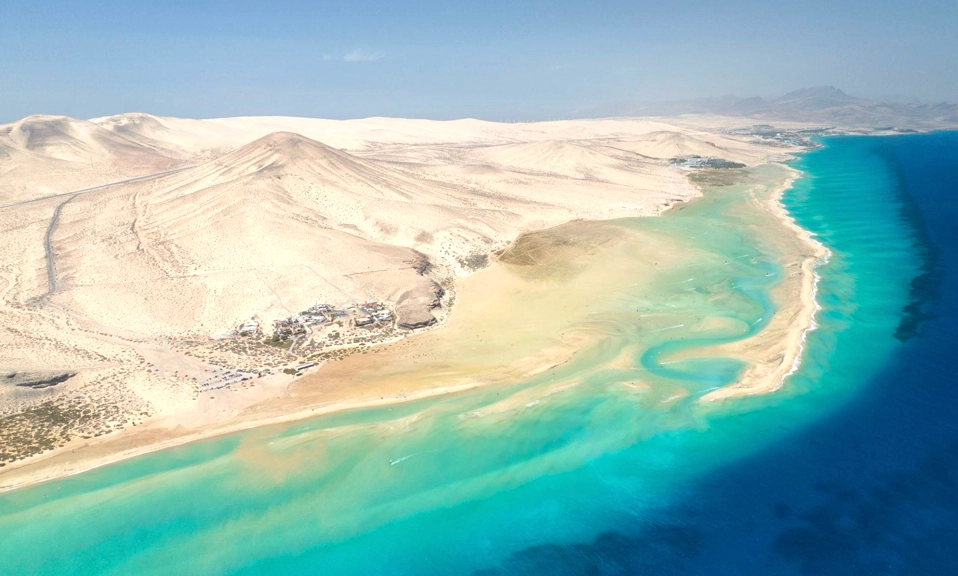
On the southern tip of the island, Sotavento is a 9km-long stretch of bright white shore with shallow, aquamarine water . It is one of the most spectacular beaches in the Canaries, and in winter it is blissfully uncrowded. The shallow lagoons that form at low tide are perfect for families with young children, and the steady trade winds make it a world-class destination for windsurfing and kitesurfing. The beach is also one of the best places on the island to watch the sunset, which paints the sky in shades of orange and pink .
El Cotillo: Lagoons and Rock Pools
In the north, El Cotillo offers something different: a huge beach with its own set of lagoon pools, created by volcanic rock formations that shelter the shoreline from the Atlantic waves . These shallow pools are ideal for swimming, snorkelling, and exploring—children will love searching for crabs and small fish in the clear water. The nearby village of El Cotillo is a charming, low-key fishing town with excellent seafood restaurants and a relaxed, bohemian atmosphere.
Corralejo Dunes: The Mini Sahara
Just south of the northern resort town of Corralejo lies one of the island’s most iconic landscapes: the Corralejo Sand Dunes, a vast expanse of shifting golden sand that feels like a piece of the Sahara transported to the Atlantic . The dunes are a protected natural park, and walking through them—with the blue sea glinting in the distance—is an experience that stays with you. The beaches here, including Flag Beach, are popular with windsurfers and kitesurfers, but there is plenty of space for those who simply want to soak up the sun.
Cofete: The Wild, Remote Beauty
For those willing to venture off the beaten track, Cofete is a beach unlike any other. Located on the remote Jandía peninsula, accessible via a bumpy dirt road, it is a place of raw, untamed scenery—wild, windswept, and often empty . The waves here are powerful, and swimming is not recommended, but the sheer scale and beauty of the landscape make the journey worthwhile. Nearby, the mysterious Villa Winter—a German-built mansion with a dark and contested history—adds a layer of intrigue to the area.
Popcorn Beach: A Geological Curiosity
One of Fuerteventura’s most unusual beaches is El Hierro, known as “Popcorn Beach” because of the fossilised coral that washes up on its shore, looking exactly like scattered pieces of popcorn . It is a quirky, photogenic spot that has become a favourite on social media. Visitors are asked to look and touch but not to take the coral home—it is a protected natural phenomenon.
What to Do: Beyond the Beach
Fuerteventura is not just a place to lie on the sand. It is an island with a rich history, a dramatic interior, and a growing reputation as a destination for active travellers.
Explore the Old Capital: Betancuria
In the island’s mountainous interior lies Betancuria, the original capital of Fuerteventura and one of the oldest towns in the Canaries. Founded in the 15th century, it is a place of whitewashed houses, cobblestone streets, and historic churches, including the Santa María Cathedral . The town is surrounded by dramatic volcanic scenery, and it is a perfect stop for a leisurely lunch of traditional Canarian cuisine.
Hike the Volcanic Landscapes
Fuerteventura’s volcanic origins are visible everywhere, from the black lava fields to the red and ochre mountains. The island offers excellent hiking, from gentle coastal walks to more challenging routes through the interior. One of the most rewarding hikes is the Barranco de las Peñitas, a gorge that winds between striking rock formations and leads to a small, whitewashed chapel . For a more panoramic challenge, the climb to Pico de la Zarza, the island’s highest peak, offers breathtaking views across the Jandía peninsula .
Visit Lobos Island
Just a 15-minute ferry ride from Corralejo lies Lobos Island, a car-free nature reserve that feels like a secret paradise . The island is small—you can walk around it in a few hours—and it boasts pristine beaches, crystal-clear waters, and a dormant volcano. It is a perfect day trip for those who want to escape even the mild bustle of Fuerteventura’s resorts. Return ferry tickets cost around €15-18 for adults, and in the winter months, the visitor permit system is often not enforced .
Watersports: Windsurfing and Kitesurfing
Fuerteventura’s steady trade winds and long, sandy beaches have made it one of Europe’s premier destinations for windsurfing and kitesurfing. The World Cup is held annually in Sotavento, and there are schools and rental centres throughout the island for beginners and experienced riders alike . Even if you are not a watersports enthusiast, watching the colourful sails dancing across the water is a spectacle in itself.
The Food: Canarian Flavours at Honest Prices
Fuerteventura’s culinary scene is a reflection of its history and geography: fresh seafood, simple ingredients, and a blend of Spanish, African, and Latin American influences. It is also remarkably affordable, especially compared to other European winter-sun destinations.
What to Eat
Papas arrugadas—small, wrinkled potatoes boiled in heavily salted water and served with mojo sauces (one red, one green)—are the island’s signature dish, and they are cheap, filling, and delicious . Fresh fish is everywhere, from grilled vieja (parrotfish) to cherne (wreckfish), best enjoyed at harbour restaurants in Corralejo, Morro Jable, or El Cotillo . Queso Majorero, the island’s protected goat’s cheese, is a must-try, whether grilled, fried, or simply served with bread and honey .
For a more contemporary take on Canarian cuisine, restaurants like El Pellizco in Morro Jable offer creative dishes such as black ceviche spheres and Majorero sushi . La Bodega de Jandia, a cosy tapas restaurant on a cobbled street in Morro Jable, is a favourite for its seasonal small plates and local wines .
Where to Eat
Casa Manolo in Corralejo is a family-run restaurant known for its traditional Canarian and Mediterranean cuisine, with fresh seafood and an excellent pulpo a la gallega (Galician-style octopus) . El Callao in El Cotillo specialises in seafood and local dishes, with a focus on fresh fish and Majorero cheese . And La Bodeguita in Corralejo is a cosy tapas bar perfect for an informal lunch or dinner with friends .
The Cost
Eating out in Fuerteventura is generally good value. A menu del día at lunchtime in a local restaurant typically costs between €12 and €20, and a meal for four at a mid-range restaurant averages around £50 . The island’s lower local tax (IGIC) compared to mainland Spain’s VAT helps keep everyday costs down .
Where to Stay: Choosing the Right Resort
Fuerteventura’s resorts each have a distinct character, and choosing the right one depends on what kind of winter escape you are looking for.
Caleta de Fuste: The Family Favourite
Caleta de Fuste, on the east coast close to the airport, is the island’s most accessible and family-friendly resort. It was recently ranked the least-visited resort in the Canary Islands by Which? readers, welcoming around a fifth as many visitors as the busiest destination . Its main attraction is a sheltered, golden-sand bay with calm waters, perfect for children, and its southerly aspect maximises the winter sunshine . It is a purpose-built resort, but its low-rise design and relaxed atmosphere make it an easy and comfortable base for first-time visitors and families .
Corralejo: The Lively Northern Hub
Corralejo, in the north, is the island’s liveliest resort, with a working harbour, a wide choice of restaurants and bars, and easy access to the Corralejo Dunes and the ferry to Lobos Island . It is a good choice for travellers who want a bit more buzz and a wider range of dining options, while still being able to escape to quieter beaches nearby.
Costa Calma: Space and Serenity
Costa Calma, on the south coast, is the place to go if you prioritise space and tranquillity. It offers long, golden beaches and access to the Sotavento lagoon, and it tends to be quieter in the evenings than Corralejo or Caleta de Fuste . It is ideal for couples, walkers, and anyone who wants to switch off completely.
Morro Jable: The Southern Escape
Morro Jable, at the southern tip of the island, is a delightful, family-oriented resort town with a spectacular beach that seems to run for miles . It has a more traditional, Canarian feel than some of the purpose-built resorts, and it is a great base for exploring the wild Jandía peninsula and the remote Cofete beach.
The Practicalities: Getting There and Getting Around
Flights
Fuerteventura is well served by direct flights from across the UK and Europe. Jet2 operates year-round flights from Belfast, Newcastle, Glasgow, and Liverpool, with prices starting from as little as £31-32 . Flight times are around four hours from the UK, making it an easy short-haul escape . The airport is compact and straightforward, and it is located close to Caleta de Fuste and Puerto del Rosario, the island’s capital .
Getting Around
Hiring a car is strongly recommended if you want to explore the island beyond your resort. Fuerteventura is easy to drive, with quiet roads, clear signage, and breathtaking views at every turn . Buses connect the main resorts, but they are infrequent and not well suited to exploring the more remote beaches and villages. Taxis are available but can be expensive for longer journeys.
Budget
Fuerteventura is one of the more affordable Canary Islands. An average seven-night stay costs around £739 per person, and an all-inclusive stay averages around £850 per person . Daily budgets for mid-range travellers typically fall between €50 and €130, depending on accommodation, dining, and activities . The island’s lower tax rate and the abundance of free outdoor attractions—beaches, hikes, and natural parks—help keep costs down.
Fuerteventura is not
the flashiest winter-sun destination in Europe. It does not have the nightlife of Tenerife, the volcanic drama of Lanzarote, or the cultural cachet of Seville. What it does have is something simpler and, for many travellers, more valuable: reliable winter sunshine, miles of uncrowded golden beaches, a relaxed and unpretentious atmosphere, and a price point that makes a winter escape genuinely accessible.
The island is changing—Fodor’s placed it on its 2026 “No-Go” list amid concerns about overtourism across the Canaries, and local authorities are introducing access fees and new regulations to manage visitor numbers . But in winter, Fuerteventura remains a quieter, more spacious alternative to its busier neighbours. The crowds are thinner, the beaches are emptier, and the sun is just as warm.
If you are looking for a winter-sun escape that does not require a long-haul flight, a second mortgage, or a tolerance for crowds, Fuerteventura should be on your list. It is Europe’s most underrated winter destination—and it is waiting.