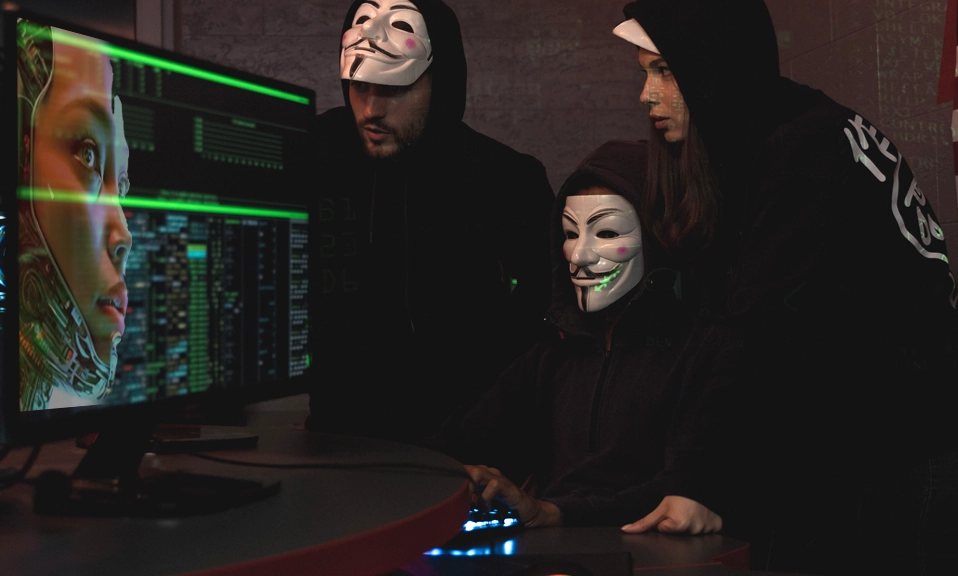
For decades, the image of a cyberattack was a lone hacker in a dark room, furiously typing lines of code to breach a firewall.
That image is dead.
Today, the cyber battlefield is a high-speed, automated warzone where algorithms fight algorithms at the speed of light. As we move deeper into the 2020s, we are witnessing the rise of autonomous, next-generation AI defense systems—let’s call this archetype “GPT-5.6-Cyber”—pitted against increasingly sophisticated, AI-empowered human hackers.
The question on every CISO’s mind is no longer if an attack will happen, but who wins the next war: the autonomous AI defender, or the human hacker?
The answer is more complex than a simple victory for either side. Here is a breakdown of the new cyber arms race, and what it means for the future of digital security.
🛡️ The Defender: The Rise of the Autonomous AI Shield
Next-generation cyber AI is no longer just a passive tool that flags suspicious logins. It is an active, autonomous agent. Systems modeled after advanced agentic AI are changing the rules of defense:
- Predictive Threat Hunting: Instead of waiting for a signature match, AI analyzes billions of data points to predict where a zero-day vulnerability might exist before it’s ever exploited.
- Self-Healing Networks: When an anomaly is detected, the AI doesn’t just alert a human; it autonomously isolates the compromised node, rewrites firewall rules, and patches the vulnerability in milliseconds.
- Infinite Scale: A human security team can monitor hundreds of endpoints. AI can monitor millions simultaneously, without fatigue, bias, or the need for sleep.
In a battle of speed, scale, and pattern recognition, the AI defender has an insurmountable advantage.
⚔️ The Attacker: The AI-Empowered Hacker
But hackers are not standing still. The myth that AI only benefits the “good guys” is dangerously false. Adversaries are weaponizing the exact same technologies:
- Automated Vulnerability Discovery: Hackers use AI to continuously “fuzz” and scan corporate networks, finding obscure software flaws faster than any human penetration tester could.
- Polymorphic Malware: AI can now write malware that constantly rewrites its own code to change its digital signature, allowing it to slip past traditional antivirus defenses undetected.
- Hyper-Personalized Social Engineering: Gone are the days of obvious, poorly spelled phishing emails. Hackers use AI to scrape an executive’s social media, clone their voice, and generate a perfectly tailored, deeply convincing spear-phishing attack in seconds.
In a battle of adaptation and deception, the human hacker, augmented by AI, is more dangerous than ever.
⚖️ The Clash: Speed vs. Creativity
So, who wins? It comes down to a fundamental mismatch in strengths: Machine Speed vs. Human Creativity.
AI is exceptionally good at defending against known patterns and executing predefined rules at lightning speed. If a hacker uses a standard exploit, the AI will crush it instantly.
However, human hackers excel at lateral thinking. They don’t always attack the technology; they attack the logic of the system or the humans running it.
For example, an AI might perfectly secure a company’s server infrastructure, but a human hacker might realize that the company’s third-party HVAC vendor has a weak password, or they might trick an employee into physically plugging a malicious USB drive into a secure terminal. AI struggles to defend against novel, highly creative, or deeply contextual social engineering attacks that fall outside its training data.
🧠 The Deciding Factor: The Human Layer
The ultimate vulnerability in any system is, and always will be, the human being.
An autonomous AI can block a million network attacks, but it cannot stop a tired, stressed employee from approving a fraudulent wire transfer because the request appeared to come from the CEO (via an AI-generated deepfake).
Conversely, the ultimate strength is also human. The organizations that will “win” this war are those that adopt a Centaur Model (Human + AI).
- AI handles the noise: It filters out 99.9% of the automated attacks, patches routine vulnerabilities, and monitors the network 24/7.
- Humans handle the nuance: Cybersecurity analysts are freed from alert fatigue, allowing them to focus on high-level strategy, investigating complex anomalies, and out-thinking the human adversaries behind the attacks.
It’s Not a War, It’s an Arms Race
Will “GPT-5.6-Cyber” definitively defeat hackers? No.
Cybersecurity is not a game of chess with a checkmate. It is a perpetual, evolving arms race. Every time defenders build a higher wall, attackers invent a new ladder.
The “winner” of the next cyber war won’t be the side with the most advanced AI. The winner will be the organization that best integrates AI with human expertise, fosters a culture of security awareness, and maintains robust, offline backups.
AI is the most powerful shield we have ever forged. But a shield is only as strong as the person holding it.
Do you think AI will eventually outsmart human hackers, or will human creativity always find a way around the machine? And how is your organization preparing for the age of autonomous cyber warfare?