You type a prompt into a chat box. You hit enter. A second later, a brilliantly written essay, a photorealistic image, or a complex block of code appears on your screen.
It feels weightless. It feels like magic. It feels like it exists purely in the “cloud.”
But there is no cloud. There is only someone else’s computer. And right now, those computers are running so hot, and drawing so much power, that they are fundamentally altering the global energy landscape.
As we navigate 2026, the artificial intelligence boom has hit a very physical, very earthly wall. The digital miracles we are enjoying come with a brutal, thermodynamic price tag. AI is no longer just a software revolution; it is a heavy industry. And it is hungry.
Here is the unvarnished truth about why AI is consuming so much electricity, the real-world collateral damage it’s causing, and how Big Tech is scrambling to fix it.
📊 The Staggering Scale of the Problem
To understand the scale, we have to look at the numbers.
According to the International Energy Agency (IEA), the electricity consumption of global data centers is projected to double between 2024 and 2026, reaching over 1,000 terawatt-hours (TWh). To put that in perspective: AI data centers are now consuming as much electricity as entire mid-sized nations like Japan or Germany.
And it’s not just about the total volume; it’s about the density.
- A traditional server rack in a standard data center draws about 7 to 10 kilowatts (kW) of power.
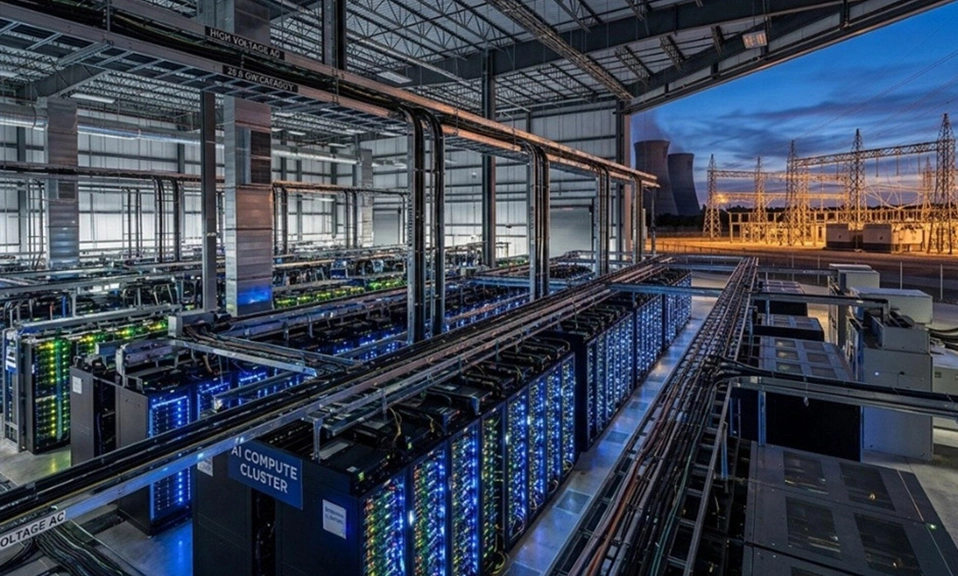
- A modern AI server rack, packed with advanced GPUs, can draw 100 to 120 kW.
We are trying to pack 1950s electrical infrastructure with 2020s supercomputers. The grid is literally buckling under the weight.
🧠 Why is AI Such a Massive Power Hog?
It’s easy to assume that AI is just “thinking,” and therefore shouldn’t take much power. But the architecture of AI is fundamentally different from traditional computing. Here is why it drains the grid:
1. The GPU Hunger
Traditional computers use CPUs (Central Processing Units), which are highly efficient at doing one thing at a time. AI uses GPUs (Graphics Processing Units), which are designed to do thousands of calculations simultaneously. Modern AI chips (like Nvidia’s latest Blackwell and Rubin architectures) are engineering marvels, but they are essentially controlled nuclear reactors. A single high-end AI chip can draw 1,000 watts of power on its own. When you cluster 100,000 of them together in a warehouse, the power draw is astronomical.
2. The “Inference” Bleed
There is a massive misconception that training the AI is the biggest energy hog. Training a massive model takes a colossal amount of power, but it’s a one-time event. The real crisis is inference—the act of the AI actually answering your prompts. Every time you ask an AI to summarize an email, it has to activate billions of parameters, moving massive amounts of data through its memory. With billions of users querying AI models daily, the continuous, 24/7 energy required for inference dwarfs the energy used to train the models in the first place.
3. The Cooling Tax
This is the hidden cost nobody talks about. When a GPU is crunching neural networks, it generates immense heat. If it gets too hot, it melts or throttles. You can’t just blow room-temperature air on a 100kW server rack. Modern AI data centers require massive, energy-intensive liquid cooling systems. The pumps, chillers, and fans required to keep these facilities at optimal temperatures can account for 30% to 40% of the data center’s total electricity bill.
🌍 The Real-World Collateral Damage
This isn’t just a problem for electrical engineers. The AI power grab is having real-world consequences for everyday people.
1. Grid Strain and Blackouts In data center hubs like Northern Virginia, Texas, and Ireland, the local power grids are reaching their absolute limits. In some regions, the influx of data centers has caused localized power shortages, delayed the retirement of dirty coal plants (because they are needed to keep the servers running), and driven up electricity prices for everyday residents.
2. The Water Crisis Because air cooling isn’t enough, many data centers use evaporative cooling towers, which require millions of gallons of water. In drought-stricken areas, AI data centers are literally drinking the local water supply. In 2026, several municipalities have had to halt data center construction because the facilities were competing with local agriculture and residents for drinking water.
3. The Carbon Reality If a data center is powered by a local grid that relies on coal or natural gas, the carbon footprint of AI is massive. Every time an AI generates an image or writes a paragraph, it is indirectly burning fossil fuels.
⚡ How Big Tech is Panicking (And Trying to Fix It)
The tech giants know they have a problem. If they can’t get power, they can’t grow. Here is how they are trying to solve the energy crisis:
1. The Nuclear Renaissance This is the most drastic move. Tech companies are no longer just buying renewable energy credits; they are securing physical, baseload power. Microsoft recently signed a deal to restart the Three Mile Island nuclear plant. Amazon, Google, and others are pouring billions into Small Modular Reactors (SMRs)—next-generation, mini nuclear plants designed to sit directly next to data centers and provide 24/7, zero-carbon juice.
2. Custom Silicon (ASICs) Nvidia makes incredible, but power-hungry, general-purpose AI chips. To fix this, companies like Google (with its TPUs) and Amazon (with Trainium) are designing custom AI chips (ASICs) that are hyper-optimized for specific AI tasks. These custom chips can perform the same calculations using a fraction of the electricity.
3. “Sparse” Models and Algorithmic Efficiency Software engineers are realizing that brute force isn’t the only way. They are developing “Mixture of Experts” (MoE) models. Instead of activating the entire massive AI “brain” for a simple question like “What is the capital of France?”, the AI routes the query to a tiny, specialized sub-network. This drastically cuts down the compute—and therefore the electricity—needed for everyday tasks.
AI is Physical
We need to fundamentally change how we talk about Artificial Intelligence.
For the last five years, we’ve treated AI like a digital abstraction—a cloud of code that costs nothing to run. But AI is bound by the laws of physics. It is made of silicon, copper, water, and electricity. It is heavy industry disguised as software.
As AI becomes more integrated into our daily lives—powering our phones, our cars, our hospitals, and our power grids—its energy footprint will only grow. The challenge of the late 2020s and 2030s won’t just be making AI smarter. It will be making AI sustainable.
The next great breakthrough in artificial intelligence might not be a new algorithm. It might be a new way to generate, cool, and distribute the massive amounts of power required to keep the digital lights on.