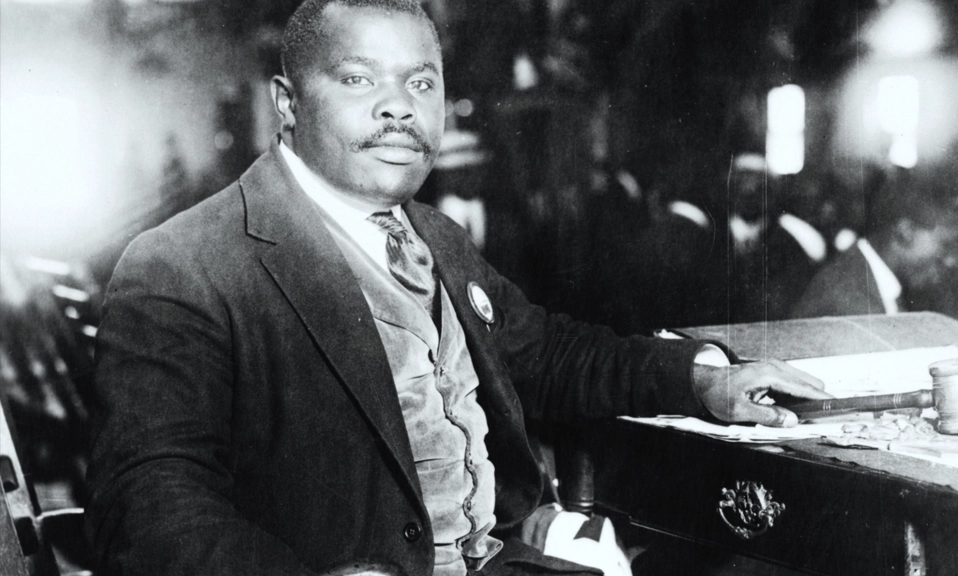
Before Malcolm X. Before Martin Luther King Jr. Before “Black Power” was a slogan on a t-shirt — there was a short, stocky Jamaican man in a military uniform with a plumed hat, standing on a stage in Harlem, telling 6 million Black people around the world: You are not a minority. You are a nation.
His name was Marcus Mosiah Garvey.
And for 7 years, he led the largest Black mass movement in history.
The Boy From St. Ann’s Bay
Marcus Garvey was born on August 17, 1887, in St. Ann’s Bay, Jamaica. He grew up witnessing the pervasive effects of colonialism and racial discrimination, which fueled his desire to advocate for the rights and unification of people of African descent globally.
He was the youngest of 11 children, only 2 of whom survived childhood. His father was a stonemason who had a huge library. His mother was a domestic worker. He left school at 14 to work as a printer’s apprentice — and mastered the skills of this trade, which he was able to use later in his career as a publicist and propagandist in the cause of black nationalism.
He traveled — to Costa Rica, Panama, London — and everywhere he saw the same thing: Black people building the world, but owning none of it.
In 1914, at age 27, he and a group of friends founded the Universal Negro Improvement and Conservation Association and African Communities League, usually called the Universal Negro Improvement Association (UNIA), which sought, among other things, to build in Africa a black-governed nation.
The motto was simple: “One God! One Aim! One Destiny!”
What Garvey Actually Built
Marcus Garvey was a charismatic black leader who organized the first important American black nationalist movement (1919-26), based in New York City’s Harlem.
When he moved to Harlem in 1916, Harlem was becoming the Black capital of America. Garvey didn’t preach integration. He preached something far more radical at the time:
1. Black is Beautiful — 50 years before James Brown said it
Garvey told Black people to stop straightening their hair to look white, to stop bleaching their skin, to be proud of being Black. He created Black dolls, Black beauty standards, Black history lessons. In his newspaper Negro World (circulation 200,000), he printed African history that schools never taught.
2. Economic Power — Build Your Own
Garvey is best known for founding the Universal Negro Improvement Association (UNIA) in 1914, which aimed to unite all people of African descent and promote their social, economic, and political empowerment.
He launched:
- The Black Star Line (1919) — a Black-owned shipping company to trade between Africa, the Caribbean, and America. Part of the Back-to-Africa movement, which promoted the return of the African diaspora to their ancestral lands.
- Negro Factories Corporation — grocery stores, restaurants, laundries, a hotel
- His idea: Don’t beg white businesses to hire you. Build Black businesses that hire Black people.
At its peak, UNIA had over 6 million members in 40 countries — from Harlem to Havana, from London to Lagos. No Black organization before or since has been that big.
3. Political Power — Africa for Africans
His philosophy centered around Black nationalism and self-reliance, inspiring movements across the African diaspora.
Garvey said: Europe carved up Africa in 1884 in Berlin without a single African in the room. We need to take it back. He planned to build a Black-governed nation in Africa — Liberia was his target.
It was called Garveyism — Black nationalism and Pan-Africanism. His ideas came to be known as Garveyism.
Why They Tried to Destroy Him
Powerful people were terrified.
- The US government (J. Edgar Hoover’s first target was Garvey) infiltrated UNIA.
- W.E.B. Du Bois and the NAACP hated him — they called him a demagogue and wanted integration, not separatism. Du Bois called him “a little, fat Black man, ugly.”
- In 1923, Garvey was convicted of mail fraud for selling stock in the Black Star Line that had an empty ship on the brochure. Historians today say the trial was politically motivated and weak. He served 2 years in prison.
- In 1927, President Coolidge commuted his sentence and deported him back to Jamaica.
After he was convicted of mail fraud and deported back to Jamaica, he continued his work for Black repatriation to Africa.
He died in London on June 10, 1940, at 52, alone, nearly broke, after suffering a stroke — after reading a false obituary of himself in the newspaper.
The Voice That Never Died
Marcus Garvey was a prominent political leader, orator, and visionary who played a pivotal role in the early 20th-century movement for Black self-determination and empowerment.
He never saw his dream happen. But everyone who came after him carried his words:
Kwame Nkrumah, who led Ghana to independence in 1957 — Africa’s first free nation — said his inspiration was Garvey’s book Philosophy and Opinions. Nkrumah put a Black Star on Ghana’s flag for Garvey’s Black Star Line.
Malcolm X — his parents were Garveyites. Malcolm said: “Every time you see another Black man, you should say ‘There goes a Black king.’ That came from Garvey.”
Martin Luther King Jr. said Garvey “was the first man of color to lead and develop a mass movement.”
Rastafari movement — Garvey’s 1920 prophecy: “Look to Africa where a Black king shall be crowned, he shall be the Redeemer” — led to the crowning of Haile Selassie and the birth of Rastafari.
Bob Marley, Burning Spear, Marcus Garvey’s grandson is in the roots of reggae, hip-hop, Black is Beautiful.
His philosophy was simple and still radical:
“A people without the knowledge of their past history, origin and culture is like a tree without roots.”
“If you have no confidence in self, you are twice defeated in the race of life.”
“Up, you mighty race, accomplish what you will!”
Why We Need Garvey Now
Garvey advanced a Pan-African philosophy which inspired a global mass movement.
In 2026, when Black businesses still get 1% of venture capital, when African history is still a footnote in schools, when young Black kids still straighten hair to fit in — Garvey’s message is not history. It’s instruction.
He didn’t want Black people to beg for a seat at the table.
He wanted us to build our own table, in our own house, on our own continent — and invite the world to come to us.
One God. One Aim. One Destiny.
That voice still echoes from St. Ann’s Bay to Harlem to Johannesburg.
Are we listening?