It happens to almost everyone at least once.
You turn the key (or press the start button) on a cold Monday morning, and instead of the engine roaring to life, you hear… nothing. Or worse, a pathetic click-click-click sound that means your battery is dead. You’re stranded, late for work, and now facing a tow truck bill or a frantic call to a friend with jumper cables.
Car battery failure is one of the most common—and most preventable—vehicle problems. The average car battery lasts 3 to 5 years, but with proper maintenance, you can maximize its lifespan and avoid the dreaded “dead battery” scenario.
The secret? Understanding what kills batteries and taking simple, proactive steps to keep yours healthy. Here is your complete guide to car battery maintenance in 2026.
🔋 Why Do Car Batteries Die?
Before we get to the solutions, you need to understand the problem. Car batteries (lead-acid, AGM, or EFB) don’t just “wear out” from age alone. They die from specific stressors:
- Sulfation: When a battery sits partially discharged for too long, lead sulfate crystals form on the plates. Over time, these crystals harden and permanently reduce the battery’s capacity.
- Deep Discharging: Draining a car battery below 50% capacity (like leaving the lights on or running accessories with the engine off) causes internal damage that accumulates over time.
- Heat: While cold weather reveals weak batteries, heat actually damages them. High under-hood temperatures accelerate internal corrosion and fluid evaporation.
- Vibration: Loose hold-down clamps allow the battery to vibrate, which can damage internal plates and connections.
- Parasitic Drain: Modern cars have computers, alarms, and modules that draw small amounts of power even when the car is off. If the battery is weak or the car sits for weeks, this “vampire drain” can kill it.
Understanding these killers is the first step to preventing them.
⚠️ 7 Warning Signs Your Battery Is Failing
Batteries rarely die without warning. If you catch these signs early, you can replace the battery on your terms—not at 2 AM in a parking lot.
1. Slow Engine Crank The engine turns over sluggishly when you start the car. It sounds like it’s struggling. This is the classic sign of a weakening battery.
2. Dim Headlights and Electrical Issues Your headlights look dim when idling but brighten when you rev the engine. Power windows move slower than usual. The infotainment screen flickers. These are signs the battery can’t maintain proper voltage.
3. The Battery Warning Light A battery-shaped icon on your dashboard means the charging system isn’t working properly. It could be the battery, the alternator, or the wiring. Get it checked immediately.
4. Corroded or Damaged Terminals Open the hood and look at the battery posts. If you see white, blue, or green crusty buildup (corrosion), it’s blocking the electrical connection. This can cause starting problems and accelerate battery failure.
5. Swollen or Bloated Battery Case If the battery case looks distorted, swollen, or cracked, it’s been exposed to excessive heat or overcharging. This is a safety hazard—replace it immediately.
6. Old Age If your battery is more than 4 years old, it’s living on borrowed time. Most batteries fail between years 3 and 5. Don’t wait for it to die—test it proactively.
7. Frequent Need for Jump Starts If you’re jump-starting your car more than once a week, the battery is failing. A healthy battery should hold a charge for days, even with normal parasitic drain.
🛠️ 10 Ways to Extend Your Battery’s Life
Now for the good news: you can dramatically extend your battery’s lifespan with these simple maintenance habits.
1. Take Longer Drives (The “Silent Killer” Fix)
The Problem: Short trips (under 10 minutes) are the number one killer of modern car batteries. The alternator needs time to recharge the battery after the massive power draw of starting the engine. If you only drive short distances, the battery never fully recharges, leading to chronic undercharging and sulfation. The Fix: Once a week, take your car for a 20-30 minute drive at highway speeds. This gives the alternator time to fully recharge the battery. If you mostly do short trips, consider a smart battery maintainer (more on this below).
2. Keep the Terminals Clean and Tight
The Problem: Corrosion increases electrical resistance, making it harder for the battery to deliver power. Loose connections cause voltage drops and can damage the battery. The Fix: Every 6 months, check the battery terminals. If you see corrosion, disconnect the cables (negative first, then positive), clean the posts and clamps with a wire brush and a baking soda/water solution, rinse with clean water, and reconnect tightly (positive first, then negative). Apply a thin coat of petroleum jelly or dedicated terminal grease to prevent future corrosion.
3. Secure the Battery Hold-Down
The Problem: A loose battery vibrates while driving, which can damage internal plates and shorten its life. The Fix: Make sure the battery hold-down clamp is tight. The battery shouldn’t move when you try to wiggle it by hand.
4. Turn Off Accessories When the Engine Is Off
The Problem: Running the radio, lights, or phone chargers with the engine off drains the battery. Deep discharges (below 50%) permanently damage lead-acid batteries. The Fix: Never use accessories with the engine off for extended periods. If you need to wait in your car with the AC or radio on, start the engine periodically to let the alternator recharge the battery.
5. Park in the Shade (Or a Garage)
The Problem: Extreme heat accelerates battery degradation. Under-hood temperatures can exceed 140°F (60°C) on hot days, cooking the battery from the inside. The Fix: Park in a garage or shaded area whenever possible. If you must park in the sun, consider a reflective windshield sunshade to reduce overall cabin and under-hood heat.
6. Test Your Battery Regularly
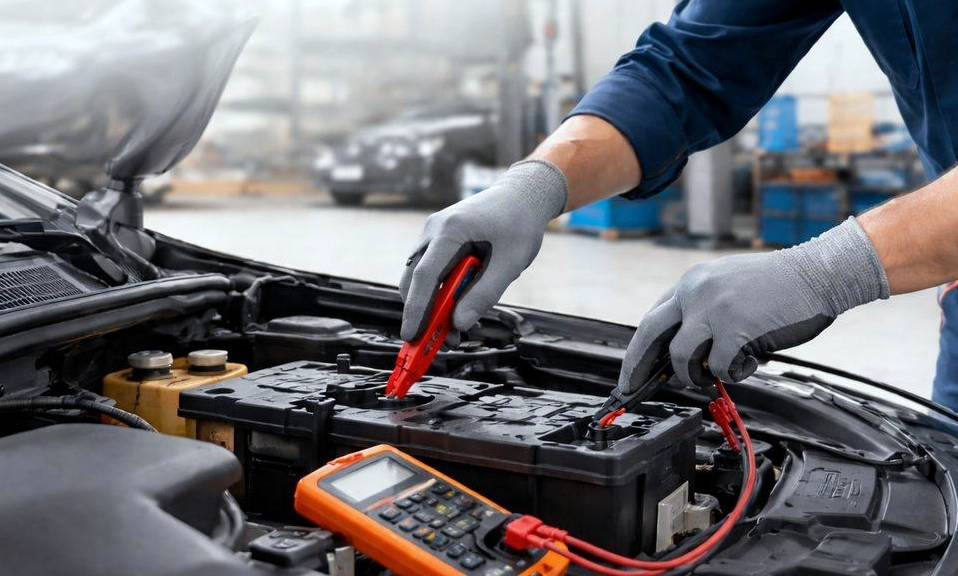
The Problem: You can’t tell a battery’s health just by looking at it. A battery can show 12.6 volts but still fail under load. The Fix: Test your battery every 6 months using a digital multimeter or a dedicated battery tester. A healthy, fully charged battery should read 12.6 volts or higher at rest. If it’s below 12.4 volts, it needs charging. If it’s below 12.0 volts, it’s likely failing. Many auto parts stores will test your battery for free.
7. Use a Smart Battery Maintainer (For Infrequently Driven Cars)
The Problem: If your car sits for weeks at a time (weekend cars, classic cars, or vehicles during winter), parasitic drain will kill the battery. The Fix: Invest in a smart battery maintainer (like a Battery Tender or CTEK). These devices plug into a wall outlet and automatically keep the battery at optimal charge without overcharging. They’re inexpensive ($30-$60) and can add years to a battery’s life.
8. Check the Charging System
The Problem: A failing alternator won’t properly charge the battery, leading to chronic undercharging and premature failure. The Fix: If your battery keeps dying, have the alternator tested. With the engine running, the voltage at the battery should be 13.5 to 14.5 volts. If it’s lower, the alternator isn’t charging properly.
9. Avoid “Deep Cycle” Drain
The Problem: Standard car batteries are designed for short, high-power bursts (starting the engine), not for deep, sustained discharge. The Fix: Don’t use your car battery to power accessories for hours. If you need sustained power (camping, tailgating), use a dedicated deep-cycle battery or a portable power station.
10. Replace with the Right Battery
The Problem: Installing the wrong battery type or size can cause charging issues and premature failure. The Fix: When replacing your battery, match the group size, cold cranking amps (CCA), and reserve capacity (RC) specified in your owner’s manual. For modern cars with start-stop systems, you must use an AGM or EFB battery—standard lead-acid batteries won’t work and will fail quickly.
🔌 Modern Battery Tech: What You Need to Know in 2026
Not all car batteries are the same. Modern vehicles use different battery technologies, and you need to know which one you have:
1. Standard Flooded Lead-Acid
- Found in: Older vehicles, basic models
- Maintenance: Check fluid levels (if accessible), keep terminals clean
- Lifespan: 3-5 years
2. AGM (Absorbent Glass Mat)
- Found in: Most modern vehicles, especially those with start-stop systems
- Maintenance: Sealed and maintenance-free, but sensitive to overcharging
- Lifespan: 4-7 years
- Note: Requires a specific AGM-compatible charger/maintainer
3. EFB (Enhanced Flooded Battery)
- Found in: Some start-stop vehicles (mostly European)
- Maintenance: Sealed, maintenance-free
- Lifespan: 3-5 years
4. Lithium-Ion (12V)
- Found in: Some high-end vehicles and EVs (for the 12V accessory system)
- Maintenance: Maintenance-free, but requires specific charging profiles
- Lifespan: 8-10+ years
- Note: Extremely lightweight and long-lasting, but expensive to replace
Critical Rule: Never mix battery types. If your car came with an AGM battery, you must replace it with an AGM battery. Installing a standard lead-acid battery in an AGM-required vehicle will result in rapid failure.
🚗 Special Considerations for EV and Hybrid Owners
If you drive an electric or hybrid vehicle, you might think battery maintenance doesn’t apply to you. Wrong.
EVs and hybrids have two batteries:
- The high-voltage traction battery (powers the electric motor)
- The 12V accessory battery (powers lights, computers, infotainment)
The 12V battery in an EV is often smaller and works harder than in a gas car, because it powers all the electronics and keeps the high-voltage system “ready.” If the 12V dies, the car won’t start—even if the main battery is full.
EV Battery Tips:
- Drive the car regularly. EVs that sit for weeks can kill the 12V battery due to constant computer activity.
- If you’re going on vacation, ask someone to start the car and drive it for 20 minutes every week, or use a 12V maintainer.
- Pay attention to 12V battery warnings—they’re just as critical as in a gas car.
🆘 What to Do When Your Battery Dies
Despite your best efforts, batteries do fail. Here’s how to handle it:
If You Have Jumper Cables:
- Park the donor car close to yours (but not touching).
- Connect the red clamp to the dead battery’s positive (+) terminal.
- Connect the other red clamp to the donor battery’s positive (+) terminal.
- Connect the black clamp to the donor battery’s negative (-) terminal.
- Connect the other black clamp to an unpainted metal surface on your car’s engine block (not the dead battery’s negative terminal—this reduces spark risk).
- Start the donor car and let it run for 2-3 minutes.
- Start your car. If it doesn’t start, wait 5 more minutes and try again.
- Once started, remove the cables in reverse order.
- Drive for at least 20 minutes to recharge the battery.
If You Don’t Have Jumper Cables:
- Call roadside assistance
- Use a portable lithium jump starter (highly recommended to keep in your trunk)
- Call a friend or tow service
After a Jump Start: If your battery dies again within a day or two, it’s failing and needs replacement. A single jump start doesn’t fix a bad battery—it just gets you going temporarily.
💰 When to Replace vs. Recharge
Recharge the battery if:
- It died due to leaving lights on or a single deep discharge
- It’s less than 3 years old
- It tests at 12.4 volts or higher after recharging
Replace the battery if:
- It’s more than 4-5 years old
- It won’t hold a charge after being fully recharged
- It fails a load test at an auto parts store
- It’s physically damaged, swollen, or leaking
- You’re frequently jump-starting the car
Prevention Is Cheaper Than Replacement
A quality car battery costs $150-$300. A tow truck costs $100-$200. Missing work or an appointment because you’re stranded? Priceless in the worst way.
Car battery maintenance isn’t complicated. Take longer drives, keep the terminals clean, test it twice a year, and replace it proactively before it fails. These simple habits will save you time, money, and the frustration of being stranded.
Your battery is trying to start your car every single day. The least you can do is make sure it’s ready for the job.