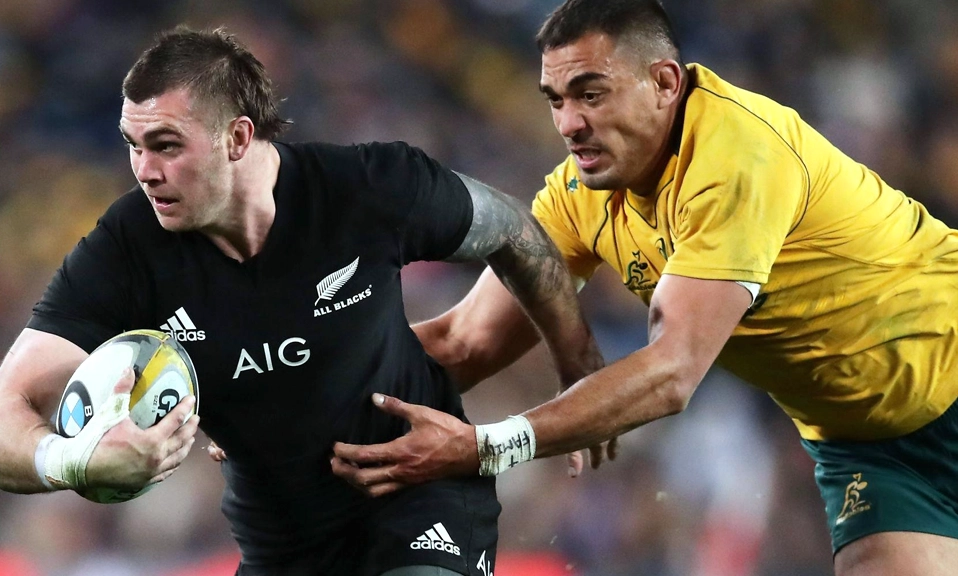
The All Blacks arrive in the Northern Hemisphere with a squad that is equal parts wounded and reinforced. A 36-man group has landed in the UK for a punishing three-week gauntlet against Scotland, Wales, and England, followed by the inaugural Nations Championship Finals weekend in London. But the headline is not the schedule. It is the casualty list.
New Zealand will be without Ardie Savea, their most influential forward, who suffered a dislocated shoulder during the September tour of South Africa and required surgery. They are also missing Caleb Clarke (shoulder), Tyrel Lomax (neck), Samisoni Taukei’aho (calf), Shannon Frizell (knee), Luke Jacobson (elbow), and Ruben Love (ankle). That is seven frontline players unavailable for the most demanding stretch of the international calendar.
And yet, the mood around this squad is not one of crisis. It is one of opportunity.
The Fixtures: A Three-Week Gauntlet
The All Blacks open against Scotland at Murrayfield on November 7 (November 8 NZDT), before facing Wales at the Principality Stadium on November 14, and England at Allianz Stadium, Twickenham, on November 21. The results count towards the Nations Championship standings, with the Finals Weekend at Twickenham from November 27 to 29 determining the ultimate winner.
It is a schedule that leaves no room for a slow start. Scotland, Wales, and England are all proud rugby nations with passionate home crowds, as head coach Dave Rennie acknowledged. “Playing Scotland, Wales and England on consecutive weekends is a tough assignment,” he said. “We will embrace the challenge and the opportunity to build on our Bledisloe Cup performances”.
The Injury Crisis: Seven Absent, Twelve Return
The absences are significant, but they are not the whole story. Rennie has recalled twelve players who missed various Tests earlier in 2026, including Richie Mo’unga, Jordie Barrett, Anton Lienert-Brown, Quinn Tupaea, Ethan Blackadder, and Asafo Aumua. Mo’unga, in particular, is a pivotal return. The Crusaders fly-half missed the Bledisloe Cup with a calf injury, and while he is unlikely to feature against Scotland, he is targeting a return against Wales.
The depth of the squad has drawn praise from former All Blacks. Stephen Donald, the 2011 World Cup winner, noted that the current selection dilemma is a sign of genuine progress. “There are some high quality rugby players that aren’t in the squad and that just shows that Dave Rennie has quickly built some depth,” he said. “All of a sudden, there are some unlucky players when in the past it’s been a case of, ‘geez, there’s so many All Blacks going away on an end-of-year tour'”.
That depth will be tested immediately. Damian McKenzie is expected to start at first five-eighth against Scotland, with Beauden Barrett alongside him in the playmaking axis. Codie Taylor, the veteran hooker, will captain the side in Savea’s absence.
The Form Guide: Bledisloe Bounce, Springbok Scar
The All Blacks enter the tour on the back of a 50-19 demolition of Australia at Eden Park, a victory that retained the Bledisloe Cup for a 24th consecutive year and extended their unbeaten run at the Auckland venue to 54 Tests. The performance was emphatic: five tries in the second half, a dominant scrum, and a defensive effort that snuffed out the Wallabies’ few dangerous assaults.
But that win came after a 3-1 series defeat to South Africa—the back-to-back world champions—and a three-match losing streak that had raised questions about the All Blacks’ ability to compete with the very best. The Bledisloe Cup restored confidence, but the Springboks series exposed vulnerabilities that Scotland, Wales, and England will be studying closely.
The Rivalries: Scotland’s Drought, Wales’s Nadir, England’s Edge
Each of the three Tests carries its own history and its own threat.
Scotland have not beaten New Zealand in 33 attempts, a drought that stretches back to 1905. But they came close last year, and they will be buoyed by the occasion of Finn Russell’s 100th cap at Murrayfield. Scotland head coach Gregor Townsend has been forced into late squad changes, with Elliot Millar Mills and Jamie Ritchie ruled out, but the Scots will believe this is their best chance in a generation.
Wales are ranked 11th in the world and have not beaten the All Blacks since 1953. They are rank outsiders, but the Principality Stadium remains one of the most hostile environments in rugby, and Wales will be desperate to avoid a fourth consecutive defeat to New Zealand.
England is the fixture with the most edge. England beat the All Blacks 33-19 at Twickenham in 2025, a historic win that ended a 13-year wait for a home victory over New Zealand. The rivalry has been reignited by Henry Pollock, the young England flanker whose defiant face-off with the haka during that match divided fans and added a new layer of needle to the fixture. Sir John Kirwan has said the All Blacks “owe England one,” and the return fixture at Twickenham is already being billed as the tour’s defining Test.
Can They Survive?
The honest answer is: yes, but not without difficulty.
The injury list is severe enough to tilt the odds. Losing Savea, Clarke, and Lomax from the forward pack and backline respectively removes physicality, pace, and set-piece solidity. The absences of Taukei’aho and Frizell further deplete the tight five. Against a Scottish side desperate to end a century of hurt, a Welsh side playing for pride at home, and an English side that has already proven it can beat New Zealand, there is no margin for error.
But the returning players matter. Mo’unga and Jordie Barrett are world-class operators. The depth Rennie has built over the past year is real, as Donald observed. And the Bledisloe Cup performance was a reminder of what this team can do when it clicks.
The Nations Championship format adds another layer of stakes. The Finals Weekend at Twickenham will pair the top Northern Hemisphere teams against the top Southern Hemisphere teams, with the Grand Final on November 29 deciding the best team on the planet. A strong November could set up a shot at the inaugural title. A poor one could leave the All Blacks watching the final from the stands.
The All Blacks do not need
to win all three Tests to “survive” November. But they need to emerge with their confidence intact, their depth validated, and their World Cup preparations on track. The injury crisis is real, but so is the talent. The rivalries are heating up, and the schedule is unforgiving. Whether this squad has the resilience to withstand it will tell us as much about the 2027 Rugby World Cup as any result on the scoreboard.
Scotland, Wales, and England are all waiting. The All Blacks arrive wounded, but not broken. The next three weeks will reveal which is the truer description.