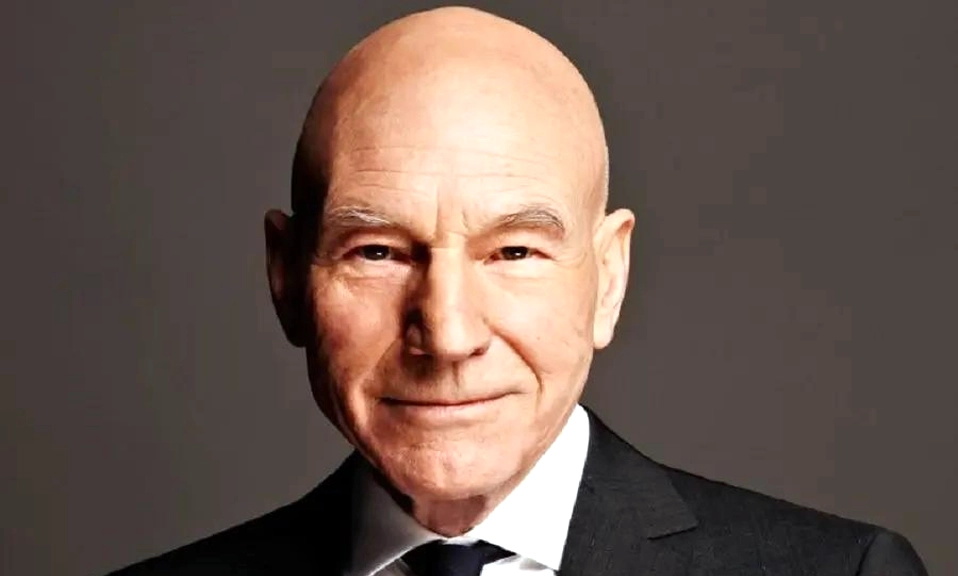
He was the classically trained Shakespearean actor who became a starship captain. He was the bald Englishman with the sonorous voice who made Jean-Luc Picard the moral conscience of the galaxy. He was a knight, a Chancellor, a lifelong Huddersfield Town fan, and — to generations of fans — the embodiment of everything Star Trek aspired to be.
Sir Patrick Stewart died on Wednesday, October 28, 2026, at his home in Los Angeles. He was 86. His spokesperson confirmed that he passed away “in the loving care of his beloved wife Sunny,” following “a brief and poignant journey with Alzheimer’s Disease and Lewy Body Dementia”. He was surrounded by family and friends, “surrounded by live music, prayer, tears, laughter, and the kind of profound emotion that only he could inspire”.
The news was announced on his Instagram account on Thursday, October 29. Tributes poured in from across the world — from William Shatner, from Hugh Jackman, from George Takei, from Marvel Studios, from the countless fans whose lives he touched.
Here is the story of a life that spanned seven decades, two galaxies, and one unforgettable captain.
From Mirfield to the Royal Shakespeare Company
Patrick Stewart was born on July 13, 1940, in Mirfield, West Yorkshire, into a working-class household with limited financial means. His father, Alfred, was an army sergeant major; his mother, Gladys, was a textile worker and weaver. Stewart later revealed that his father subjected his mother to repeated bouts of violence — a trauma that shaped him and, in later years, fueled his activism on behalf of domestic violence survivors.
He found his escape in acting. He joined an amateur drama group at 12, memorized Shakespeare as a teenager, and left school at 15. In 1966, he joined the Royal Shakespeare Company, beginning an association that would last 27 years and establish him as one of Britain’s leading classical actors.
For two decades before Star Trek, Stewart was a mainstay of the RSC. He appeared in more than two dozen productions, including Uncle Vanya, A Midsummer Night’s Dream, The Merchant of Venice, and the title role in Titus Andronicus. He won two Laurence Olivier Awards for his stage work, and in 2008 he was nominated for a Tony for his Macbeth on Broadway.
He was, by every measure, a serious actor. Star Trek was not supposed to change that.
The Captain: Jean-Luc Picard
In 1987, Stewart was cast as Captain Jean-Luc Picard in Star Trek: The Next Generation. He played the role for seven seasons, from 1987 to 1994, and then in four feature films: Generations, First Contact, Insurrection, and Nemesis. He returned to the character in 2020 for Star Trek: Picard, a three-season series that gave Picard a final, poignant chapter.
The role transformed his life. “It is hard to emphasize enough how dramatically Stewart’s life changed when he began his run on Star Trek: The Next Generation,” Variety noted. He became a global star, a sex symbol (unexpectedly), and — more importantly — the face of a character who represented the best of what humanity could be.
Picard was not a conventional action hero. He was a diplomat, a philosopher, a man who quoted Shakespeare and believed in the rule of law. He was the captain who would rather negotiate than fight, who saw the potential for good in everyone, who stood for the idea that exploration and understanding were nobler than conquest.
“Captain Picard stood for the best of us,” William Shatner wrote in his tribute. “And so did the man who played him”.
George Takei put it simply: “As Captain Jean-Luc Picard, Patrick Stewart took the starship Enterprise to places it had never gone before. He inspired a whole next generation of star-gazers who looked longingly ahead to a brighter future for all humanity”.
The Professor: Charles Xavier
If Picard made Stewart a star, Professor Charles Xavier made him a superhero.
Stewart stepped into the role in 2000’s X-Men, playing the telepathic founder of the X-Men opposite his good friend Ian McKellen as Magneto. He reprised the role in X2, The Last Stand, X-Men Origins: Wolverine, The Wolverine, Days of Future Past, and Logan.
He returned to the role one final time in Avengers: Doomsday, scheduled for release in December 2026. Marvel Studios confirmed that the film will mark Stewart’s final on-screen appearance. In their tribute, they wrote: “Sir Patrick brought Professor Charles Xavier to life with extraordinary grace, intelligence, and humanity, defining the character for generations of fans”.
He was, as Marvel put it, “a singular talent, a generous collaborator, and a true gentleman”.
The Accolades: A Career of Distinction
Stewart’s career was not defined by a single role. It was defined by range.
He was nominated for four Emmy Awards and three Golden Globe Awards. He won a Grammy for Best Spoken Word Album for Children. He won three Olivier Awards and was nominated for a Tony. He received a star on the Hollywood Walk of Fame and was knighted by Queen Elizabeth II in 2009 (he had been made an OBE in 2001).
He was a Chancellor of the University of Huddersfield, a motor sport enthusiast, and a lifelong Huddersfield Town fan. He was a philanthropist and activist, working on behalf of human rights, survivors of domestic violence, global refugees, veterans’ mental health services, and animal welfare — particularly his “cherished foster pitties”.
He was, in every sense, more than an actor.
The Tributes: “Godspeed, Captain”
The reaction to Stewart’s death was immediate and global.
William Shatner, his predecessor as captain of the Enterprise, wrote: “What a heartbreaking week it has been. Sir Patrick Stewart was a friend, a colleague, and a magnificent actor. From the stage to the bridge of the Enterprise, he brought intelligence, grace, and a deep sense of humanity to everything he did. Captain Picard stood for the best of us, and so did the man who played him. I was filled with affection and admiration for him and his work”.
George Takei wrote: “Fans across the world mourn the passing of a true and irreplaceable legend… Rest in the heavens, Captain”.
Wil Wheaton, who played Wesley Crusher, posted a photograph of the two with the caption: “Godspeed, Captain”.
Jonathan Frakes, who played Commander Riker, posted a photo of Stewart with the caption: “Rest in peace, my friend”.
Akiva Goldsman, co-creator of Star Trek: Picard, said: “Patrick was not only a true lion of the profession, he was the rarest of alchemists, one who could literally turn the written word into flesh and blood… His Captain Jean-Luc Picard permanently expanded the universe of Star Trek without measure”.
Marina Sirtis, who played Counselor Troi, reacted to his passing in a tribute video that left fans in tears.
And Hugh Jackman, his X-Men co-star, was among the first to pay tribute.
The Legacy: More Than a Captain
Patrick Stewart was not Jean-Luc Picard. But he understood what Picard meant to people, and he carried that responsibility with grace.
He encouraged young artists to “be brave” and trust others. “If I had done that earlier in my life, maybe everything would have changed,” he told Esquire. He was generous with his time, thoughtful in his interviews, and unfailingly kind to the fans who approached him.
He was a classically trained actor who never lost his love for the stage. He was a working-class boy from Yorkshire who became a knight of the realm. He was a man who survived a difficult childhood and used his platform to speak for those who couldn’t speak for themselves.
And he was, for seven seasons and four films and three streaming seasons, the captain of the Enterprise — a character who taught us that intelligence, diplomacy, and compassion were not weaknesses, but strengths.
He will be remembered for the dignity, compassion, and humanity he brought to every role — in his art and in his life.
Sir Patrick Stewart is gone.
He died at 86, at home, surrounded by the people he loved. He had been diagnosed with Alzheimer’s disease and Lewy body dementia, and his journey was, in the words of his family, “brief and poignant”.
He leaves behind his wife, Sunny Ozell, his children, Daniel and Sophie, and a legacy that spans Shakespeare and Star Trek, Broadway and blockbusters, the Royal Shakespeare Company and the Marvel Cinematic Universe.
He also leaves behind something less tangible: the memory of a captain who stood for the best of us. A man who believed that the future could be better, that humanity could be kinder, that the stars were worth reaching for.
“Godspeed, Captain,” Wil Wheaton wrote.
It is the simplest tribute, and the truest. He was our captain. And he always will be.