Tesla’s robotaxi network is expanding at a pace that would have seemed implausible just a year ago, but the question of whether driverless cars are becoming the “new normal” is far more complicated than a simple count of cities and miles. The answer depends on where you stand, and what you’re willing to overlook.
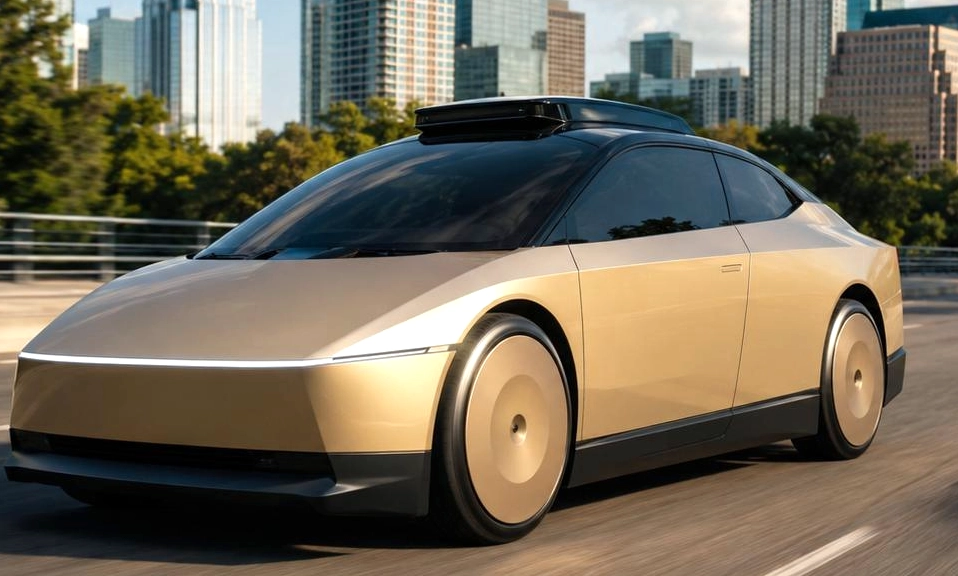
On one hand, the operational footprint is undeniably growing. As of late October 2026, Tesla’s unsupervised Robotaxi service—vehicles operating without anyone in the front seats—runs in six cities: Austin, Dallas, Houston, Miami, Orlando, and Tampa. The company has signaled that San Antonio, Jacksonville, Las Vegas, and Phoenix are next in line. In Austin, Tesla has “swarmed” the city with Cybercabs, growing its fleet there “by a factor of 10” in about a month.
But the “new normal” framing falls apart when you look at the numbers that actually measure scale. Tesla has logged roughly 3.1 million unsupervised miles since January 2026. Waymo, its primary rival, logged 271.3 million rider-only miles through June—more than that in a single week during Q2 than Tesla has driven in total. Waymo operates over 4,000 self-driving vehicles across more than a dozen US cities and surpassed 500,000 fully autonomous rides per week earlier this year. Tesla has not disclosed how many paid robotaxi trips it provides. The gap is not closing; it is, if anything, widening as Waymo expands into snowbelt cities like Detroit, Denver, and Chicago.
The competitive dynamic is further complicated by the fact that Tesla and Waymo are pursuing fundamentally different technological paths. Tesla relies on cameras and AI alone, while Waymo uses a more expensive combination of cameras, radar, and lidar. Tesla’s approach could eventually give it a significant cost advantage—the Cybercab is reportedly designed to cost about $25,000 to build—but that advantage is theoretical until Tesla can demonstrate that its camera-only system is safe enough to scale.
And that is where the “new normal” narrative hits its most significant obstacle: safety and regulation.
In October 2026, the National Highway Traffic Safety Administration (NHTSA) opened a defect-petition review into allegations that Tesla’s robotaxis—covering an estimated 1,000 vehicles (2026 Model Y and Cybercab)—exceeded posted speed limits in active school zones while their automated driving systems were engaged. The filing records no crashes, no injuries, and no fatalities, and the evidence is thin: an unnamed petitioner supplied three video links, and the agency has not yet decided whether to open a full investigation. But the specific behavior is a red flag. Exceeding speed limits in school zones is also the exact issue holding up Tesla’s approval for its driver-assisted software in Europe, where Germany wants the system capped at 10% over the posted limit.
The regulatory scrutiny is not confined to the United States. The Cybercab itself—which has no steering wheel, pedals, or mirrors—is already under a separate NHTSA inquiry into how Tesla self-certified the vehicle’s compliance with federal safety standards. A King’s College London review cited by regulators found that pedestrian detection systems were almost 20% less accurate for children than adults, and worse in low light—a finding that is directly relevant to the school-zone allegations. Waymo has faced similar scrutiny: it was investigated after reports its cars passed stopped school buses and recalled vehicles in December, and in January one of its cars struck a child near a Santa Monica primary school, causing minor injuries.
So, are driverless cars becoming the new normal? In a handful of American cities, for a small number of riders, they are already part of the landscape. But “normal” implies a level of ubiquity, reliability, and public trust that the industry has not yet achieved. Tesla’s expansion is real, and its cost advantage could eventually reshape the economics of the sector. But for now, the company is a distant second in operational scale, its safety record is under federal review, and its regulatory path in Europe is blocked by the same speed-setting questions that triggered the US inquiry.
The more accurate description is that driverless cars are becoming a new option—visible, growing, and increasingly competitive—but not yet the default. That distinction matters, because it is the difference between a technology that has arrived and one that is still proving it deserves to. Tesla’s Cybercab rollout in Dallas in November, and its plans to sell vehicles to outside fleet operators by year-end, will be the next tests of whether the “new normal” is a genuine inflection point or a well-marketed aspiration.
The robotaxi race is no longer a question of whether driverless cars will exist on public roads. They already do. The question is whether they can scale safely, profitably, and at a pace that justifies the extraordinary bets being placed on them. On that front, the verdict is still very much out.