When we think of birds, we usually picture harmless creatures chirping in trees, gracefully gliding over lakes, or awkwardly waddling on the ice.
But it’s easy to forget one crucial biological fact: birds are the direct descendants of dinosaurs.
And while many have evolved to be peaceful seed-eaters or fish-catchers, some have retained (or developed) terrifyingly effective weapons. From dagger-like claws and bone-shattering kicks to literal poison, the avian world has its fair share of apex predators and defensive powerhouses.
If you think a pigeon is the most aggressive bird you’ll ever meet, think again. Here are the 6 most dangerous birds in the animal kingdom, and the science behind their deadly capabilities.
🦖 1. The Southern Cassowary: The World’s Most Dangerous Bird
The Danger: A prehistoric-looking bird with a kick that can disembowel.
The Habitat: Tropical rainforests of New Guinea and northeastern Australia.
The Habitat: Tropical rainforests of New Guinea and northeastern Australia.
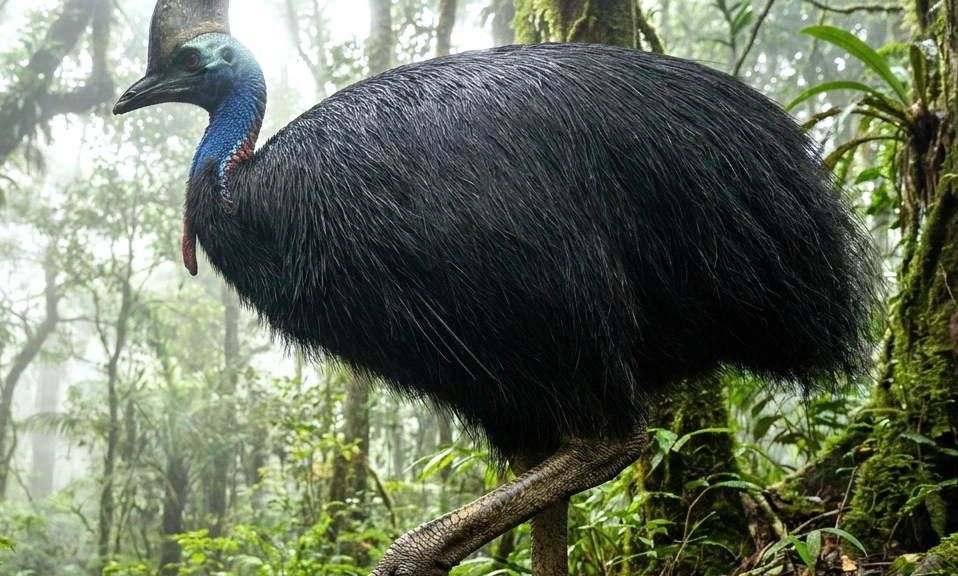
If there is a undisputed champion of avian danger, it’s the Southern Cassowary. Standing up to 6 feet tall and weighing over 130 pounds, this flightless bird looks like it walked straight out of the Jurassic period, complete with a bony “casque” on its head and vibrant blue and red neck skin.
The Science: The cassowary’s primary weapon is its inner toe, which features a 4-to-5-inch, dagger-like claw. When threatened, it doesn’t peck; it leaps into the air and kicks forward with both legs simultaneously. This kick can slice through flesh and bone with terrifying ease. There are multiple documented cases of cassowaries killing dogs and, rarely, humans who encroached on their territory or attempted to feed them.
🏃♂️ 2. The Ostrich: The Heavyweight Kickboxer
The Danger: Sheer size, speed, and a kick that can kill a lion.
The Habitat: Savannas and deserts of Africa.
The Habitat: Savannas and deserts of Africa.
The ostrich is the largest and heaviest bird on Earth, weighing up to 300 pounds and standing nearly 9 feet tall. While they are famously fast (sprinting up to 43 mph), their true danger lies in their legs.
The Science: An ostrich’s legs are incredibly muscular, designed for explosive speed. A single forward kick from an ostrich delivers enough force to shatter human bone or kill a large predator like a lion or hyena. They are highly territorial, especially males guarding a nest, and will not hesitate to charge and strike if they feel their young are threatened. Their vision is also exceptional, meaning they will spot you long before you spot them.
🦅 3. The Harpy Eagle: The Canopy Apex Predator
The Danger: Talons the size of a grizzly bear’s claws.
The Habitat: Tropical lowland rainforests of Central and South America.
The Habitat: Tropical lowland rainforests of Central and South America.
The Harpy Eagle is one of the largest and most powerful raptors in the world. It doesn’t hunt by soaring high in the sky; it hunts by silently maneuvering through dense jungle canopies, relying on stealth and explosive power.
The Science: The Harpy Eagle’s talons are its claim to fame. The rear talon can reach up to 4 inches long—roughly the same size as a grizzly bear’s claws. Its grip strength is estimated to be over 500 pounds per square inch (PSI), which is more than enough to crush the skull of its favorite prey: monkeys and sloths. A human is not on its typical menu, but an encounter with an agitated Harpy Eagle would be a deeply traumatic, and potentially fatal, experience.
🐍 4. The Secretary Bird: The Snake Stomper
The Danger: A specialized, high-velocity snake-killing machine.
The Habitat: Grasslands and savannas of sub-Saharan Africa.
The Habitat: Grasslands and savannas of sub-Saharan Africa.
With its long, crane-like legs and crest of black feathers that look like quill pens tucked behind its ear, the Secretary Bird looks elegant. But it is one of the most efficient snake hunters on the planet.
The Science: The Secretary Bird doesn’t use its beak to kill venomous snakes like cobras and puff adders. Instead, it uses its long legs to deliver lightning-fast, high-impact stomps. Studies have shown that a Secretary Bird can strike with a force equivalent to five times its own body weight in a fraction of a second. It stomps the snake’s head with such precision and speed that the venomous reptile rarely gets a chance to strike back.
☠️ 5. The Hooded Pitohui: The Poisonous Songbird
The Danger: Toxic feathers and skin.
The Habitat: Forests of New Guinea.
The Habitat: Forests of New Guinea.
Not all dangerous birds attack you physically. Some are dangerous to the touch. The Hooded Pitohui, a vibrant orange and black songbird, is one of the only known poisonous birds in the world.
The Science: The Pitohui’s skin and feathers contain batrachotoxin, the exact same potent neurotoxin found in poison dart frogs. The bird doesn’t produce this toxin itself; it sequesters it from its diet of Choresine beetles. Local hunters in New Guinea know to avoid this bird, as handling it can cause numbness, tingling, and a burning sensation. If a predator (or a curious human) were to ingest it, the toxin could cause paralysis or even death.
🪓 6. The Loggerhead Shrike: The “Butcherbird”
The Danger: A tiny bird with a serial killer’s methodology.
The Habitat: Open country across North America, Europe, and Asia.
The Habitat: Open country across North America, Europe, and Asia.
Don’t let its small size (about the size of a robin) fool you. The Loggerhead Shrike is a fierce, carnivorous passerine (songbird) with a terrifying hunting habit that earned it the nickname “Butcherbird.”
The Science: Unlike raptors, the Shrike lacks strong talons to hold down its prey (which includes large insects, lizards, frogs, and small rodents). To compensate, it has evolved a sharply hooked beak and a unique behavior: it impales its prey on sharp objects like thorns, barbed wire, or jagged branches. This “larder” serves two purposes: it anchors the prey so the Shrike can tear it apart with its beak, and it stores food for later. It is a brutal, highly effective survival strategy packed into a deceptively cute package.
🛡️ How to Respect the Skies (And Stay Safe)
Encounters with dangerous birds are incredibly rare, and these animals are not out to get humans. Almost all attacks occur when the bird feels cornered, is protecting a nest, or has become habituated to humans feeding them.
To stay safe and protect these magnificent creatures:
- Never Feed Wild Birds: Feeding cassowaries, emus, or ostriches removes their natural fear of humans and associates people with food, leading to aggressive behavior.
- Keep Your Distance: If you see a large, ground-dwelling bird, give it a wide berth. Back away slowly; never run, as this can trigger a chase instinct.
- Protect Your Pets: Small dogs and cats can be viewed as prey or territorial threats by large raptors or cassowaries. Keep them leashed in known habitats.
- Look Up (and Around): When hiking in areas with Harpy Eagles or nesting ostriches, stay alert and respect posted warning signs.
Respect the Dinosaur in the Room
It’s easy to dismiss birds as fragile or harmless, but the cassowary’s kick, the Harpy Eagle’s grip, and the Pitohui’s poison are powerful reminders of the raw, untamed diversity of the natural world.
These birds aren’t “evil” or “monsters.” They are perfectly evolved survivors, utilizing the tools nature gave them to thrive in their respective environments. The best way to interact with them is to admire them from a safe distance, educate ourselves on their behaviors, and remember that when we step into their habitat, we are the guests.