When you hear the word “carnival,” your mind might immediately jump to the samba parades of Rio or the bead-throwing streets of New Orleans. But you don’t need to look to the Western hemisphere to experience world-class revelry, elaborate costumes, pulsing music, and massive street celebrations.
While China doesn’t celebrate “Mardi Gras” in the traditional sense, it has a rich, ancient history of public festivals that embody the true, original spirit of a carnival: a time of communal joy, vibrant parades, masking, and spectacular sensory overload.
From glowing winter wonderlands to massive, water-soaked street parties, here are the top 6 most famous carnival-like festivals in China that you need to experience at least once.
1. Zigong International Lantern Festival (Sichuan) 🏮
When: Lunar New Year through the Lantern Festival (January/February)
The Vibe: A breathtaking, immersive “Carnival of Lights.”
The Vibe: A breathtaking, immersive “Carnival of Lights.”
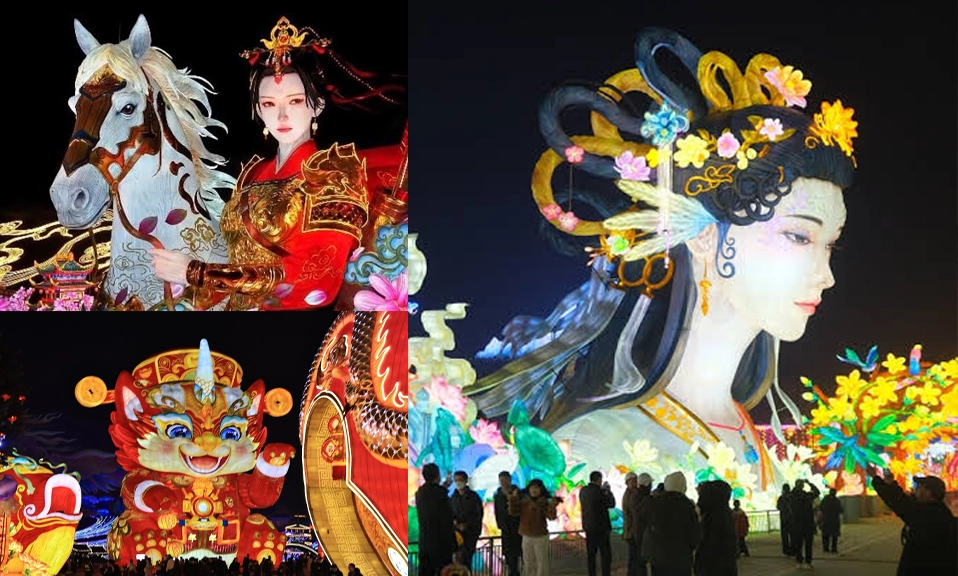
While lantern festivals happen all over China, Zigong is the undisputed global capital of lantern-making. This isn’t just a few paper lanterns hanging from trees; it’s a massive, sprawling nighttime carnival featuring hundreds of colossal, intricately engineered light sculptures. We’re talking glowing dinosaurs, mythical dragons, and futuristic landscapes that stretch for miles.
- The Highlight: The opening night parade, where massive, illuminated floats are accompanied by traditional lion dancers, stilt walkers, and face-changing (Bian Lian) performers.
- Must-Do: Wander through the “Lantern Sea” after dark, grab some spicy Sichuan street food (like chuan chuan), and take a traditional wooden boat ride through the illuminated canals.
2. The Dai Water-Splashing Festival (Yunnan) 💦
When: Mid-April (coinciding with the Dai New Year)
The Vibe: The ultimate, joyous, water-soaked street party.
The Vibe: The ultimate, joyous, water-soaked street party.
Held in the tropical, jungle region of Xishuangbanna, this is China’s closest equivalent to a traditional, high-energy street carnival. For three days, the streets of Jinghong transform into a massive, good-natured water fight. Locals and tourists alike don traditional Dai clothing, take to the streets with buckets, water guns, and bowls, and splash each other to wash away the bad luck of the old year and welcome the new one.
- The Highlight: The Dragon Boat races on the Lancang (Mekong) River, followed by the “Water-Splashing Square” chaos, where thousands of people dance to traditional Dai music while getting absolutely drenched.
- Must-Do: Wear clothes you don’t mind getting soaked, protect your phone in a waterproof pouch, and join the traditional “Peacock Dance” in the town square.
3. Harbin International Ice and Snow Sculpture Festival (Heilongjiang) ❄️
When: Early January through late February
The Vibe: A magical, freezing, winter wonderland carnival.
The Vibe: A magical, freezing, winter wonderland carnival.
If Rio has heat, Harbin has extreme cold. This is the largest ice and snow festival in the world. The city essentially builds a temporary, glowing metropolis out of ice blocks harvested from the Songhua River. It’s a visual carnival of towering ice castles, massive snow sculptures, and illuminated ice slides that attract millions of visitors.
- The Highlight: “Ice and Snow World” at night. When the sun goes down, the massive ice structures are lit from within by millions of colorful LED lights, creating a surreal, glowing carnival atmosphere. ,
- Must-Do: Slide down the 500-meter-long super ice slide, brave the -20°C (-4°F) temperatures with proper thermal gear, and eat a Madieer popsicle (yes, in the freezing cold—it’s a local tradition!).
4. Qingdao International Beer Festival (Shandong) 🍻
When: Mid-August to late August
The Vibe: A massive, coastal, high-energy block party.
The Vibe: A massive, coastal, high-energy block party.
Often dubbed the “Oriental Oktoberfest,” this two-week-long event is a modern carnival of epic proportions. Held in the beautiful coastal city of Qingdao (the birthplace of Tsingtao Beer), the festival features massive beer tents, amusement park rides, fireworks, and daily parades. It’s a vibrant mix of German brewing tradition and Chinese festival culture.
- The Highlight: The opening ceremony parade, featuring brass bands, traditional Chinese drummers, and elaborate floats marching down the Golden Beach promenade.
- Must-Do: Grab a fresh, unfiltered Tsingtao beer served in a giant plastic bag (a local Qingdao quirk), feast on spicy clams (gala), and join the nightly beach concerts and fireworks displays.
is the “Carnival of the East.” For three days and nights, the Yi people gather in the mountains to celebrate the harvest and honor fire. The landscape is dotted with massive, roaring bonfires, and the air is filled with the sound of the lusheng (a traditional reed pipe) and rhythmic chanting.
- The Highlight: The “Torch Parade.” At night, thousands of participants light long torches and wind through the villages and fields in a glowing, serpentine river of fire, believed to drive away evil spirits and bless the crops.
- Must-Do: Join hands with the locals to dance the traditional “Dage” (circle dance) around a massive bonfire, and watch the thrilling traditional Yi wrestling (Gedi) matches.
6. Miao New Year / Miao Sister Festival (Guizhou) 🪶
When: Varies by village (often October/November for New Year, Spring for Sister Festival)
The Vibe: A vibrant, deeply traditional cultural carnival of color and silver.
The Vibe: A vibrant, deeply traditional cultural carnival of color and silver.
The Miao ethnic minority in Guizhou province hosts some of the most visually stunning cultural festivals in Asia. During the Miao New Year or the “Sister Festival” (often called the oldest Valentine’s Day), villages erupt into a carnival of traditional dress. Women wear breathtaking, hand-embroidered garments and massive, intricate silver headdresses that can weigh several pounds and jingle with every step.
- The Highlight: The grand village parades, where hundreds of Miao women in full regalia march to the hypnotic, polyphonic music of the lusheng, accompanied by traditional bullfighting and horse racing.
- Must-Do: Visit a Miao village in the Qiandongnan region, accept a cup of “high mountain flowing water” rice wine (a traditional, cascading welcome toast), and admire the incredible, centuries-old batik and silver-smithing crafts.
🎟️Join the Celebration
Carnivals in China are more than just tourist attractions; they are living, breathing expressions of the country’s incredible ethnic diversity, ancient agricultural roots, and communal spirit. They are the moments when communities collectively pause to honor their heritage, welcome the seasons, and celebrate the sheer joy of being together.
Whether you’re getting drenched in Yunnan, marveling at glowing ice castles in Harbin, or dancing around a bonfire in Sichuan, there is a Chinese festival that will completely captivate your senses.
So, pack your bags, bring your appetite, and get ready to experience the magic.
Which of these incredible Chinese festivals is at the top of your travel bucket list? Have you ever experienced the magic of the Water-Splashing Festival or the Ice Festival? 🏮🎉🐉