Netflix has built an empire on the promise of endless content. But for every Stranger Things or Squid Game, there is a trail of expensive, ambitious, and ultimately unsuccessful projects that have cost the streamer hundreds of millions of dollars. From big-budget sci-fi epics that critics eviscerated to star-studded series that vanished without a trace, these are the most notable Netflix flops of all time.
The Biggest Movie Flops
The Electric State (2025)
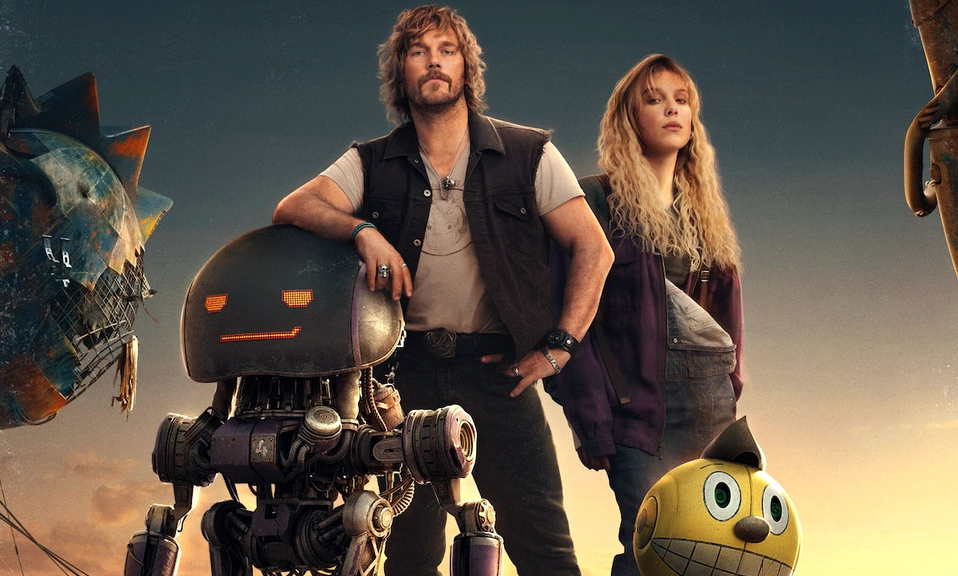
The Electric State is, by many accounts, Netflix’s most expensive flop to date. Directed by the Russo Brothers and starring Millie Bobby Brown and Chris Pratt, the retro-futuristic sci-fi film reportedly cost between $300 million and $320 million to produce. That price tag made it the most expensive original film Netflix had ever produced.
The return on that investment was disappointing. The film drew only 25.2 million global views in its debut weekend, far below other high-budget titles like Carry-On or The Gray Man. Critics were brutal, giving it a 15–17 percent rating on Rotten Tomatoes, with reviews calling it “dumb,” “unfunny,” and “overpriced”. Netflix had spent hundreds of millions on a project that failed to connect with audiences, and it now stands as the company’s most high-profile misfire.
The Cloverfield Paradox (2018)
The third installment in the Cloverfield franchise was acquired by Netflix from Paramount and released surprise-style after the Super Bowl. While it was a savvy marketing move, the film itself was poorly received, and it is frequently cited as one of Netflix’s most expensive missteps.
The Ridiculous 6 (2015)
Adam Sandler’s first Netflix original film was a critical disaster, widely panned for its juvenile humor and lazy execution. It became a symbol of Netflix’s early willingness to spend big on star-driven projects regardless of quality.
Rebel Moon (2023-2024)
Zack Snyder’s two-part sci-fi epic was intended to launch a new universe for Netflix, but the roughly $166 million spent on the first film did not yield the hoped-for returns. The two “Snyder Cut” versions received slightly better reviews than the originals but went largely unnoticed on the platform.
The Biggest TV Show Flops
Marco Polo (2014-2016)
Before The Crown and Stranger Things, Netflix attempted to rival Game of Thrones with Marco Polo, a lavish historical epic about the early years of the famous explorer. The first season alone cost around $90 million, making it the second most expensive series ever produced at the time, after Game of Thrones.
The series received lukewarm reviews and audiences quickly turned away. Despite producing a second season, Netflix cancelled the show, and it became the first major Netflix series to end before a third season. The Hollywood Reporter noted that Marco Polo ultimately cost Netflix approximately $200 million in losses.
Jupiter’s Legacy (2021)
Based on Mark Millar’s comic book series, Jupiter’s Legacy was expected to launch a new superhero universe for Netflix. The first season reportedly cost around $200 million, but the show was cancelled after just one season.
Cowboy Bebop (2021)
The live-action adaptation of the beloved anime was a high-profile gamble that did not pay off. Despite a significant budget and a passionate fanbase for the source material, the series was met with mixed-to-negative reviews and was cancelled after one season.
The Boroughs (2026)
From the Duffer Brothers, the creators of Stranger Things, The Boroughs was a sci-fi mystery series with a star-studded cast including Alfred Molina and Geena Davis. The show garnered almost 20 million views in its first week, but viewership dropped to just over 3 million in its second week. Despite strong reviews and early talks of renewal, Netflix cancelled the show after one season, citing the sharp drop in viewership and the high costs of sci-fi production.
The Abandons (2025-2026)
A Western drama from Sons of Anarchy creator Kurt Sutter, The Abandons struggled from the start. Sutter departed production weeks before filming concluded following disagreements over creative direction, and Netflix executives reportedly balked at the length and tone of initial cuts. The series was cancelled after its first season.
The Pattern: Big Budgets, Bigger Risks
What unites these flops is not a lack of ambition. Netflix has consistently been willing to spend enormous sums on projects that promise to be the next big thing—whether that is a Game of Thrones rival, a superhero universe, or a star-driven blockbuster.
The problem is that spending does not guarantee success. The Electric State, Marco Polo, and Jupiter’s Legacy all had the resources to be great, but they failed to connect with critics or audiences. And in an era where Netflix is facing increased competition and shareholder pressure, the tolerance for expensive failures is shrinking. In 2026, the company laid off around 1,000 employees and vowed to axe series with “zero financial return”. The message is clear: the era of blank-check spending is over.
Netflix’s biggest flops
are not just cautionary tales about wasteful spending. They are a reminder that in the streaming wars, even the most powerful platform in the world is not immune to failure. The difference between a hit and a flop is not always quality or budget—it is the unpredictable alchemy of timing, taste, and cultural resonance.
For every KPop Demon Hunters that becomes a record-breaking smash, there is an Electric State that sinks under the weight of its own budget. Netflix has learned to live with that risk. The question is how much longer it can afford to.