In March 2026, at South by Southwest in Austin, Steven Spielberg was asked a simple question: Have you used AI in your movies?
His answer: “I’ve never used AI on any of my films yet. I am not for AI if it replaces a creative individual.”
In May 2026, at Cannes, Demi Moore said the opposite — sort of: Resisting AI is a battle Hollywood is set to lose.
Both are right. And that’s why Hollywood in 2026 feels like it’s having an identity crisis live on stage.
The Panic of 2023 Is Over. The Reality of 2026 Is Weirder.
In 2026, the conversation around artificial intelligence in the creative industries has shifted. The panic of “AI is coming for our jobs” has largely given way to a more nuanced reality: AI isn’t replacing creatives — it’s becoming their most powerful collaborator.
In 2023, writers went on strike because they thought AI would write scripts. In 2026, writers are using AI to write 30 versions of a scene in 10 minutes, then picking the human one.
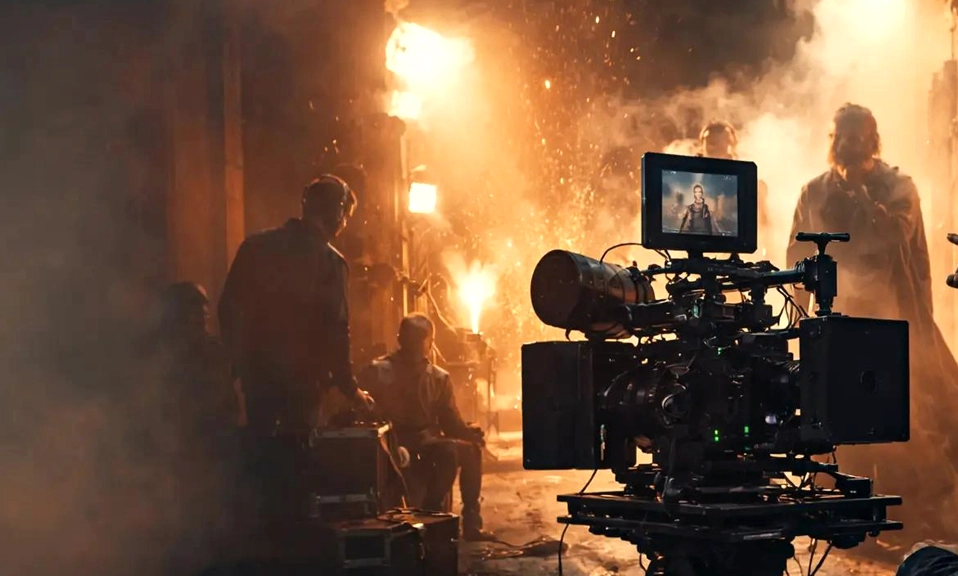
Here’s what’s actually happening on a real Hollywood set today:
AI is already doing:
- Pre-vis: Director types “rainy neon Tokyo street, Blade Runner vibe, 35mm” — gets 200 concept images in 5 minutes. Used to take an art department 2 weeks.
- De-aging & dubbing: Actors’ voices dubbed into perfect Spanish, French, Korean with their own AI voice, not a voice actor
- Backgrounds: Promise, co-founded by former YouTube executive Jamie Byrne, uses generative AI tools to lower costs while expanding opportunities for mid-budget storytelling. “We want to partner with Hollywood, not replace it,” Byrne says. That company made a $5M film look like $50M by generating crowds, cities, destroyed buildings.
- Editing: AI does first assembly cut of reality shows, documentaries — saves 200 hours
AI is NOT doing (yet):
- Writing a script that makes you cry
- Directing actors to give a performance that feels true
- Knowing when to break the rules
What Hollywood’s Top Execs Are Actually Saying in 2026
Artificial intelligence is transforming Hollywood at a pace that has sent shockwaves through creative industries, but human creativity will always prevail, a leading executive at the cutting edge of that change told AFP.
Spielberg (SXSW 2026): Human element remains indispensable. He is not against AI as a tool, but as a replacement.
Guillermo del Toro (Sept 2026): Guillermo del Toro says AI can rearrange existing ideas, but cannot replace the human accidents, discovery and apprenticeship behind original filmmaking.
Del Toro nailed it: AI is a remix machine. It has seen every movie ever made. It can combine Pan’s Labyrinth + The Shape of Water and make something that looks like Del Toro. But it can’t have lived through a childhood in Guadalajara, being afraid, loving monsters — the accidents that make Del Toro Del Toro.
Disney‘s New CEO Josh D’Amaro (Feb 2026): Josh D’Amaro stepped onto the ABC World News Tonight stage and spoke about the future of Disney. He told viewers that artificial intelligence will not take over human imagination. He promised that AI will help, not replace, those creators.
Translation: Disney will use AI to make Marvel movies cheaper, not to fire Marvel writers. They want 3 Marvel shows a year for the price of 1.
Demi Moore (Cannes Jury 2026): Demi Moore addressed the growing debate around artificial intelligence in filmmaking during the 2026 Cannes Film Festival, arguing that Hollywood should stop treating AI as something that can be completely resisted. Speaking as part of the festival’s main competition jury, Moore described AI as an unavoidable shift while also insisting that human creativity remains impossible to replace.
She’s right. You can’t put AI back in box. The question is who controls it.
The Real Battle: Vibe vs Execution
The convergence of Technology, Business, Digital Marketing, and Artificial Intelligence has turned the “Creative Act” into a partnership between human “Vibe” and machine “Execution.” In 2026, the winners are those who use AI to handle the “How” so they can spend more time on the “Why.”
This is the best way to think about it:
- Human = Why: Why does this story matter? Why will this make a 14-year-old in Kansas feel less alone? Why is this joke funny? Why is this death sad? AI doesn’t know why. It knows how words are usually arranged after sad words.
- AI = How: How do we make this spaceship look real for $10k not $10M? How do we translate this film into 40 languages in a day? How do we storyboard this fight scene 20 ways?
AI will handle speed and automation, while humans will bring creativity and originality. In 2026 and beyond, the real power lies in combining technology with human imagination. Can AI completely replace human creativity? No, AI lacks emotions and real-life experiences, which are essential for true creativity.
So Can AI Replace Hollywood?
The panel concluded with a clear message: AI is not the end of human creativity. It is a powerful tool that expands what filmmakers can achieve, but it cannot replace emotional and narrative intelligence. As the panel emphasized, AI may change how films are made, but it cannot replace imagination, intuition, or emotional resonance.
Here’s my honest take after watching 30 AI-generated short films in 2026:
AI can make something that LOOKS like a movie. It cannot make something that FEELS like a movie you remember 10 years later.
I watched an AI-generated “new” Wes Anderson short. Perfect symmetry. Perfect colors. Perfectly boring. Because Wes Anderson isn’t symmetry — it’s a human who is obsessed with symmetry because his childhood felt chaotic. AI copies the symmetry, not the chaos that caused it.
Hollywood’s real fear in 2026 isn’t that AI will replace Spielberg. It’s that AI will replace the 1,000 middle-class jobs below Spielberg — the junior VFX artists, the assistant editors, the concept artists, the voice actors, the background actors who get scanned once and used forever.
That is happening. That battle was lost.
But the battle for why we watch movies — to feel human emotions made by other humans who felt them first — that battle Hollywood is still winning.
By embracing the “Intelligent Creative” era, the artists of 2026 are proving that while machines can synthesize, only humans can mean.
AI can write you a love letter. Only a human can mean it.
Would you watch a movie that was 100% written and directed by AI if it was good? Or would it feel empty no matter how good it looked?