The car industry has spent a decade telling us that the future would look like a spaceship. Electric vehicles would be defined by their smooth, screen-dominated minimalism—a clean-sheet reinvention of what a car could be. That future is still coming. But in 2026, something unexpected is happening alongside it: the past is being invited back into the design studio, and it is turning out to be the most powerful idea the industry has had in years.
The evidence was impossible to miss at the 2026 Paris Motor Show. The oldest motor show in the world became a stage for some of the most beloved names in motoring history to be reborn as electric vehicles. The Citroën 2CV returned as an adorable, affordable EV concept. The Renault 5, a 1970s icon, is already the best-selling mid-size electric car in Europe. Alpine revived the A310 as a retro-futuristic sports coupe. Peugeot brought back the spirit of the 205 T16 as an 805-horsepower electric monster. And Renault reimagined the 8 Gordini as a 270-hp electric rally-inspired coupe.
This is not a niche trend or a nostalgic sideshow. It is a strategic pivot. As European automakers face an existential threat from fast-moving Chinese EV brands, they are reaching for the one thing their rivals cannot easily replicate: a century of heritage, and the emotional pull of a familiar shape. The return of retro cars is not about living in the past. It is about using the past to sell the future.
The Icons Are Back, and They’re Electric
The Paris Motor Show 2026 was a coming-out party for retro-inspired EVs. The sheer breadth of concepts and production-ready models on display made one thing clear: this is no longer a novelty. It is a wave.
The Citroën 2CV Concept is perhaps the purest expression of the idea. The original 2CV was conceived as an affordable “people’s car” to motorise French farmers in the 1940s. The new concept retains that spirit—a minimalist, affordable EV with a targeted starting price of around €15,000, with a production version expected by the end of 2028. It is not a luxury item or a performance statement. It is a car for the masses, reborn for the electric age.
The Alpine A310 Vision takes a different approach. A one-off concept inspired by the original A310 of the 1970s, it uses a retro-futuristic design language that blends the unmistakable wedge shape of the original with modern proportions and an electric powertrain. It is a statement of brand identity, a reminder that Alpine has a sporting heritage that stretches back decades.
The Renault 8 Gordini Concept is a love letter to Renault’s rally heritage. The original 8 Gordini was a working-class hero, a car that proved ordinary machines could deliver serious performance. The electric reinterpretation is a two-seat coupe with a 270-horsepower motor on the rear axle, wrapped in a low, broad, café-racer-inspired body. It is not a production car—yet—but it demonstrates how a classic nameplate can be translated into something genuinely exciting for a new era.
And then there is the Renault 5 E-Tech, which is no longer a concept. It is a production car, and it is a phenomenon. Launched in 2024, it sold over 100,000 units in Europe in 2025 and added roughly 55,000 more in the first part of 2026. It was named UK Car of the Year 2026. It is the proof of concept that every other automaker is now trying to replicate. The Renault 5 demonstrated that a familiar, much-loved design, reborn as an affordable EV, can succeed on a mass-market scale.
Why Retro Works: Nostalgia as a Competitive Weapon
The business case for retro design is not mysterious. It is rooted in human psychology, and it is being sharpened by the pressures of the modern car market.
Nostalgia sells. A 2026 consumer trends report found that 61% of UK car owners would opt for a model from the 2000s or earlier if given the choice. That is not a fringe preference. It is a majority sentiment. People are drawn to the shapes, the textures, and the associations of the cars they grew up with—or the cars their parents drove, or the cars they saw in films and magazines. Retro design taps into that emotional reservoir in a way that a clean-sheet EV simply cannot.
It differentiates. The electric vehicle market is becoming increasingly homogenised. Batteries and motors are commoditised; the engineering differences between one EV and another are shrinking. In that environment, design is the differentiator, and heritage is a design resource that cannot be copied quickly or cheaply. As Renault Group’s Chief Design Officer Laurens van den Acker put it: “Iconic design is what will make us different… Now with the arrival of competition from Asia, it’s become even more of a trump card. It cannot be copied easily”.
It reduces resistance to electrification. For many buyers, the switch to an EV is a leap into the unknown—a new interface, a new driving experience, a new set of anxieties. A familiar design eases that transition. It signals that the car is still a car, even if what’s underneath has changed. As one analysis noted, “while EVs with deliberately futuristic styling tend to meet with resistance in Europe, familiar design is one of the most effective ways of easing people’s reservations about battery electric cars”.
It appeals across generations. The retro trend is not just for older buyers who remember the originals. Gen Z and millennials are just as susceptible to the emotional pull of a well-designed classic shape. For them, the appeal is not memory but aesthetics—a reaction against the sameness of modern design, a desire for something with individuality and character.
The Restomod Alternative: When You Want the Original, But Better
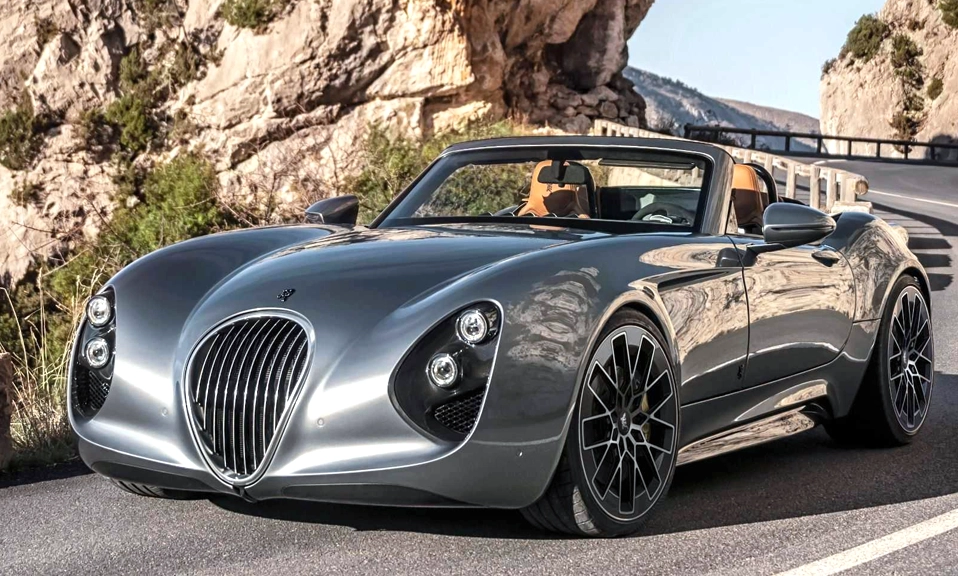
The retro revival is not limited to new cars wearing old names. A parallel movement is transforming actual classic cars into modern, reliable, electric machines. This is the world of the electric restomod, and it is thriving.
Companies like Lunaz in the UK are restoring classic Range Rovers and fitting them with bespoke electric powertrains, combining the original’s timeless design with silent, emissions-free propulsion. Totem Automobili has built an electric Alfa Romeo restomod with a 590-horsepower motor that accelerates from 0 to 60 mph in 2.9 seconds while producing no sound at all. The appeal is obvious: you get the car you love, with the performance and reliability of a modern EV, without waiting for a manufacturer to build one.
For buyers who want the original experience without the headaches of maintaining a decades-old combustion engine, restomods offer a compelling middle path. They are not mass-market products—they are expensive, bespoke commissions—but they represent the same underlying desire: to hold onto something real and beautiful in a world that is becoming increasingly digital and homogenised.
The Risk: When Does Retro Become a Crutch?
The retro revival is not without its critics, and their concerns are worth taking seriously.
The most common criticism is that retro design is a creative shortcut—a sign that the industry has run out of ideas. As Evo magazine put it, “retro’s a cheap trick and nostalgia is the lowest of the low-hanging fruit and all of it is a sign of a creative drought”. If every new EV is just a rehash of a 1970s or 1980s icon, the market will eventually tire of it. The novelty will wear off.
There is also the risk of over-saturation. Renault has already revived the 5, the 4, and the Twingo, and it is now working on the 8 Gordini and the E-Space concept. Citroën is bringing back the 2CV. Peugeot is teasing the return of the 205 spirit. Fiat has the 500. At some point, the market may reach a point where every iconic nameplate has been resurrected, and the retro well runs dry. As Renault’s design boss himself acknowledged, “we need to pace it a little bit”.
The deeper question is whether retro design can sustain the industry in the long term. Nostalgia is a powerful tool, but it is fundamentally backward-looking. At some point, automakers will need to create new icons—designs that are not referencing the past, but defining the future. The retro wave may be a bridge, not a destination.
The return of retro cars
is not a fleeting trend. It is a strategic response to a set of real market pressures: the homogenisation of EV design, the competitive threat from China, and the deep human desire for familiarity and emotional connection in a time of rapid change. The success of the Renault 5 has proven that it works, and the wave of concepts at Paris 2026 shows that every major European automaker is now betting on it.
But retro is not a permanent solution. It is a bridge—a way to bring people into the electric era by giving them something they already love. The automakers that succeed in the long run will be the ones that use retro as a foundation, not a crutch; that honour the past while also finding the courage to create something new. The classic designs are back. What matters now is what comes next.