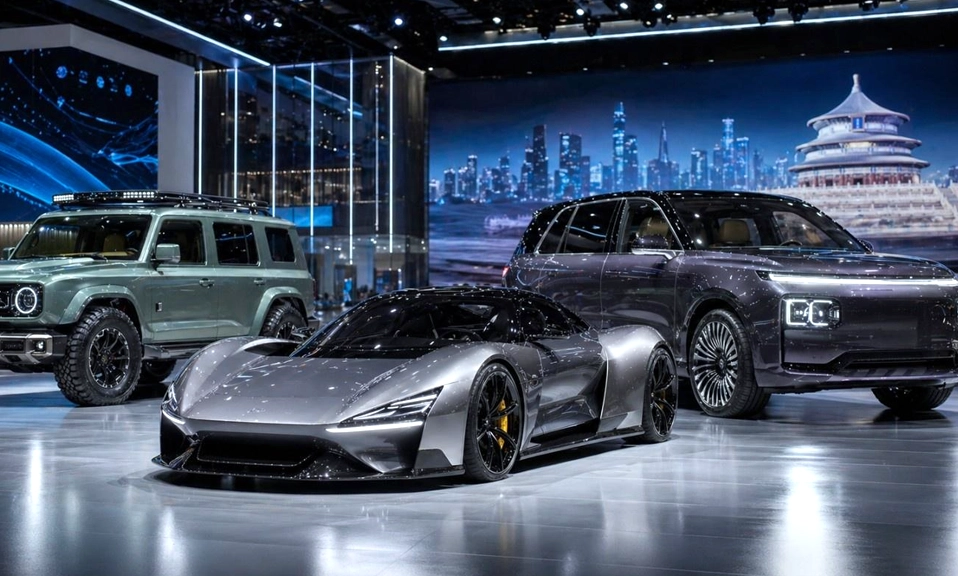
The next five years promise to be the most transformative period in automotive history. The cars arriving between 2027 and 2030 will fundamentally redefine the daily driving experience. This upcoming decade will be defined by the ultimate convergence of raw, unadulterated performance and the unstoppable rise of artificial intelligence. From bleeding-edge battery breakthroughs to vehicles that can genuinely drive themselves, here are the 10 most anticipated cars poised to change everything.
🚀 The 10 Most Anticipated Future Cars (2027–2030)
1. Tesla Roadster (Expected: 2028)
The second-generation Tesla Roadster is perhaps the most hyped and delayed vehicle in modern history. Initially unveiled in 2017, production has been pushed back repeatedly, with a current target of 2028. When it finally arrives, it promises to be a physics-defying machine, featuring cold-gas thrusters developed in collaboration with SpaceX for staggering acceleration. It is expected to be a halo product that showcases Tesla’s most advanced technology.
2. Porsche 718 Boxster & Cayman EV (Expected: 2027)
Porsche is taking its beloved mid-engine sports car fully electric. The next-generation 718 Boxster and Cayman, due to be revealed in 2027 with full production in 2028, will be exclusively electric. The engineering focus will be on preserving the iconic handling dynamics of the 718 line by placing the battery pack in a mid-mounted position to mirror the classic weight distribution of the petrol-powered models.
3. Lexus LFA Successor (Expected: 2029)
The legendary Lexus LFA is returning, but its howling V10 will be replaced by pure electric power. This new flagship supercar is expected to arrive around 2029, sharing a platform with Toyota’s GR GT hybrid. It is predicted to produce around 1,000 horsepower, achieve a 0-60 mph time in the low two-second range, and potentially use solid-state batteries for a range of up to 430 miles.
4. Audi Nuvolari (Expected: 2027)
Named after the legendary racing driver Tazio Nuvolari, this is Audi’s spiritual successor to the R8. It is a high-performance hybrid supercar powered by a twin-turbo V8 and three electric motors, producing a combined output of 736kW (over 1,000hp). Production is limited to just 499 examples, with deliveries beginning in the first half of 2027.
5. BMW iM3 (Expected: 2027)
The first fully electric model from BMW’s M division is a landmark moment. The iM3, based on the Neue Klasse platform, is expected to feature a quad-motor powertrain, delivering immense, instant torque and a 0-100 km/h time well under three seconds. It is set to debut in 2027 and will be sold alongside the combustion-engine M3, offering a distinct, silent, and brutally fast alternative.
6. Mercedes-Benz GLC EV (Expected: 2026/2027)
This is the electric version of Mercedes’ best-selling SUV, and it is packed with technology. The GLC 400 4MATIC Electric features a dual-motor setup producing 483 horsepower and 590 lb-ft of torque. It supports 330 kW DC fast charging, which can add 190 miles of range in just 10 minutes, and has an EPA-estimated range of up to 331 miles.
7. Rivian R2 and R3 (Expected: 2027/2028)
Rivian is moving into the mainstream with the R2, a smaller and more affordable SUV. The R2 is scheduled to launch in late 2027, with a starting price of around $45,000. The even more affordable and highly anticipated R3, which will include a high-performance R3X variant, is expected to follow in 2028, produced at Rivian’s new Georgia factory.
8. Alfa Romeo Stelvio EV (Expected: 2027/2028)
Alfa Romeo’s iconic Stelvio SUV is being reinvented for the electric age. It will migrate to the STLA Large platform and offer a choice of hybrid or fully electric powertrains. A future Quadrifoglio variant could produce massive power, potentially using a version of the Hurricane twin-turbo inline-six or a high-output electric setup. The launch timeline has been delayed, with expectations now pointing to 2027 or later.
9. McLaren McL 820 (Expected: 2027)
McLaren’s replacement for the 750S is a significant step forward. The McL 820 is set to be a series-production supercar that adopts a high-performance hybrid V8 powertrain, inspired by the technology in the £2 million W1 hypercar. It is expected to produce around 809bhp, putting it ahead of the car it replaces and firmly in Ferrari territory.
10. Lucid Cosmos (Expected: Late 2027)
Lucid is expanding its lineup beyond the Air sedan with the Cosmos, a mid-size SUV that aims to make its class-leading electric technology more accessible. With a target starting price of under $50,000, it is designed to be a more affordable rival to the Tesla Model Y. It will feature a futuristic cabin with a massive 36-inch screen and a range of other new models, including a more rugged SUV called the Earth, expected to follow.
💎 The 2027–2030 period
is a bridge to the future of mobility, where the choice between raw emotion and silent efficiency becomes less a compromise and more a distinct preference. From the electric heartbeats of iconic supercars to the smart, accessible EVs designed for the mainstream, these ten vehicles are set to define the automotive landscape for the next decade.