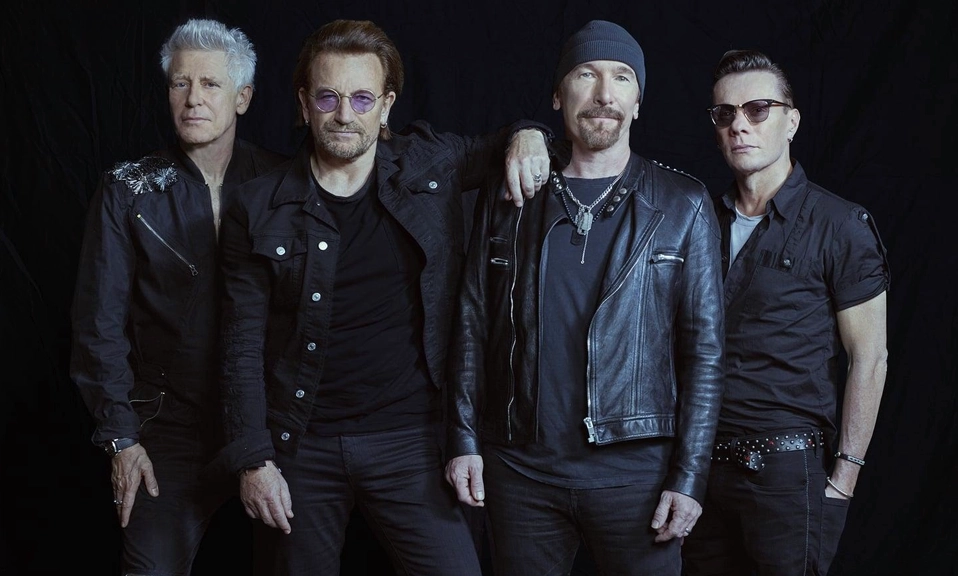
Fifty years after a teenage drummer pinned a handwritten note to a school noticeboard in Dublin, U2 have returned with their first album of new material in nine years. Carnaval De Luz arrives on November 13, 2026, and it is already one of the most talked-about records of the year—not just because of the music, but because of what it represents: a band refusing to fade quietly into legacy status, a farewell from a country icon, and a reinvention that sounds like a beginning rather than an ending.
The Occasion: Fifty Years and Twenty-Four New Songs
The timing of Carnaval De Luz is deliberate. The album lands in the week that marks 50 years since Larry Mullen Jr., then aged 14, posted “Drummer Seeks Musicians To Form Band” on the noticeboard of Mount Temple Comprehensive School in Dublin. Bono, The Edge, Adam Clayton, and Mullen Jr. were all there from the first meeting. Half a century later, the same four men are still finding “new dimensions and possibilities within their creative process,” as the band’s official announcement put it.
The album is U2’s 16th studio album and their first full-length of new material since 2017’s Songs of Experience. It is also the culmination of an extraordinarily productive year: the band surprise-released two six-track EPs, Days of Ash and Easter Lily, in early 2026, recorded during the same creative period as the album. All told, 2026 will have seen U2 release 24 new songs.
The Headline: Dolly Parton’s Final Recording
The story that has dominated headlines is the album’s closing track, “Torn.” It is a duet between Bono and Dolly Parton, and it has sadly turned out to be Parton’s last recorded vocal performance. Parton died on August 25, 2026, at the age of 80.
The song, co-written by U2, Parton, and Snow Patrol’s Johnny McDaid, is described as “a tender country song detailing broken family ties that holds wider resonances”. Daniel Lanois, the legendary producer who worked on The Unforgettable Fire, The Joshua Tree, and Achtung Baby, plays pedal steel on the track. The song also serves as the connective tissue between the album and the two EPs: Days of Ash and Easter Lily followed the liturgical calendar, and Carnaval De Luz sits “before them in timeline”—Carnival, a celebration of the flesh, before the denial of Lent and the rebirth of Easter.
The Sound: A Defiantly Joyful Reinvention
Carnaval De Luz is not a political album in the way its preceding EPs were. Days of Ash reflected on ICE, Iran, Ukraine, and the Israel-Palestine conflict. Carnaval De Luz, by contrast, is “the sound of celebration”—a collection described by The Edge as “a messy, provocative, sacred collection of songs” .
Bono framed the album’s ethos in characteristic fashion: “There will be loud guitars, deep bass, some ecstatic rhythms and, yes, some silver tears will make an appearance… the same imagination that brings us our creativity can also bring us monsters. So we make the drums louder. We build a bigger fire. We make our stories wilder and funnier. We make the melodies sweeter and the songs, they better shine, because if the world is in darkness we better not be”.
The music reflects that defiance. Rolling Stone described the album as “tight and punchy, memorable and melodic,” calling it “big, bright pop music with more silver linings than clouds and only a few minor keys”. The central theme, the magazine noted, “seems to be ‘it’s not too late'”—not too late to party, to find God, to empathise, to save a relationship, to save the world. RTE called it “the freshest and most immediate the band have sounded in an age,” noting that Bono “gets his mojo back” and that the second half of the album “leaves the first for dust”.
The Collaborators: Eno, Lanois, Garrix, and Tedder
The album reunites U2 with some of their most important creative partners, while also embracing contemporary voices. Brian Eno co-writes and plays synthesizers on three tracks—”Go (Carnaval De Luz),” “The Greatest Show on Earth,” and “Can’t Stop Us Now”—and the opener is described as “a curtain raiser… that starts like a long lost edit from Delia Derbyshire’s Radiophonic Workshop, with Doctor Who theme electronica giving way to Achtung Baby era guitars”. Daniel Lanois contributes pedal steel to “Torn”.
At the other end of the spectrum, Martin Garrix co-wrote “Glorify,” and Ryan Tedder provided additional production on “Silencio”. The album also features a song inspired by Rosalía called “The Mirror Maker,” which RTE described as “scaling the heights of rapture with a hammering force that can’t contain itself”. The Edge also noted a small but significant first for the band: the use of flat-wound strings on a U2 recording.
The Reception: Revitalised, If Not Reinvented
The early reviews have been largely enthusiastic, with critics framing the album as a confident, late-career statement rather than a nostalgic retread. RTE concluded that Carnaval de Luz finds U2 “reinvigorated, if not reinvented,” and that “after a frankly extraordinary fifty years together,” the band still sound like they have something to prove. Rolling Stone called it a “counterargument to pop-culture doomsaying,” praising the album’s focus and energy. The Irish Times noted that the album is “so much more carefree and immediate” than the band’s recent work, though it also observed that Bono’s lyrics can be “loaded with portent but ultimately add up to a whole lot of sweet nothingness”.
There are dissenting voices. The Folha de S.Paulo review argued that U2 “doesn’t bring exuberant innovation” and that the album is “a bit loose” in places. But even the more critical assessments tend to agree on one point: this is a band that, five decades in, still sounds vital.
A Carnival Against the Darkness
Carnaval De Luz is not a victory lap. It is a statement of intent. U2 have spent 50 years building one of the most consequential catalogues in rock music, and they could easily have spent their 50th anniversary touring the hits and accepting the applause. Instead, they have released 24 new songs in a single year, collaborated with everyone from Brian Eno to Martin Garrix, and closed the album with a farewell from Dolly Parton that will be remembered for decades.
The headlines are about the guests and the milestones, and they deserve to be. But the deeper story is simpler: a band that began with a noticeboard in a Dublin school is still, half a century later, making music that believes in something. As Bono put it, “if the world is in darkness, we better not be”. Carnaval De Luz is U2’s refusal to go quietly. And on this evidence, they have plenty of light left to give.