They were household names before they could drive. Some survived it. Some didn’t. All of them were handed something no child is equipped to carry.
There’s a moment in every child star’s life when the world knows their name — and they don’t yet know who they are. They’re praised for being “natural,” “precocious,” “wise beyond their years.” What nobody says is that the same industry handing them a career is also handing them an identity they never got to choose.
Here are 10 Hollywood child stars who became famous before they could possibly have understood what fame meant — and what it cost them.
1. Jackie Coogan — The First Child Star
Famous at: 7 years old
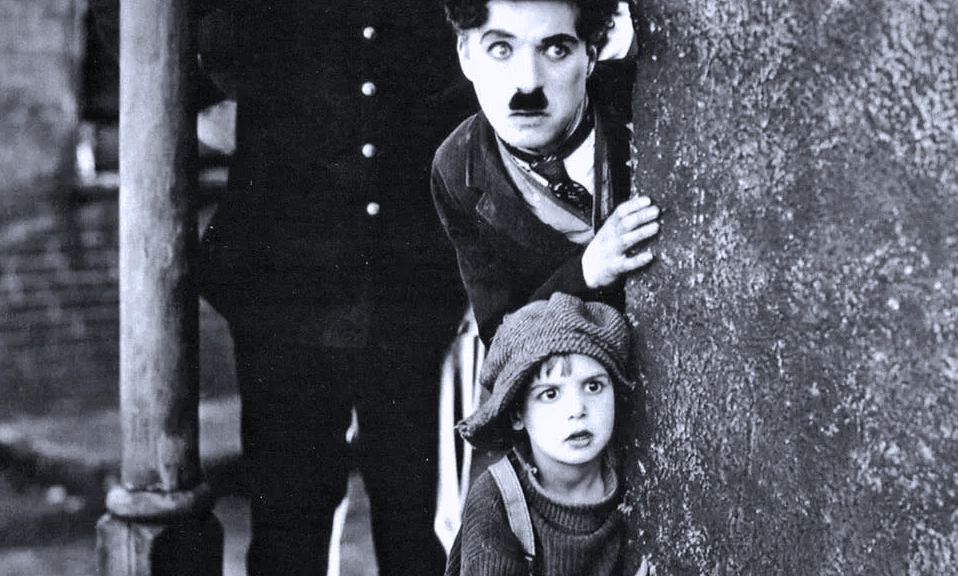
Jackie Coogan was the original Hollywood child star. Charlie Chaplin discovered him performing onstage at the Orpheum Theater in Los Angeles, noticing the boy was a “natural-born mimic”. Chaplin cast him at age five in a small part in A Day’s Pleasure (1919), then put him in The Kid (1921). The film made him an overnight sensation and one of the first child stars in Hollywood history.
By 1923, he was one of the highest-paid stars in Hollywood, earning as much as $4 million as a child. But he received an allowance of only $6.25 a week. When he turned 21 and asked for the money he had earned, his mother and stepfather refused. He sued them — and won — but the legal battle consumed years of his life and left him estranged from his family. The “Coogan Law,” which protects child performers’ earnings, was named after him.
Why it matters: Coogan didn’t just invent the child star. He also invented the cautionary tale.
2. Shirley Temple — The Most Famous Child Star of All Time
Famous at: 3 years old
Shirley Temple was, by almost any measure, the most popular and famous child star in Hollywood history. She got her start in movies at the age of three and quickly progressed to super stardom, winning a special juvenile Oscar in 1935 when she was just six years old. President Franklin D. Roosevelt famously said, “As long as we have Shirley Temple we’ll be alright”.
Temple was one of the rare child stars who grew up to be a happy, well-adjusted adult — a fact that was noted with genuine surprise by commentators. She retired from acting in her early twenties, married, raised a family, and later became a diplomat, serving as U.S. Ambassador to Czechoslovakia.
Why it matters: Temple proved that surviving child stardom was possible. But she also proved how rare it was that anyone did.
3. Tatum O’Neal — The Youngest Oscar Winner in History
Famous at: 10 years old
Tatum O’Neal was nine years old when she starred opposite her father, Ryan O’Neal, in Paper Moon (1973). Her performance was so electric, so funny and tough and heartbreaking, that she won the Academy Award for Best Supporting Actress — becoming the youngest Oscar winner in history at just 10 years and 106 days old.
She was hailed as a new kind of child star: sassy, precocious, and perfectly suited to a hip, cynical age. But her childhood was not her own. She shot the film all night, every night. Her father controlled her career and her life. She later wrote in her memoir that she “never really recovered” from her father forbidding her from auditioning for Taxi Driver after her Oscar win.
Why it matters: O’Neal’s Oscar is a record that still stands. But it’s a record that came at a price no ten-year-old should have to pay.
4. Jodie Foster — The Child Star Who Became an Auteur
Famous at: 14 years old (breakthrough)
Jodie Foster started her career at the age of two, making commercials before landing her first acting role in the TV series Mayberry R.F.D. in 1968. But it was her role as a teenage prostitute in Martin Scorsese’s Taxi Driver (1976), at age 14, that made her a star — and earned her an Academy Award nomination for Best Supporting Actress.
Foster was followed by a documentary crew when she was 13. She felt pressured to support her family, telling The Atlantic that “there was no other income”. One of the most disturbing moments of her early fame came in 1981, when John Hinckley Jr. attempted to assassinate President Ronald Reagan, claiming he was obsessed with Foster and Taxi Driver.
Foster survived. She graduated from Yale magna cum laude, won two Oscars before she was thirty, and became one of the most respected actors and directors in Hollywood.
Why it matters: Foster is proof that child stardom doesn’t have to be a trap. But the Hinckley incident is a reminder that it can be a danger.
5. Drew Barrymore — The Girl Who Fell and Got Back Up
Famous at: 7 years old
Drew Barrymore made her first commercial at 11 months old. She hit worldwide fame at seven with her performance as Gertie in Steven Spielberg’s E.T. the Extra-Terrestrial (1982), capturing hearts in a way no child actress had since Shirley Temple.
Before she reached puberty, she was both a movie star and an international icon. And then she went to rehab. By age 13, she had already entered treatment for addiction — the first of several stints. Her teenage years were a public spiral: partying, legal troubles, emancipation from her parents.
But Barrymore rebuilt herself. She became a producer, a successful romantic comedy lead, and one of the most beloved figures in Hollywood — a woman who talks openly about her past without letting it define her.
Why it matters: Barrymore’s story is one of the most documented child star collapses — and one of the most inspiring recoveries.
6. Macaulay Culkin — The Biggest Star in the World, Then Gone
Famous at: 9 years old
Macaulay Culkin became a global superstar at the age of nine after starring as Kevin McCallister in Home Alone (1990). The film grossed more than $285 million in the US alone, making it one of the highest-grossing movies of all time and making Culkin one of the biggest stars of the era. He became the first child actor to ever receive $1 million for a single film — and he was in a supporting role.
But Culkin didn’t want it. He stepped away from Hollywood as a teenager, seeking what he described as a “mundane” life. He has said that fame is “a bell you can’t un-ring”. He has since returned to acting on his own terms, in projects like Fallout and Zootropolis 2, and has spoken about how he “beat the curse” that claimed so many other child stars.
Why it matters: Culkin walked away from the machine. That takes a kind of strength most people never need to find.
7. Henry Thomas — The Boy Who Wasn’t Ready
Famous at: 10 years old
Henry Thomas was just 10 years old when E.T. the Extra-Terrestrial premiered in 1982, and he wasn’t prepared for what followed. “I wasn’t ready for it and never saw it coming,” he said, reflecting on the fame that arrived overnight.
Thomas had been acting for years before E.T., but nothing on that scale. He remembers being a kid who was really into Star Wars and Indiana Jones — and then suddenly he was the face of the biggest movie in the world. He has admitted he “did not handle being a child star well”.
But Thomas kept working. He never stopped acting. He’s built a career as one of the most reliable supporting players in Hollywood — a character actor so good that audiences often don’t realize the kid from E.T. is the same person they’re watching.
Why it matters: Thomas didn’t become a cautionary tale or a comeback story. He just became an actor. That’s its own kind of victory.
8. Josh Hutcherson — The Kid Who Called the Agency Himself
Famous at: 11 years old (breakthrough)
As a 9-year-old kid in Kentucky, Josh Hutcherson looked up a local acting agency in the phone book and called them himself. “The conversation went, ‘Hello, I would like to make movies,’ and they responded with: ‘That’s great. Can we talk to your parents?'” he recalled. “I was like, ‘I’ll have to call you back'”.
His mother drove him across the country to Los Angeles. “She thought pilot season was aviation-related,” Hutcherson said. “That shows you how little we knew”. Despite the naïveté, he booked role after role: Little Manhattan, Bridge to Terabithia, Zathura, Journey to the Center of the Earth, The Kids Are All Right. Then came The Hunger Games.
The franchise made him a global star. But rather than propel his career, it seemed to stunt him. He has spoken openly about the strange space between massive fame and feeling like it “almost all went away”. His return in Five Nights at Freddy’s and I Love L.A. has been a quiet, steady rebuild.
Why it matters: Hutcherson shows that child stardom doesn’t end when the franchise does. It just changes shape.
9. Alyson Stoner — The Child Laborer
Famous at: 6 years old
Alyson Stoner was just six years old when they were signed by Hollywood agents and told they had the “it” factor. They got their big break dancing in Missy Elliott’s “Work It” music video, then went on to appear in Cheaper by the Dozen, Camp Rock, and a string of Disney and Nickelodeon projects.
Stoner has since become one of the most articulate critics of the child star system. In their memoir Semi-Well-Adjusted Despite Literally Everything, they exposed the dark realities of child stardom: working 80 hours a week at age eight, learning to distinguish fan mail from kidnapping plots, and grappling with eating disorders that sent them to rehab.
Stoner prefers the term “child laborer” to “child star”. They have advocated for fair pay and transparency in the industry, turning their experience into a call for change.
Why it matters: Stoner didn’t just survive child stardom. They’re trying to make sure the next generation doesn’t have to.
10. Miley Cyrus, Selena Gomez, and Zendaya — The Disney Machine
Famous at: 13, 15, and 14 years old (respectively)
The Disney Channel and Nickelodeon pipeline produced an entire generation of child stars who became famous as teenagers: Miley Cyrus on Hannah Montana, Selena Gomez on Wizards of Waverly Place, Zendaya on Shake It Up and K.C. Undercover.
They were teenagers when they became household names. They were also teenagers when the scrutiny began — the tabloid coverage, the body shaming, the pressure to be role models for millions of children while navigating their own adolescence in public.
All three have spoken about the toll. All three have rebuilt their careers on their own terms — Cyrus as a Grammy-winning artist, Gomez as an Emmy-winning actress and entrepreneur, Zendaya as one of the most sought-after actors of her generation.
Why it matters: The Disney machine is still running. The question is whether the industry has learned anything from the generation it produced.
The Pattern Behind the Names
Look at the list again. Jackie Coogan. Shirley Temple. Tatum O’Neal. Jodie Foster. Drew Barrymore. Macaulay Culkin. Henry Thomas. Josh Hutcherson. Alyson Stoner. Miley Cyrus, Selena Gomez, Zendaya.
The ages vary. The eras vary. The outcomes vary wildly. But the pattern is consistent: a child is handed a level of visibility, scrutiny, and professional pressure that no child is equipped to process. Some thrive. Some collapse. Most do something in between.
The industry has changed. There are more protections now — the Coogan Law, studio teachers, intimacy coordinators, mental health resources. But the fundamental tension remains: you cannot give a child fame without also giving them something they didn’t ask for, something they can’t understand, and something they can’t give back.
Fame is a bell you can’t un-ring. These ten stars rang it before they knew what bells were for.