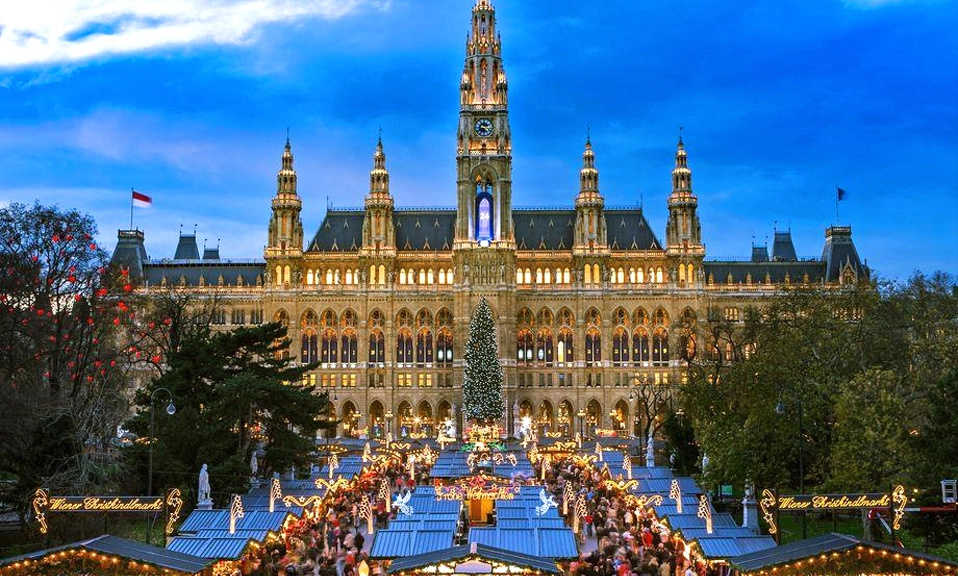
November in Vienna is a study in contrasts. The days are short, the skies are often grey, and the temperature hovers just above freezing. And yet, as dusk falls and the first lights flicker on in the city’s squares, something magical happens. The Austrian capital transforms into a glittering, fragrant, warmly lit wonderland—and the Christmas markets, which open in mid-November, are the reason to go now rather than later.
Vienna’s Christmas markets are not a single event. They are a city-wide phenomenon, with more than a dozen markets scattered across the capital, each with its own character, its own traditions, and its own particular magic. They open progressively from early to mid-November—most are in full swing by November 15—and run through Christmas and into the New Year. The timing is deliberate: November is the sweet spot, when the markets are open, the crowds are thinner than in December, and the city is still yours to explore.
Here is why Vienna’s Christmas markets are worth the trip in November, and how to make the most of them.
The Markets: A City Transformed
The Christkindlmarkt at Rathausplatz: The Grand Dame
If you visit only one market, make it this one. The Christkindlmarkt in front of Vienna’s neo-Gothic City Hall is the city’s largest and most famous Christmas market, and it is a spectacle in every sense. The square is filled with more than 150 stalls, a giant Christmas tree, an ice-skating rink, and a light installation that turns the building’s facade into a canvas of twinkling stars and festive scenes.
The market dates back to 1298, when the first “December Market” was held in Vienna. The modern incarnation has been running since 1975 and is the gold standard by which all other Christmas markets are judged. The stalls sell everything from hand-blown glass ornaments to wooden toys, woolen gloves, and traditional Austrian crafts. The food is excellent: Kaiserschmarrn (shredded pancake with plum compote), Käsekrainer (cheese-filled sausage), Lebkuchen (gingerbread), and the ubiquitous Glühwein and Punsch—the latter served in collectible mugs that change design every year.
The best time to go: Arrive at dusk, around 4:30 p.m., when the lights come on and the market is at its most atmospheric. Avoid weekends if you can—Vienna’s markets draw visitors from across Europe, and the Rathausplatz gets busy.
Schönbrunn Palace Christmas Market: Imperial Elegance
Set against the backdrop of Vienna’s most famous palace, the Schönbrunn Christmas Market is the most elegant of the city’s festive gatherings. The market is smaller than Rathausplatz—around 80 stalls—but the setting is unmatched. The palace, illuminated and framed by winter trees, creates a backdrop that feels like something out of a fairy tale.
The market is particularly good for families, with a children’s program that includes craft workshops, pony rides, and a petting zoo. The food is excellent, and the Glühwein is served in beautiful ceramic mugs. The market is open from November 8 to December 29, making it one of the earliest to open and the latest to close.
Don’t miss: The Apfelstrudel and Sachertorte at the café stalls, and the view of the palace lit up against the night sky.
Spittelberg Christmas Market: The Bohemian Alternative
Tucked into the narrow streets of the Spittelberg district—a warren of cobblestone lanes, artisan workshops, and historic buildings—this market is the antidote to the grand spectacle of Rathausplatz. It is intimate, quirky, and decidedly local. The stalls are spread through the neighbourhood’s streets, and the atmosphere is more village fête than tourist attraction.
The Spittelberg market is known for its handmade crafts, its organic food, and its unhurried pace. It is the kind of place where you can spend an hour browsing without feeling the pressure to move on. The market runs from November 13 to December 23.
Don’t miss: The handmade ceramics and wooden toys at the artisan stalls, and the Glühwein at the small stand at the corner of Spittelberggasse and Gutenberggasse.
Belvedere Christmas Market: Art and Light
The Belvedere market, located in front of the Upper Belvedere Palace, is one of the most picturesque in Vienna. The palace’s baroque architecture provides a stunning backdrop, and the market’s focus on art and craftsmanship sets it apart. It is smaller than the big markets—around 40 stalls—and the atmosphere is refined and relaxed.
The market runs from November 20 to December 23, and it is particularly lovely in the evening, when the palace is lit up and the market glows with warm light.
Don’t miss: The Klimt-inspired ornaments and the miniature paintings at the artisan stalls, and the view of the palace reflected in the market’s water features.
Karlsplatz Advent Market: The Creative Hub
Located on Karlsplatz, in front of the stunning Karlskirche (St. Charles Church), this market is a favourite with Vienna’s creative community. It is focused on contemporary crafts and design, with stalls selling everything from hand-poured candles to ceramic jewellery, screen-printed textiles, and sustainable wooden toys.
The market is also one of the most family-friendly in the city, with a dedicated children’s program that includes craft workshops and a small carousel. It runs from November 13 to December 23.
Don’t miss: The handmade ceramics and textile art, and the waffles at the stall near the church entrance.
Stephansplatz Christmas Market: The Central Hub
Right in the heart of the city, at the foot of St. Stephen’s Cathedral, this market is impossible to miss. It is smaller than the big markets—around 30 stalls—but its location makes it the perfect stop on a city walk. The market is focused on traditional crafts, with stalls selling wooden ornaments, nativity scenes, and hand-knitted scarves.
The market runs from November 8 to December 26, and it is at its most beautiful at night, when the cathedral is illuminated and the market’s lights twinkle in the shadow of the spire.
Don’t miss: The nativity scenes and the hand-carved wooden figures, and the Kaiserschmarrn at the stall on the corner of Stephansplatz and Graben.
The Food and Drink: A Culinary Tour of the Markets
The food is a major part of the Vienna Christmas market experience, and it is worth planning your visit around.
Glühwein is the ubiquitous mulled wine, served hot and spiced with cinnamon, cloves, and citrus. It is the fuel of the markets, and every stall has its own recipe. Punsch is a sweeter, fruitier alternative, made with rum, tea, and orange juice. Both are served in collectible mugs—you pay a deposit (Pfand) and keep the mug if you like it.
The food is hearty and warming. Kaiserschmarrn is a must-try: a shredded pancake served with plum compote or apple sauce. Käsekrainer is a cheese-filled sausage served with mustard and a slice of rye bread. Lebkuchen is a traditional gingerbread, often decorated with icing and sold in heart-shaped cookies called Lebkuchenherzen. Baumkuchen, a layered cake cooked on a spit, is another classic. And for something sweet, try the waffles or the roasted chestnuts sold at carts throughout the city.
Why November?
There are practical and atmospheric reasons to visit in November rather than December.
Fewer crowds. The markets are open from mid-November, but the peak season is December. Visiting in November means you can browse the stalls without being elbow-to-elbow with tourists, and you can get a table at the food stalls without waiting.
Cheaper flights and accommodation. Vienna’s hotel prices rise sharply in December, especially around Christmas. November is still low season, and you can find excellent deals on flights and hotels.
The city is still yours. In November, you can explore Vienna’s museums, coffee houses, and architecture without the holiday crowds. The Kunsthistorisches Museum, the Belvedere, and the Hofburg are all quieter in November than they are in December.
The markets are at their most magical. There is something about the early darkness and the cold air that makes the lights feel more precious. The markets are not yet crowded with tourists, and the local atmosphere is more pronounced. It feels like a discovery, not a pilgrimage.
Beyond the Markets: What Else to Do
Vienna is one of Europe’s great cities, and November is a fine time to explore it.
Coffee houses. Vienna’s coffee house culture is a UNESCO Intangible Cultural Heritage, and there is no better way to warm up than with a Melange (a Viennese cappuccino) and a slice of Sachertorte at a historic café like Café Central or Café Sperl.
Museums. The Kunsthistorisches Museum and the Belvedere are world-class, and the Albertina has an excellent collection of modern art. The Haus der Musik is a delightful interactive museum dedicated to the science and history of sound.
Music. Vienna is the city of Mozart, Beethoven, and Strauss. Book a ticket to a concert at the Musikverein or the Konzerthaus, or catch a performance at the Vienna State Opera.
Day trips. If you have time, the Wachau Valley wine region is a short train ride away, and the Danube is beautiful in the winter light.
Vienna in November
is a city on the cusp of the holidays, and the Christmas markets are the reason to go. They are a celebration of light, craftsmanship, and community—a reminder that even in the darkest, coldest months, there is warmth to be found. The markets are spectacular, the food is delicious, and the city is yours to explore. Go in November, before the crowds arrive, and discover the magic for yourself.