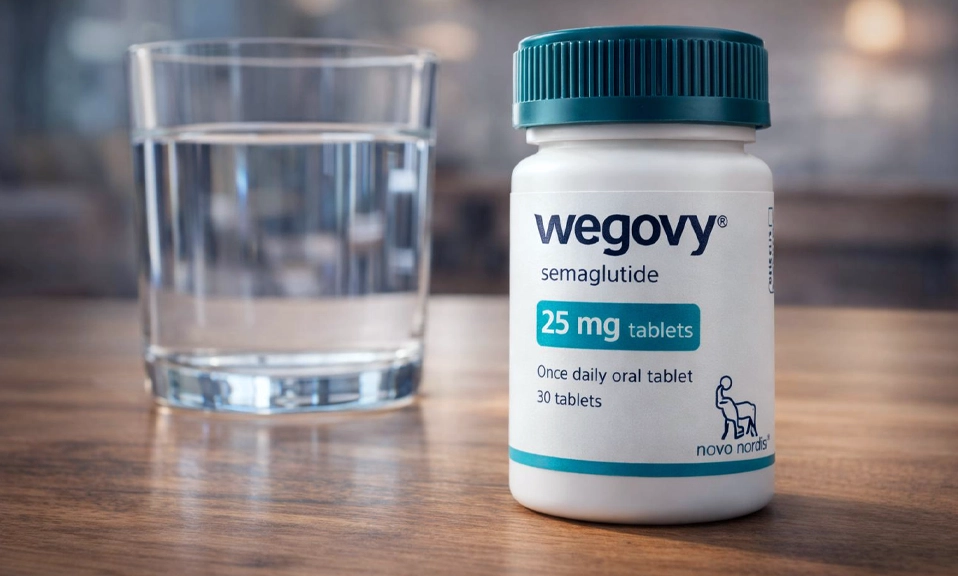
Two daily weight-loss pills are reshaping the GLP-1 market in the United States: Novo Nordisk’s oral Wegovy, which contains semaglutide, and Eli Lilly’s Foundayo, which contains orforglipron.
Both are prescription GLP-1 medicines used with a reduced-calorie diet and increased physical activity. Both are approved for adults with obesity, or for some adults with overweight plus a weight-related medical problem. Both can cause gastrointestinal side effects and carry a boxed warning about thyroid C-cell tumours. Neither should be combined with another GLP-1 medicine.
But they are not identical medicines, and the choice is not simply a contest between two brand names.
The early 2026 verdict is this: oral Wegovy is ahead on the best available weight-loss evidence, while Foundayo is ahead on dosing convenience. A 2026 population-adjusted indirect comparison estimated that oral semaglutide 25 mg produced about 3.2 percentage points more weight loss than orforglipron 36 mg. However, the drugs have not been compared in a large, randomized, obesity head-to-head trial.
What are the two pills?
Oral Wegovy is semaglutide in tablet form
Wegovy’s active ingredient is semaglutide, the same GLP-1 molecule used in injectable Wegovy. The tablet uses an absorption-enhancing ingredient called SNAC because semaglutide is a peptide that would otherwise be poorly absorbed by mouth.
The approved oral Wegovy maintenance dose is 25 mg once daily. The dose is increased gradually, beginning at 1.5 mg and moving upward at intervals directed by a healthcare professional. The step-up schedule is intended to give the body time to adjust and may be extended when side effects require it.
Oral Wegovy is also approved to reduce the risk of major cardiovascular events, such as cardiovascular death, nonfatal heart attack or nonfatal stroke, in adults with established cardiovascular disease and overweight or obesity. That cardiovascular indication is an important distinction from Foundayo’s current US weight-management approval.
Foundayo is orforglipron, a small-molecule GLP-1 pill
Foundayo contains orforglipron, an oral, nonpeptide GLP-1 receptor agonist. Unlike semaglutide, it is a small molecule designed to work as a tablet without the same absorption challenges.
The FDA approved Foundayo on April 1, 2026, for chronic weight management in adults with obesity, or adults with overweight and at least one weight-related comorbid condition, alongside diet and physical activity. The FDA-approved dose begins at 0.8 mg once daily and can be increased to 2.5 mg, 5.5 mg, 9 mg, 14.5 mg and 17.2 mg, with at least 30 days at each step when appropriate.
Foundayo’s headline practical advantage is simple: it can be taken once daily with or without food, at any time of day, without a special water limit. The tablet should be swallowed whole.
The weight-loss evidence so far
The most important caution is that the headline trial percentages come from different studies. They used different populations, sample sizes, durations, dose-escalation schedules and statistical estimands. A direct comparison would be more reliable than placing the percentages next to each other.
Oral Wegovy: OASIS 4
The approval of oral Wegovy was supported by OASIS 4, a randomized, double-blind, placebo-controlled phase 3 trial involving 307 adults with obesity or overweight and a weight-related comorbidity, without diabetes. Participants received oral semaglutide 25 mg or placebo for 64 weeks alongside lifestyle intervention.
When the analysis estimated what would happen if participants stayed on treatment, average weight loss was about 16.6%, compared with 2.7% with placebo. In the analysis that included participants regardless of whether they stayed on treatment, average weight loss was about 13.6% with oral semaglutide and 2.4% with placebo.
An American College of Cardiology summary of the published trial reported that about 30% of the oral semaglutide group reached at least 20% weight loss, compared with 3% of the placebo group. Gastrointestinal adverse events occurred in 74% of participants receiving oral semaglutide and 42% of those receiving placebo, although most were described as mild to moderate and transient.
Those figures are impressive, but they describe trial averages. They do not mean every patient will lose 14% or 17%, and they do not establish that the same person would lose more on oral semaglutide than on orforglipron.
Foundayo: ATTAIN-1
ATTAIN-1 was a randomized, double-blind, placebo-controlled phase 3 trial involving 3,127 adults with obesity and no diabetes. Participants received orforglipron at different doses or placebo for 72 weeks, together with a healthy diet and physical activity.
In the peer-reviewed report, average weight change at week 72 was 7.5% with 6 mg, 8.4% with 12 mg and 11.2% with 36 mg of orforglipron, compared with 2.1% with placebo. In the 36 mg group, 54.6% achieved at least 10% weight loss, 36.0% achieved at least 15% and 18.4% achieved at least 20%.
The FDA approval and Lilly’s labeling use the lower approved maintenance strength of 17.2 mg for Foundayo’s US weight-management dosing. Lilly reported that people taking the highest approved dose in ATTAIN-1 lost an average of 11.1% when the analysis included participants regardless of whether they remained on treatment, and 12.4% among those who stayed on treatment.
Treatment discontinuation because of adverse events occurred in 5.3% to 10.3% of the orforglipron groups in the ATTAIN-1 report, compared with 2.7% in the placebo group. Gastrointestinal effects were the most common adverse events and were mostly mild to moderate.
So is oral Wegovy actually more effective?
The strongest answer available in 2026 is probably, but not conclusively.
A peer-reviewed population-adjusted indirect treatment comparison used individual-patient data from OASIS 4 and aggregate data from ATTAIN-1. It estimated that oral semaglutide 25 mg produced 3.2 percentage points more weight loss than orforglipron 36 mg under a treatment-regimen analysis, with a 95% confidence interval from 0.4 to 5.9 percentage points. A second efficacy analysis estimated a 3.0-point advantage.
The same analysis found higher odds of stopping treatment because of any adverse event, and particularly because of gastrointestinal adverse events, in the orforglipron group. But the confidence intervals were wide, especially for gastrointestinal discontinuations. The comparison also found no statistically significant difference between the medicines in the proportion of patients crossing particular weight-loss thresholds such as 10%, 15% or 20%.
That is why the result should be described as a signal, not a final championship belt. The authors explicitly note that the comparison is indirect. The OASIS 4 and ATTAIN-1 populations were not identical, and the trials differed in design and baseline characteristics. For example, the ATTAIN-1 trial included a much larger proportion of Asian participants than OASIS 4, and the analysis could not fully adjust for race and ethnicity.
A company-sponsored indirect comparison may produce a similar commercial message, but it is still not a substitute for a randomized head-to-head obesity trial.
The convenience battle is much clearer
Foundayo wins on timing and food restrictions
Foundayo can be taken once daily at any time, with or without food. There is no requirement to wake up before breakfast, limit water to a few ounces or wait before taking other morning medicines. For people with busy routines, irregular work schedules or several morning medications, that may be a meaningful advantage.
The trade-off is that Foundayo still requires daily adherence and gradual dose escalation. “Convenient” does not mean side-effect-free, and the dose may need to remain at a lower level for longer if tolerability is an issue.
Oral Wegovy has a strict morning routine
Oral Wegovy must be taken in the morning on an empty stomach with no more than 4 ounces of water. The tablet should be swallowed whole, and the patient should wait at least 30 minutes before eating, drinking other beverages or taking other oral medicines.
That routine is more demanding, especially for people who take thyroid medicine, blood-pressure medicine or other tablets immediately after waking. On the other hand, some people may prefer a well-defined routine that connects the dose to a consistent morning habit.
Neither pill is an “easy” option if daily medication is difficult to remember. A once-weekly injection may still be a better adherence fit for some patients, even though many people strongly prefer tablets.
Safety: similar class warnings, different practical concerns
The two products share important GLP-1-related warnings. Both labels include a boxed warning about thyroid C-cell tumours based on rodent findings. They are contraindicated in people with a personal or family history of medullary thyroid carcinoma or Multiple Endocrine Neoplasia syndrome type 2.
Both can cause nausea, vomiting, diarrhoea, constipation, abdominal discomfort and other digestive symptoms. Both labels also warn about pancreatitis, gallbladder disease, dehydration-related kidney injury, hypoglycaemia in some diabetes-treatment combinations, serious allergic reactions and the risk of aspiration during anaesthesia or deep sedation.
The medicines can also affect the absorption or effectiveness of other oral medicines because GLP-1 drugs slow stomach emptying. Anyone taking diabetes drugs, oral contraceptives or other time-sensitive medicines should discuss the choice with a prescriber or pharmacist. Lilly’s patient information specifically warns that oral birth-control pills may be less reliable while starting Foundayo and for 30 days after starting and after each dose increase; the Wegovy prescribing information also requires attention to oral medicines and pregnancy planning.
Pregnancy changes the decision entirely. These are not casual weight-loss products, and people who are pregnant, planning pregnancy or breastfeeding need specific medical advice. The official product information should be read with a healthcare professional rather than replaced by a blog comparison.
Which patients may prefer each pill?
Oral Wegovy may be the better fit when:
•The priority is the strongest current weight-loss signal from oral obesity trials.
•The patient has established cardiovascular disease and may benefit from Wegovy’s approved cardiovascular-risk indication.
•The patient can reliably follow the empty-stomach, small-water and 30-minute waiting routine.
•The patient and clinician prefer semaglutide because of its longer clinical history across injectable and oral formulations.
Foundayo may be the better fit when:
•The patient strongly prefers a pill that can be taken at any time with or without food.
•A morning fasting routine would be difficult to maintain.
•The clinician believes orforglipron’s dosing flexibility is more likely to support consistent daily use.
•The patient understands that the current evidence does not show it is the weight-loss leader, but values administration convenience.
These are not prescribing rules. A clinician must consider medical history, current medicines, pregnancy plans, diabetes, gastrointestinal conditions, insurance or self-pay access, and the person’s ability to tolerate and continue treatment.
What about cost and access?
Prices change quickly and depend on insurance, eligibility, pharmacy arrangements, manufacturer programmes and whether the patient is paying cash. Novo Nordisk announced a $149 monthly starting price for the oral Wegovy launch under specific savings arrangements, while Lilly has announced self-pay and access programmes for Foundayo. Those advertised prices should not be treated as a universal out-of-pocket cost or a promise of coverage.
Availability also changes by country. The regulatory evidence discussed here is primarily the United States approval position in 2026. A medicine approved in the US may not yet be approved, marketed or reimbursed in another country.
The 2026 scorecard
Weight-loss efficacy: Oral Wegovy currently has the edge in the best available indirect comparison, but there is no direct obesity head-to-head trial.
Dosing convenience: Foundayo wins clearly because it can be taken at any time with or without food and without a water restriction.
Cardiovascular indication: Oral Wegovy has the broader current US label because it is also indicated to reduce major cardiovascular events in adults with established cardiovascular disease and overweight or obesity.
Evidence maturity: Both have phase 3 obesity data, but semaglutide has a longer clinical history across the GLP-1 category. That does not automatically make it safer or better for every individual.
Tolerability: Both commonly cause gastrointestinal effects. The indirect comparison suggested more treatment discontinuation with orforglipron, but the result is not the same as a direct randomized comparison and some confidence intervals were wide.
If “winning” means the strongest
current weight-loss result supported by cross-trial evidence, the Wegovy pill is ahead in 2026. Its OASIS 4 results were stronger than ATTAIN-1’s headline orforglipron results, and a population-adjusted indirect comparison also favoured oral semaglutide.
If “winning” means the easiest oral dosing routine, Foundayo is ahead. Its ability to be taken at any time with or without food removes the most inconvenient part of oral semaglutide treatment.
The most responsible conclusion is not that one pill has made the other obsolete. It is that patients now have two oral GLP-1 options with different trade-offs. The right choice is the medicine a qualified clinician considers appropriate and that the patient can take safely, tolerate and continue.
This article is for general information and is not a diagnosis or a substitute for medical advice. Do not start, stop or switch a prescription weight-loss medicine without speaking with a qualified healthcare professional.