Picture this: You’ve spent 12 weeks on a strict diet. You’ve done hours of cardio, skipped the desserts, and watched your daily calorie intake like a hawk. You step on the scale, and you’ve lost 15 pounds. You celebrate.
But when you look in the mirror, you don’t look “toned” or “lean.” You just look… softer. You feel weaker. Your metabolism feels sluggish, and you’re tired all the time.
Welcome to the “skinny fat” trap.
For decades, the fitness industry sold us a flawed equation: Calories in < Calories out = Success. But modern sports science and longevity research have completely rewritten the rules. Today, we know that the goal isn’t weight loss. The goal is fat loss.
And in the era of 2026—where GLP-1 weight loss medications are helping people drop pounds rapidly, but often at the cost of severe muscle depletion—preserving your lean muscle mass is no longer just a vanity project. It is the ultimate metabolic hack for long-term health.
Here is why strength training is the non-negotiable key to losing fat without losing muscle, and how to actually do it.
🏋️♂️ The Problem with the “Old Model” of Weight Loss
When you create a massive calorie deficit (starving yourself) and only do steady-state cardio (like jogging on a treadmill), your body panics. It needs energy, and it doesn’t care where it gets it.
Because muscle tissue is highly “metabolically expensive” (it requires a lot of calories just to exist), your body views it as a luxury. If you aren’t using that muscle to lift heavy things, and you aren’t feeding it enough protein, your body will literally cannibalize its own muscle tissue to burn for fuel.
The result? You weigh less on the scale, but your body fat percentage has actually gone up. You’ve slowed your metabolism, weakened your bones, and set yourself up for rapid weight regain the moment you start eating normally again.
🧬 Why Muscle is Your Ultimate Metabolic Currency
To understand why you must lift weights to lose fat, you have to understand what muscle actually does in the body. It’s not just for looking good in a t-shirt; it’s a vital metabolic organ.
- The Metabolic Engine: Muscle tissue burns calories 24/7, even when you are sleeping. The more lean mass you have, the higher your Resting Metabolic Rate (RMR). Building muscle is like upgrading your body’s engine from a 4-cylinder to a V8.
- The “Glucose Sink”: Your muscles are the primary disposal site for the carbohydrates you eat. When you strength train, you increase your muscle’s insulin sensitivity. This means the food you eat is shuttled into your muscle cells to be used as energy, rather than being stored as body fat.
- The Longevity Armor: As we age, we naturally lose muscle mass (sarcopenia). Preserving muscle through strength training is the number one predictor of independence, fall prevention, and overall lifespan in older age.
🛠️ The 3 Pillars of Fat Loss Without Muscle Loss
If you want to strip away the fat while keeping (or even building) your muscle, you need to execute these three pillars simultaneously.
Pillar 1: Strength Training (The “Keep” Signal)
When you are in a calorie deficit, your body is looking for a reason to shed tissue. Lifting heavy things provides the reason to keep your muscle.
- The Fix: You need to engage in resistance training 2 to 4 times per week. Focus on compound movements (squats, deadlifts, lunges, push-ups, rows, and overhead presses). These exercises recruit the maximum amount of muscle fibers, sending a loud, undeniable signal to your body: “We need this muscle to survive this physical stress. Do not burn it for fuel!”
- The Golden Rule: Focus on Progressive Overload. You must continually challenge your muscles by lifting slightly heavier weights, or doing more reps, over time.
Pillar 2: High Protein Intake (The Building Blocks)
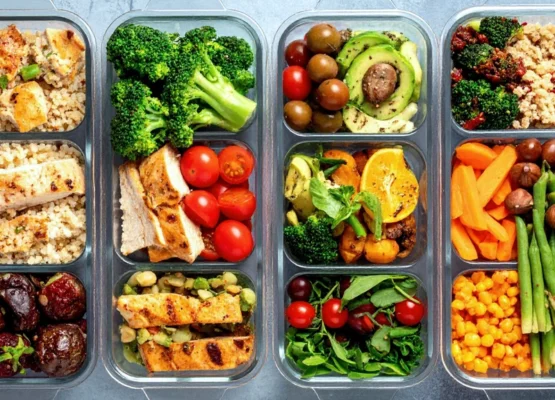
You cannot build or preserve muscle out of thin air. Protein provides the amino acids required to repair the tissue you break down in the gym. Furthermore, protein has a high “thermic effect” (your body burns calories just digesting it) and keeps you incredibly full.
- The Fix: Aim for 1.6 to 2.2 grams of protein per kilogram of body weight (or about 0.8 to 1 gram per pound). Spread this out evenly across 3 to 4 meals a day to maximize Muscle Protein Synthesis (MPS).
Pillar 3: A Conservative Calorie Deficit (The Slow Burn)
Crash diets are muscle murderers. If you cut your calories by 1,000 a day, you will lose muscle.
- The Fix: Aim for a modest deficit of 300 to 500 calories below your maintenance level. This slow, steady approach forces your body to primarily tap into stored body fat for energy, while the strength training and high protein intake protect your lean tissue.
🚫 Busting the “Bulky” Myth
The most common reason people (especially women) avoid strength training while dieting is the fear of getting “bulky.”
Let’s kill this myth right now: You cannot accidentally get bulky.
Building massive amounts of muscle requires years of dedicated, heavy lifting and a massive caloric surplus. When you lift weights in a calorie deficit, you will not get bulky. You will get “toned.” (And for the record, “toned” is just fitness industry slang for “having muscle mass while losing the fat covering it”).
Cardio makes you a smaller version of your current self. Strength training changes your actual shape.
🏃♂️ What About Cardio?
This isn’t an anti-cardio manifesto. Cardiovascular exercise is phenomenal for your heart health, your VO2 max, and your mental well-being.
But if your primary goal is body recomposition (losing fat and keeping muscle), cardio should be the accessory, not the main event. Think of strength training as the foundation of the house, and cardio as the paint on the walls. Use cardio for heart health and extra calorie burning, but never let it replace your weight sessions.
Throw Away the Scale
The most liberating thing you can do on a fat-loss journey is to stop obsessing over the number on the scale.
Because muscle is denser than fat, you could lose 5 pounds of fat and gain 3 pounds of muscle. The scale will only show a 2-pound drop. But in the mirror, your clothes will fit completely differently, your posture will improve, and you will look dramatically leaner and stronger.
Weight loss is about shrinking. Fat loss with strength training is about transforming.
Pick up the heavy weights, eat your protein, and give your body the signal it needs to keep its most valuable metabolic asset. The scale might move slower, but the results will last a lifetime.