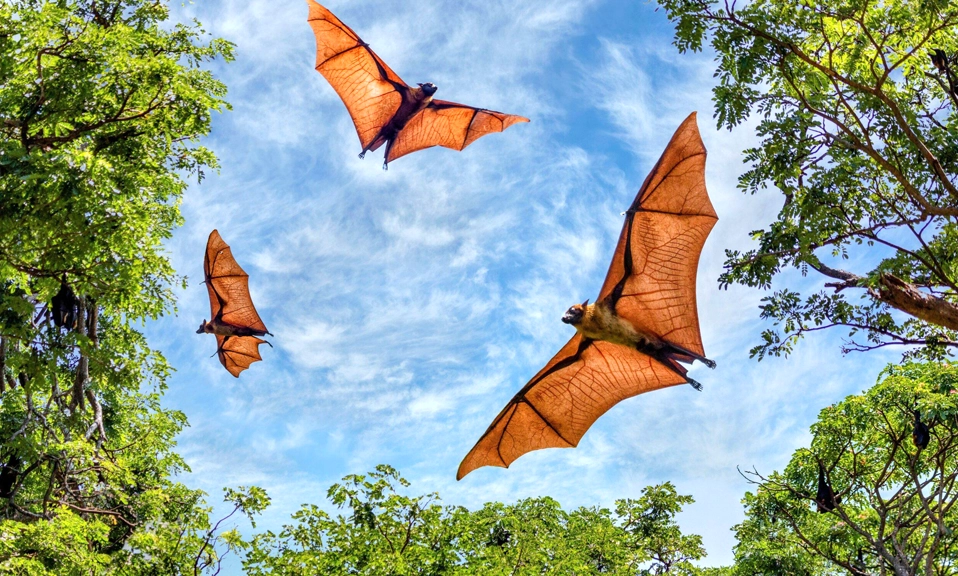
They are the only mammals capable of true flight, the creatures of the night that most of us rarely see and often misunderstand. But behind the eerie squeaks and the leathery wings lies one of the most important ecological forces on the planet. Bats are not just inhabitants of forests—they are among their most essential architects, quietly shaping the health and future of woodlands across the globe.
From the tropical rainforests of the Amazon to the temperate woodlands of Europe and North America, bats perform a suite of ecological roles that few other animals can match. They pollinate, they disperse seeds, they control insect populations, and they cycle nutrients through cave ecosystems. Without them, many forests would look fundamentally different—and some might not survive at all.
Here is why bats are essential to healthy forests, and why protecting them is one of the smartest investments we can make in the natural world.
1. Seed Dispersers: The Gardeners of the Night
In tropical forests, fruit bats are among the most important seed dispersers on Earth. Unlike birds, which often digest seeds or drop them in predictable locations, bats consume fruit and excrete seeds as they fly—scattering them across the landscape in their droppings. This process, known as chiropterochory, is responsible for the regeneration of vast areas of forest.
A single fruit bat can disperse thousands of seeds in a single night, and some species travel dozens of kilometres between feeding sites. This long-distance dispersal is crucial for connecting fragmented habitats and allowing forests to recolonise cleared land. In the Neotropics, bats are the primary dispersers for hundreds of plant species, including many that are economically important—avocado, mango, banana, and fig among them.
Research has shown that areas where fruit bats have been lost experience slower forest regeneration and reduced plant diversity. In some cases, large-seeded trees—those that produce the biggest, most nutrient-dense fruits—are the hardest hit, because few other animals can swallow and disperse their seeds. Without bats, these trees struggle to reproduce and spread.
2. Pollinators: The Night Shift That Keeps Forests Flowering
While bees and butterflies get most of the credit for pollination, bats are unsung heroes of the night shift. More than 500 species of plants rely on bats for pollination, including many that are ecologically and economically significant.
In the deserts of North America, nectar-feeding bats pollinate columnar cacti, including the iconic saguaro. In the forests of Southeast Asia, the dawn bat (Eonycteris spelaea) is the primary pollinator of durian—a fruit worth billions of dollars in global trade. In Africa, baobab trees and their bat pollinators have co-evolved for millions of years, with the trees producing large, night-blooming flowers specifically adapted to attract bats.
These pollination services are not just ecologically valuable—they are economically essential. A 2026 study estimated that bat pollination contributes hundreds of millions of dollars annually to global agriculture, and the loss of bat pollinators would have cascading effects on both wild plant communities and human food systems.
3. Insect Control: The Original Pest Managers
Insectivorous bats are nature’s most efficient pest controllers. A single bat can eat up to 1,000 mosquitoes in an hour, and a colony of 150 bats can consume more than a million insects in a single night. On a landscape scale, bats provide pest control services worth billions of dollars to agriculture every year.
In forests, bats play a critical role in keeping insect populations in check. Many forest pests—including beetles, moths, and caterpillars—are nocturnal, which makes them perfect prey for bats. When bat populations decline, insect damage to trees can increase significantly. A 2026 study in the Journal of Applied Ecology found that forests with healthy bat populations had lower rates of herbivory and higher tree growth rates than forests where bats had been lost.
This pest control service is particularly valuable in the context of climate change, as warming temperatures expand the ranges of many forest pests. Bats provide a natural buffer against these outbreaks, reducing the need for chemical pesticides and helping to maintain forest health.
4. Nutrient Cyclers: The Cave Connection
Bats are not just forest dwellers—they are also cave dwellers, and their presence in caves has profound effects on the ecosystems around them.
Bat guano—the accumulated droppings of millions of bats over thousands of years—is one of the richest natural fertilisers on Earth. In caves where bats roost, guano supports entire food webs, from bacteria and fungi to insects, spiders, and even fish. It also seeps into groundwater and is carried into surrounding forests, delivering nutrients that support plant growth.
In tropical caves, guano deposits can be metres deep and support thousands of species, many of which are found nowhere else. These cave ecosystems are intimately linked to the forests above, and the nutrients that bats bring from their foraging grounds help to fertilise the forest floor.
5. Indicator Species: What Bats Tell Us About Forest Health
Because bats are so sensitive to environmental change, they are excellent indicators of ecosystem health. A healthy bat population suggests a healthy forest—one with diverse plant life, abundant insect prey, and clean water.
When bat populations decline, it is often a sign that something is wrong: pesticide use, habitat loss, climate stress, or disease. Monitoring bats can therefore serve as an early warning system for forest health, allowing conservationists to intervene before the damage becomes irreversible.
The Threats: Why Bats Need Our Help
Despite their ecological importance, bats are among the most threatened groups of mammals on Earth. More than 200 bat species are listed as threatened or endangered, and many more are in decline.
Habitat loss is the most significant threat. Deforestation, agricultural expansion, and urban development destroy the roosts, foraging grounds, and migratory corridors that bats depend on.
Pesticides kill the insects that bats eat, and can accumulate in their bodies over time. Wind turbines kill hundreds of thousands of bats each year, particularly during migration.
Disease has also taken a devastating toll. White-nose syndrome, caused by a fungus introduced to North America, has killed more than six million bats since it was first detected in 2006.
And climate change is altering the timing of insect emergence, the availability of fruit, and the suitability of roosts—creating mismatches that bats cannot always adapt to.
What Can Be Done?
The good news is that bats are resilient, and targeted conservation efforts can make a real difference.
Protect roosts. Bats need safe places to rest, breed, and hibernate—whether that’s a cave, a tree, or a building. Preserving and restoring these sites is the most important step.
Reduce pesticide use. Supporting organic farming and reducing chemical inputs in gardens and agricultural landscapes helps to keep bat food sources healthy.
Install bat boxes. Artificial roosts can provide alternative habitat in areas where natural roosts are scarce.
Support bat research. We still know surprisingly little about many bat species. Funding research is essential for effective conservation.
Spread the word. Bats suffer from a PR problem. Educating others about their ecological importance—and dispelling myths about them being “pests” or “disease carriers”—is one of the most effective ways to build support for their protection.
The Architects We Overlook
Bats are not just part of the forest—they are among its most important builders. They plant the seeds that become trees, pollinate the flowers that become fruit, and control the insects that would otherwise strip the canopy bare. They cycle nutrients through caves and forests, and they warn us when ecosystems are in trouble.
They do all of this in the dark, unnoticed by most people, while facing threats that would have driven many species to extinction.
The next time you see a bat flicker past a streetlight, or hear the faint rustle of wings in the twilight, remember: you are watching one of nature’s most essential architects at work. The forest depends on them. And so, in ways both direct and indirect, do we.