Your car’s brakes are, without exaggeration, the most critical safety system you have. They are the only thing standing between you and a catastrophe when a child runs into the street, traffic stops suddenly, or you’re navigating a steep, winding hill.
Yet, because they are hidden behind your wheels, it’s easy to adopt an “out of sight, out of mind” mentality.
The problem? Brakes don’t usually fail without warning. They give you subtle (and sometimes not-so-subtle) clues that they are wearing out or malfunctioning. Ignoring these signs doesn’t just lead to a more expensive repair bill; it puts your life and the lives of others at risk.
If you want to keep your stopping power sharp and your wallet intact, here are the 8 warning signs that your car brakes need immediate attention.
🛑 1. High-Pitched Squeaking or Squealing
The Symptom: A sharp, high-pitched squeal every time you press the brake pedal, which may go away when you let off. The Cause: Most modern brake pads have a built-in “wear indicator”—a small metal tab designed to scrape against the rotor when the friction material gets dangerously thin. It’s essentially a built-in alarm system. The Urgency: Moderate to High. This is your car’s way of saying, “I need new pads soon.” If you ignore it, the pads will wear down completely, leading to the next, much worse symptom on this list.
⚙️ 2. Loud Grinding or Growling
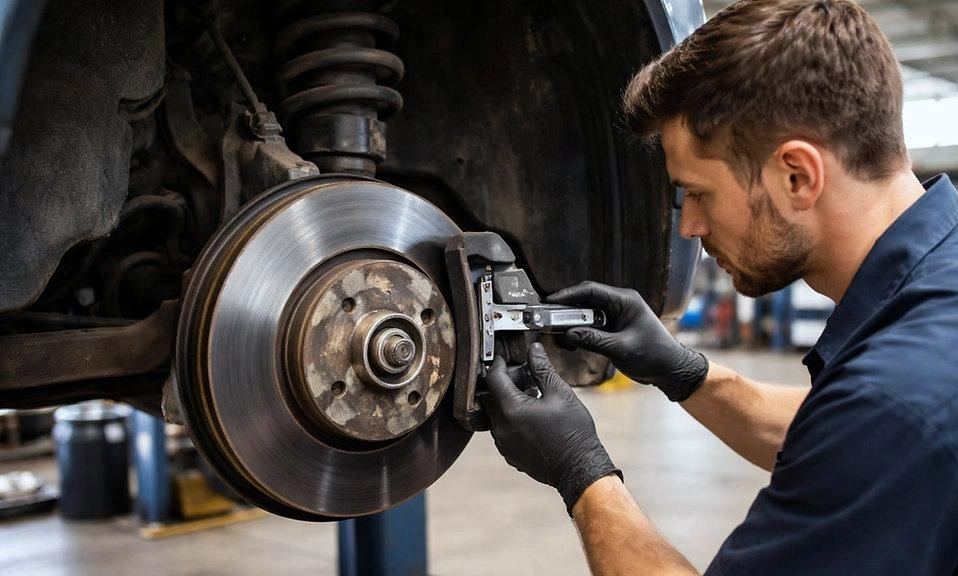
The Symptom: A harsh, metallic grinding, growling, or rumbling sound when you brake. It feels like you’re driving over gravel. The Cause: The brake pad friction material is completely gone. You are now experiencing metal-on-metal contact, with the steel backing plate of the brake pad grinding directly against the cast-iron brake rotor. The Urgency: CRITICAL. Pull over safely and call a tow truck if possible. Continuing to drive will destroy your brake rotors, damage the calipers, and drastically increase your stopping distance. A $150 brake pad job just turned into a $600+ rotor and caliper replacement.
📳 3. Vibrating or Pulsating Brake Pedal
The Symptom: When you press the brake pedal, it pulses, shudders, or vibrates under your foot. You might also feel a shaking in the steering wheel. The Cause: This is the classic sign of warped brake rotors. Rotors can warp due to extreme heat (like riding the brakes down a long mountain pass) or from being rapidly cooled (like driving through a deep puddle after heavy braking). The Urgency: High. Warped rotors reduce the surface area of the brake pad making contact with the rotor, increasing your stopping distance. They need to be resurfaced or replaced.
☁️ 4. A “Spongy” or Soft Brake Pedal
The Symptom: The brake pedal feels mushy, sinks closer to the floor than usual, or requires you to pump it to get the car to stop. The Cause: This almost always indicates a problem with the hydraulic system. It could be air bubbles in the brake lines (which compress, unlike fluid), a leak in the brake lines, or severely degraded, moisture-contaminated brake fluid. The Urgency: CRITICAL. If your pedal goes to the floor, you are one hard stop away from total brake failure. Do not drive the car. Have it towed to a mechanic immediately.
⬅️ 5. The Car Pulls to One Side When Braking
The Symptom: When you apply the brakes, the steering wheel yanks to the left or right, and you have to fight to keep the car going straight. The Cause: This means the braking force is uneven. It could be a seized or sticking brake caliper on one side, a collapsed brake hose, or unevenly worn brake pads. One side of the car is stopping faster than the other. The Urgency: High. This severely compromises your vehicle’s stability, especially in wet conditions or during emergency stops. It requires immediate professional diagnosis.
🔥 6. A Sharp, Burning Chemical Smell
The Symptom: A distinct, acrid, chemical odor coming from the wheels after driving, sometimes accompanied by a faint haze or smoke. The Cause: Your brakes are overheating. This can happen if you “ride” the brakes down a long hill instead of using engine braking (downshifting). It can also mean a brake caliper is stuck in the “engaged” position, causing the pad to constantly drag against the rotor. The Urgency: High. Overheated brakes can boil your brake fluid (leading to a spongy pedal and total failure) and warp your rotors. Pull over and let the brakes cool down completely before driving again, and get them inspected.
💡 7. The Brake Warning Light is On
The Symptom: A red exclamation mark inside a circle, the word “BRAKE,” or the yellow “ABS” (Anti-lock Braking System) light illuminates on your dashboard. The Cause: The red light usually means your parking brake is engaged, your brake fluid is critically low, or there is a major hydraulic fault. The yellow ABS light means the anti-lock system has detected a fault and has disabled itself (though your standard brakes should still work). The Urgency: High to Critical. Check your parking brake first. If it’s off and the red light remains, check your brake fluid reservoir immediately. If it’s low, you likely have a leak. Do not ignore dashboard warning lights.
📏 8. Noticeably Increased Stopping Distance
The Symptom: You find yourself having to brake much earlier than you used to, or the car just doesn’t seem to slow down as quickly as it should. The Cause: This is a general symptom of worn brake pads, glazed (overheated and hardened) rotors, old/contaminated brake fluid, or worn tires. The Urgency: High. If your car isn’t stopping when you expect it to, you are a hazard on the road. Have the entire braking system, including the tires, inspected immediately.
🛠️ 3 Pro Tips to Make Your Brakes Last Longer
Brake replacement is inevitable, but you can stretch their lifespan (and save hundreds of dollars) with these habits:
- Don’t “Ride” the Brakes: Resting your foot lightly on the brake pedal while driving keeps the pads in constant, light contact with the rotors, generating unnecessary heat and wear.
- Use Engine Braking on Hills: When going down a steep incline, shift into a lower gear (or “L” / “B” mode in many modern cars and EVs). Let the engine’s compression slow the car down, saving your brake pads from overheating. (Note for EV/Hybrid drivers: Maximize your regenerative braking settings to let the electric motor do the slowing, which saves your physical friction brakes for when you really need them).
- Get Them Inspected with Every Tire Rotation: You don’t need to replace your brakes every time you rotate your tires, but you should ask the technician to visually inspect the pad thickness and rotor condition every 5,000 to 7,500 miles.
When in Doubt, Get it Checked Out
Brake repairs can feel expensive, but they are always cheaper than the alternative: a preventable accident, a towed car, or a destroyed rotor and caliper assembly.
Your car is trying to talk to you. If it’s squealing, grinding, vibrating, or pulling, listen to it. Don’t wait for a minor annoyance to become a major safety hazard.
Find a trusted, reputable local mechanic, describe the symptoms you’ve been experiencing, and get your brakes inspected today. Your future self (and your passengers) will thank you.