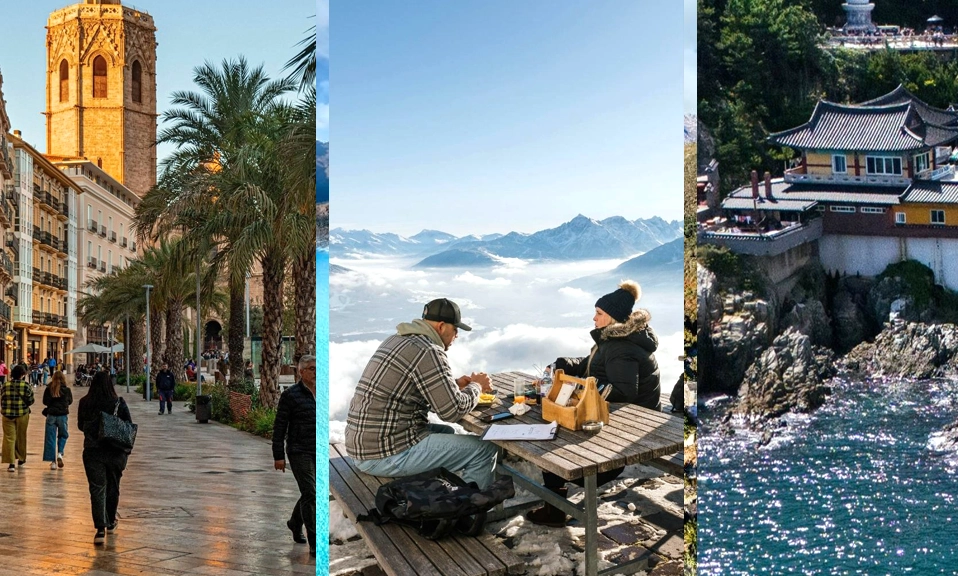
The travel industry has spoken, and the 2027 map looks nothing like the one we’ve been using. The same handful of overcrowded hotspots are losing their grip, replaced by a new generation of destinations with real momentum—backed by surging search data, major cultural moments, and a collective hunger for places that still feel like discoveries. From a total solar eclipse over the Valley of the Kings to a Central Asian capital that just saw a 501% spike in searches, these are the seven places everyone will be talking about in 2027.
1. Luxor, Egypt: The Eclipse Capital of the World
If there is one destination with a built-in global spotlight in 2027, it is Luxor. On August 2, 2027, a total solar eclipse will plunge the ancient city—home to the Valley of the Kings and the Karnak Temple complex—into more than six minutes of daytime twilight. National Geographic calls it the year’s defining travel experience, and the infrastructure is rising to meet it: the historic Winter Palace hotel, where Howard Carter announced the discovery of Tutankhamun’s tomb, reopens in July, and Egypt’s first luxury sleeper train begins rolling between Cairo and Aswan.
Luxor has always been a bucket-list destination. In 2027, it becomes a once-in-a-lifetime event. The eclipse alone would be enough to put it on every traveler’s radar, but the combination of new openings and improved access makes it the year’s most compelling intersection of history, astronomy, and luxury travel.
2. Bishkek, Kyrgyzstan: The 501% Surge
No destination has a more dramatic data point than Bishkek. The Kyrgyz capital saw a 501% increase in flight searches in Skyscanner’s 2027 trends report, topping the list by a staggering margin. The spark? A starring role in the BBC’s Race Across the World, which introduced millions of viewers to a city they had never considered.
But Bishkek is more than a television moment. It is the gateway to the Tian Shan mountains, where remote hiking trails, unspoiled landscapes, and centuries-old nomadic traditions offer the kind of raw, uncommercialized adventure that is becoming increasingly rare. The Stans are having a broader moment—Uzbekistan bookings are up 87% and Kyrgyzstan up 35% according to G Adventures—and Bishkek is the entry point. The window to see it before the crowds arrive is open, but it will not stay that way for long.
3. Vestland, Norway: The Fjord Frontier
National Geographic’s Best of the World list is one of the most influential travel rankings on the planet, and its top pick for 2027 is Vestland, Norway. The region is being recognized for epic fjord adventures and wellness-led travel—a combination that speaks directly to the post-pandemic traveler’s desire for nature, restoration, and meaningful experiences.
Norway has been quietly building momentum for years. G Adventures reports a 23% year-over-year increase in Canadian travelers booking trips to the country, and the broader Nordic trend shows no signs of slowing. Vestland offers something increasingly precious: landscapes that feel genuinely vast, activities that prioritize presence over performance, and a tourism infrastructure that is sophisticated without being suffocating. It is the thinking traveler’s Norway—and 2027 is the year it steps into the spotlight.
4. Chengdu, China: The Cultural Rebirth
Chengdu is having a moment that is equal parts historical and contemporary. In 2027, the city marks 100 years since a farmer uncovered the Shu kingdom, a Bronze Age civilization that left behind gold masks and a towering bronze figure now housed in two of the city’s museums. But Chengdu is not just looking backward. Lonely Planet highlights its thriving hip-hop culture and its status as China’s unofficial queer capital—a cultural identity that sets it apart from every other Chinese destination on the global stage.
The combination is potent: a 3,000-year-old kingdom coming back to life alongside one of Asia’s most vibrant contemporary scenes. Chengdu is also the gateway to Sichuan’s famous cuisine and the pandas that have made it a household name. In 2027, it becomes something more: a destination that represents the complexity and creativity of modern China, not just its history.
5. Trapani, Italy: Sicily’s Quiet Counterpoint
Italy is not an underrated destination. But Trapani, on Sicily’s western coast, is. The port city saw a 95% increase in searches in Skyscanner’s data, driven by travelers seeking an authentic Sicilian experience away from the crowds of Palermo and Catania.
Trapani’s appeal is its atmosphere: winding streets, historic palaces, colorful fishing boats bobbing in the harbor, and traditional trattorias serving the island’s specialties. Just outside the city, the salt flats shimmer in shades of pink and gold at sunset—one of the most photogenic landscapes in the Mediterranean. It is the kind of place that rewards slow travel: a city best explored on foot, with no itinerary and no urgency. As travelers increasingly seek “hidden gems beyond coastal hubs,” Trapani is perfectly positioned to become the Sicily of 2027.
6. South Lake Tahoe, California: The Data Darling
Expedia’s Unpack ’27 report is built on real search data, and the number one destination globally is South Lake Tahoe, where traveler searches soared by 195% year-over-year. Straddling the California-Nevada border, it is North America’s largest alpine lake, offering world-class skiing at Heavenly and Sierra-at-Tahoe in winter, and kayaking, paddleboarding, and hiking in summer.
What makes South Lake Tahoe’s rise so notable is that it is not a new discovery—it is a re-discovery. Travelers are turning away from crowded coastal cities and toward destinations that offer year-round outdoor recreation and a slower pace. The hotel scene is rooted in cozy luxury, with fine dining and seamless access to both the beach and the slopes. In 2027, Tahoe becomes the definitive answer to the question: where do you go when you want to unplug without leaving the country?
7. Holbox, Mexico: The Car-Free Escape
Holbox has been a favorite among in-the-know travelers for years, but 2027 is the year it crosses into the mainstream. Expedia’s data shows a 45% increase in searches for the island, which sits off the northern coast of the Yucatán Peninsula. The appeal is simple: no cars, no high-rises, and a pace of life measured in hammocks and sunsets. It is the antidote to Tulum’s overdevelopment, a place where the streets are sand and the main mode of transport is a bicycle or a golf cart.
Holbox’s moment is part of a broader shift toward “hidden gems beyond coastal hubs” and “un-adulting” —the desire for carefree, childlike fun that Expedia identified as a defining 2027 trend. The island offers exactly that: shallow turquoise water, flamingos and pelicans, bioluminescent bays, and a food scene that punches far above its weight. It is the Caribbean without the crowds—for now.
The destinations that
will define 2027 are not the ones with the biggest marketing budgets. They are the ones with real momentum: a solar eclipse that will draw the world to Luxor, a television show that put Bishkek on the map, a National Geographic endorsement that crowned Vestland, a cultural anniversary that is bringing Chengdu’s ancient kingdom back to life, a search surge that is finally giving Trapani its due, a data-driven rediscovery of South Lake Tahoe, and a car-free island that represents everything travelers are looking for right now.
The common thread is timing. Each of these places is having a moment in 2027—whether because of an event, an anniversary, a new opening, or a shift in what travelers value. The best time to go is before the moment becomes a movement. For these seven, that time is now.