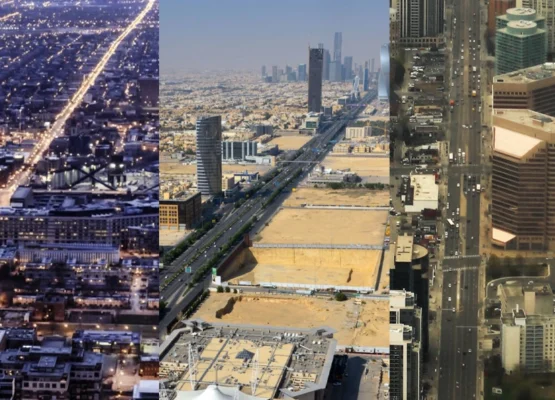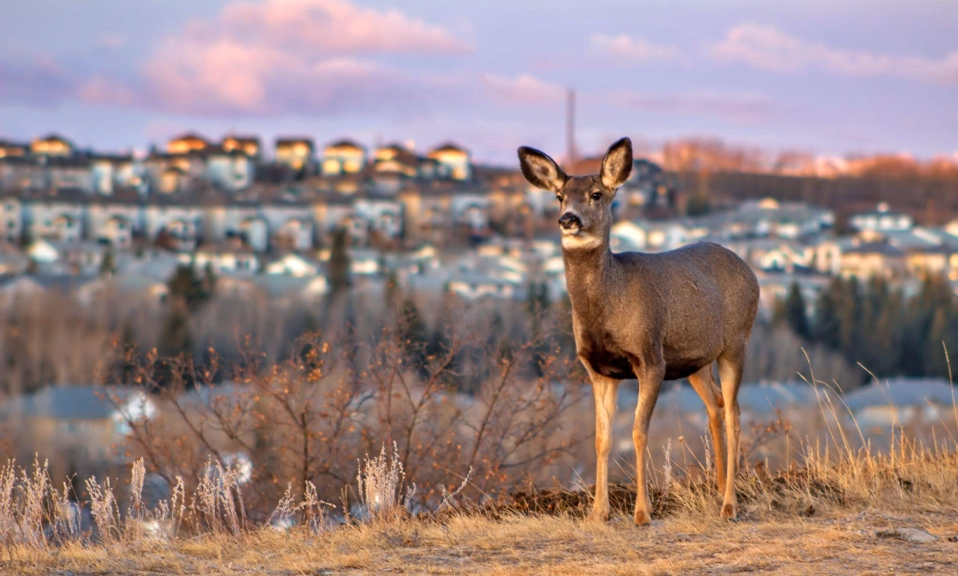
Human expansion is relentless. Cities sprawl, roads cut through forests, farms replace grasslands, and the human footprint now touches nearly every corner of the planet. For decades, the narrative has been one of simple loss: animals disappear when people arrive, and the natural world shrinks. But the latest research tells a more complicated—and more surprising—story. Animals are not passive victims. They are adapting, innovating, and in some cases, thriving. The question isn’t whether nature can survive human expansion. It’s what kind of nature will emerge from it.
Here’s what the science is revealing about how animals react to us—and why the answers are more nuanced than you might think.
The Landscape of Fear Is Now Human-Shaped
For decades, ecologists studied how animals respond to natural predators—the way deer scan for wolves, the way elk avoid valleys where cougars hunt. But a wave of research published in 2026 has upended that picture. When scientists tracked thousands of wild animals across six continents, they found something unsettling: the predator they fear most is us.
In a 2023 study led by ecologist Liana Zanette, researchers played recordings of human voices, dog barks, and gunshots to wild mammals in South Africa’s savanna. The animals responded to human voices with significantly more fear than to lion vocalizations or even gunshots. They fled, abandoned waterholes, and stayed hidden for hours. A 2026 follow-up study expanded the research to 21 species across four continents and found the same pattern: even in protected areas where humans pose no direct threat, animals avoid human infrastructure, shift their activity patterns, and alter their movement in ways that suggest a deep, hardwired fear.
The most consistent behavioral change is a shift toward nocturnality. Deer, coyotes, foxes, bobcats, and even large carnivores like mountain lions and bears are becoming more active at night and less active during the day when humans are around. This “night shift” has consequences that ripple through entire ecosystems—changing predator-prey dynamics, altering foraging patterns, and affecting reproduction and survival.
“The landscape of fear is now a human landscape,” the authors of one 2025 analysis wrote. And that fear is a powerful force shaping the natural world.
The Adapters: Animals That Are Learning to Live With Us
But fear is only one response. The other is adaptation.
Some species are not just surviving human expansion—they are exploiting it. Urban foxes in London have learned to navigate traffic, find food in trash bins, and raise cubs in garden sheds. Coyotes have expanded their range across North America, thriving in suburbs and cities by shifting their diets and becoming more nocturnal. Peregrine falcons nest on skyscrapers and bridges, using the same cliffs their ancestors used. White storks in Europe now migrate shorter distances, or not at all, because landfills provide reliable food year-round.
A 2026 study on urban birds found that species with larger brains relative to their body size are more successful in cities—they are better at problem-solving, adapting to new food sources, and avoiding novel threats. Another 2026 study found that some city-dwelling birds are changing their songs, singing higher and faster to be heard over traffic noise.
These are not just curiosities. They are evidence that evolution is happening in real time, driven by human pressure. The animals that survive are not the strongest or the fastest. They are the most flexible.
The Cost of Adaptation: Stress, Disease, and Shrinking Diversity
But adaptation has a cost. A 2026 study of urban foxes found that city life changes their physiology: urban foxes have higher stress hormones, altered immune responses, and different gut microbiomes than their rural counterparts. They may be surviving, but they are not necessarily thriving.
And the shift toward a small number of adaptable species comes at the expense of diversity. As generalists like foxes, coyotes, and pigeons thrive, specialists—the animals that need specific habitats, specific foods, specific conditions—decline. The result is a world that is increasingly populated by a handful of winners and a long list of losers. Biodiversity doesn’t disappear overnight. It erodes, one specialist at a time.
The 2026 Living Planet Report captured this tension perfectly: 73% average decline in monitored wildlife populations since 1970, but half of those populations are stable or increasing. The losses are concentrated in the species that cannot adapt. The gains are concentrated in the species that can.
The Innovators: Animals That Are Using Human Infrastructure
Some animals are doing more than adapting. They are innovating.
Bears in North America have learned to use highway underpasses and overpasses designed for wildlife. Elephants in Kenya have learned to navigate around farms and use corridors protected by community conservancies. Primates in Indonesia have learned to raid crops and avoid traps. Crows in Japan have learned to use cars to crack nuts—a behavior that requires understanding traffic lights and timing.
These are not just clever tricks. They are evidence of behavioral flexibility—the ability to solve novel problems in novel environments. And they suggest that some animals are capable of coexisting with humans, if we give them the chance.
The key is connectivity. A 2026 study using GPS telemetry reaffirmed that the survival of species like the Sunda clouded leopard in Borneo depends on intact and connected forest networks. Fragmented habitat is a death sentence for species that need to move. Connected habitat is a lifeline.
The Question: Can Nature Survive?
The honest answer is: yes, but not in the form we remember.
Nature is not a static thing. It is a dynamic, evolving system. It has survived ice ages, asteroid impacts, and mass extinctions. It will survive human expansion. But it will look different. It will be more homogenized, more nocturnal, more dependent on human-managed landscapes. It will be a nature of survivors and adapters, not of abundance and diversity.
That’s not a reason for despair. It’s a reason for action. The research shows that animals can adapt if we give them the space to do it. They can thrive if we design our cities, farms, and infrastructure with them in mind. They can survive if we protect the habitats and corridors they need to move.
The question isn’t whether nature can survive human expansion. It’s whether we will choose to share the planet with it—or whether we will continue to expand until there’s nothing left to share.
Human expansion
is not going to stop. But the way animals respond to it is not fixed. Some will flee. Some will adapt. Some will innovate. And some will thrive.
The research tells us that the future of nature is not predetermined. It depends on the choices we make: whether we protect connected habitats, whether we design cities that accommodate wildlife, whether we recognize that the “landscape of fear” we have created is not inevitable.
Nature can survive human expansion. But it needs us to be more than just a predator. It needs us to be a partner.