Sport is built on a simple promise: the best team wins, the rules are applied fairly, and the result is earned. But every fan knows that promise is fragile. A single decision—a whistle blown, a flag raised, a video replay left untouched—can decide a championship, define a career, and haunt a nation for decades. The most controversial sports decisions force us to ask an uncomfortable question: when the margins are this thin, are we witnessing fair play, or are we watching a referee’s mistake become history?
Here are some of the most debated decisions in modern sport—and what they reveal about the line between gamesmanship and error.
1. The Hand of God (1986 World Cup)
What happened: In the quarter-final between Argentina and England, Diego Maradona rose to meet a looping ball and punched it into the net with his left hand. The referee, Tunisian Ali Bin Nasser, did not see it. The goal stood. Four minutes later, Maradona scored the “Goal of the Century” and Argentina won 2-1.
Fair play or mistake? Both. Maradona later admitted it was “a little with the head of Maradona and a little with the hand of God”—a knowing act of gamesmanship. But the referee’s failure to spot it was a human error. The decision was a mistake; the act was not fair play. And yet, in the years since, the goal has become folklore—celebrated by Argentinians, mourned by the English, and studied by every referee who has since been told to watch the hands.
2. Frank Lampard’s Ghost Goal (2010 World Cup)
What happened: England vs Germany, round of 16. With Germany leading 2-1, Lampard’s shot beat Manuel Neuer, hit the crossbar, bounced clearly over the line, and spun back out. The referee waved play on. No goal. Germany won 4-1.
Fair play or mistake? Pure referee error. The ball was a foot over the line. The assistant referee was poorly positioned, and goal-line technology did not yet exist at the World Cup. The decision was not controversial because of interpretation—it was controversial because the evidence was unambiguous and the officials missed it. The incident accelerated the adoption of goal-line technology, which was used at the 2014 World Cup.
3. The 2018 Champions League Final: Ramos and Salah
What happened: Real Madrid vs Liverpool. Early in the first half, Sergio Ramos tangled with Mohamed Salah and dragged him to the ground, injuring Salah’s shoulder. Salah left the pitch in tears. Ramos was not penalised. Real Madrid won 3-1.
Fair play or mistake? A gray area. Ramos is a master of the “dark arts”—subtle, physical, often unpunished. Many Liverpool fans saw it as a cynical, premeditated act. Others saw it as a standard physical challenge that went wrong. The referee did not see a foul. Whether it was fair play depends on your definition: it was within the rules as officiated, but it was not within the spirit of the game as many fans understand it.
4. The 2019 NFC Championship: The No-Call
What happened: Los Angeles Rams vs New Orleans Saints, with a trip to the Super Bowl on the line. Late in the fourth quarter, Rams cornerback Nickell Robey-Coleman flattened Saints receiver Tommylee Lewis before the ball arrived. It was a clear pass interference—and the referee did not throw a flag. The Rams won in overtime.
Fair play or mistake? Referee error, compounded by the rules of the time. Pass interference was not reviewable, so there was no mechanism to correct the mistake. The NFL later changed its rules to allow pass interference to be challenged—a direct response to the controversy. The no-call became a symbol of how one human decision can override an entire season.
5. The 2002 Winter Olympics Figure Skating Scandal
What happened: Pairs figure skating. Russian pair Elena Berezhnaya and Anton Sikharulidze were awarded the gold medal over Canadians Jamie Salé and David Pelletier, despite a performance many believed was inferior. A French judge later admitted she had been pressured to vote for the Russians. The IOC eventually awarded a second gold medal to the Canadians.
Fair play or mistake? Corruption, not error. The judge’s admission revealed a systemic problem: the scoring system was opaque and vulnerable to bloc voting. The scandal led to a complete overhaul of figure skating judging, introducing the ISU Judging System that remains in use today. It was not a referee’s mistake—it was a failure of the system itself.
6. The 1981 Underarm Incident (Cricket)
What happened: Australia vs New Zealand, one-day international. With New Zealand needing six runs to tie off the final ball, Australian captain Greg Chappell instructed his brother Trevor to bowl the ball underarm—along the ground—so it could not be hit for six. The tactic was legal at the time. New Zealand could not score the runs. Australia won.
Fair play or mistake? Fair play by the letter of the law; a betrayal of the spirit of the game. The underarm delivery was within the rules, but it was so widely condemned that it was banned shortly afterwards. It remains one of the clearest examples of legal gamesmanship that the sporting community rejected as unethical.
7. The 2022 World Cup Final: The Messi Handball?
What happened: Argentina vs France, the greatest World Cup final in history. In extra time, with the score 3-3, Lionel Messi’s shot was blocked on the line by France’s Kingsley Coman—but replays suggested the ball may have struck Messi’s hand in the build-up. The goal was given. Argentina won on penalties.
Fair play or mistake? Debatable. The handball rule is complex, and the officials had to make a split-second judgment. Some analysts argued it was a clear handball; others argued the contact was incidental and not deliberate. The decision was not a clear error—it was an interpretation of a rule that is notoriously difficult to apply consistently. In that sense, it was neither fair play nor a mistake, but the kind of ambiguity that sport cannot eliminate.
The Pattern: Technology Has Not Solved the Problem
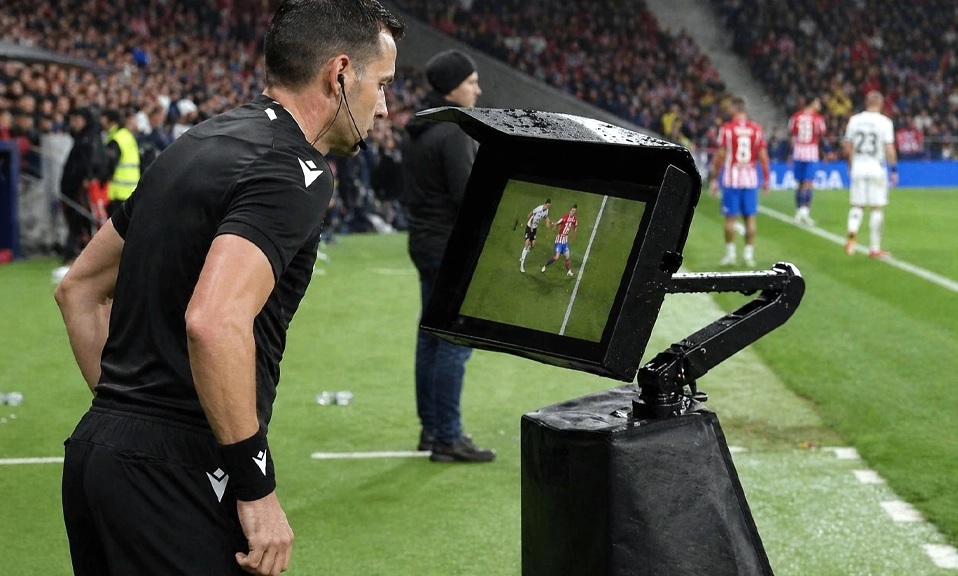
What links these decisions is not incompetence or corruption—though both exist. It is that human judgment is fallible, and the rules are often ambiguous. Goal-line technology, VAR, and review systems have reduced the frequency of clear errors, but they have not eliminated controversy. In some cases, they have shifted it: the debate is now about how a decision was reviewed, not just whether it was right.
The deeper issue is that sport asks referees to do something impossible: apply complex, sometimes contradictory rules in real time, at full speed, under enormous pressure, with millions of people watching. The best referees get most decisions right. But “most” is not “all,” and in a sport defined by fine margins, a single mistake can be the difference between glory and heartbreak.
The most controversial sports
decisions are rarely about simple mistakes. They are about the tension between the rules as written and the game as played, between the letter of the law and the spirit of competition. Sometimes a decision is a clear error. Sometimes it is a clever exploitation of a loophole. Sometimes it is both—a mistake that becomes a legend.
What unites these moments is that they force us to confront the fragility of fair play. Sport is not fair because the rules are perfect. It is fair because we agree to accept the outcome, even when the outcome feels unjust. That agreement is tested every time a referee blows a whistle that changes history. And every time, we come back—because the controversy is part of the drama, and the drama is why we watch.