The NBA has spent the better part of two decades asking a single question: who’s next? For years, the answer was always the same handful of names—LeBron, KD, Steph, Giannis. But as the 2026-27 season tips off, that question has finally found a new, overwhelming answer. The next generation isn’t just arriving; it’s already here. And it’s led by a 22-year-old Frenchman who general managers have anointed as the future of the league, a 19-year-old rookie class that was hyped for years before it ever touched an NBA floor, and a supporting cast of young stars who are making the old guard look over their shoulders.
The NBA has never had this much young talent. Twenty-five players under the age of 25 made USA TODAY’s Top 100 player rankings entering the season, including three teenagers and multiple members of the heralded 2026 draft class. The question isn’t whether the next generation is coming. It’s whether anyone—any team, any veteran, any defensive scheme—can stop them.
The Alien at the Center of It All
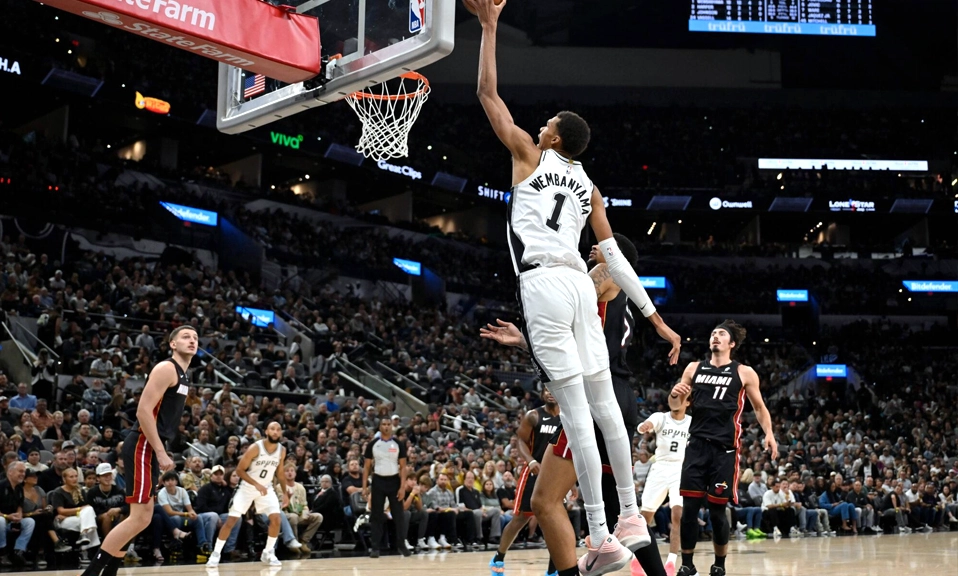
Every conversation about the NBA’s future begins and ends with Victor Wembanyama. The San Antonio Spurs big man is no longer a projection; he is a force. In the NBA’s annual GM Survey, Wembanyama received the most votes for MVP and for the player GMs would most like to start a franchise with—and he set records for both categories with the highest percentage of votes in the survey’s history. He earned the top spot for eight different questions, a level of consensus usually reserved for players already in their prime.
The Spurs are no longer a rebuilding project. GMs picked San Antonio as the most popular choice to win the 2027 NBA Finals (50%), displacing the Oklahoma City Thunder, who received 80% of the vote a year ago. And the reason isn’t just Wembanyama. It’s the young core around him: Stephon Castle (21), a brick-wall perimeter defender whose vision and athleticism already make him one of the better two-way point guards in the league, and Dylan Harper (20), the No. 2 pick in the 2025 draft who saw his role expand in the playoffs and is poised for a breakout sophomore season. The Spurs have the best young core in the NBA—and they might be capable of winning a title right now.
Cooper Flagg: The Quiet Superstar
If Wembanyama is the alien, Cooper Flagg is the inevitable. The Dallas Mavericks forward was the No. 1 pick in 2025, the Rookie of the Year, and the rare prospect who lived up to the hype and then some. He averaged 21 points, 6.7 rebounds, and 4.5 assists per game in his rookie season, leading all rookies in scoring.
What makes Flagg’s second season so compelling is that the conditions around him have improved. Kyrie Irving is back from injury. New head coach Dusty May is building a system tailored to Flagg’s versatile skill set. And Flagg, now listed at 6-foot-10 without shoes, has the physical tools to dominate. Brian Windhorst has said Flagg will enter the NBA’s top 10 “soon,” placing his long-term trajectory alongside Wembanyama’s. The quiet consensus is that Flagg is the next face of the league—and he’s only 19.
The 2026 Rookie Class: The Most Hyped in Years
The 2026 NBA Draft was billed as one of the best classes in years, with as many as four No. 1-level prospects. That hype is now reality.
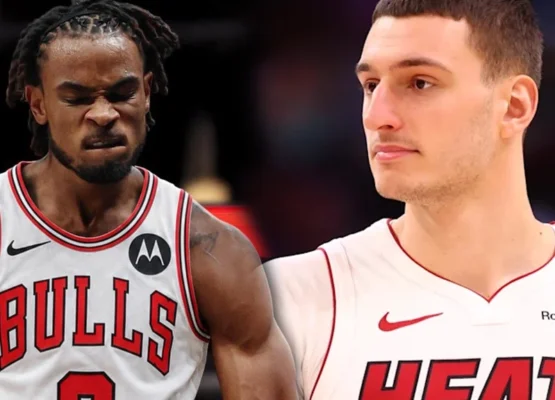
AJ Dybantsa, the No. 1 pick by the Washington Wizards, is the headliner. The 19-year-old BYU product averaged 25.5 points per game in his lone college season and was a viral phenomenon before he ever played a professional minute. He joins a Wizards roster that also features Alex Sarr, Bilal Coulibaly, and Tre Johnson, giving Washington one of the deepest young cores in the league. Darryn Peterson (Utah Jazz, No. 2 pick) is a scoring machine with rare ease. Cameron Boozer (Memphis Grizzlies, No. 3 pick) brings a competitive maturity beyond his years. Caleb Wilson (Chicago Bulls, No. 4 pick) is the athletic, versatile forward that modern franchises covet.
This isn’t a class that will take years to develop. These are players who are expected to contribute immediately, and the teams that drafted them are betting their futures on it.
The Supporting Cast: Breakout Stars and Sophomore Leaps
Beyond the headliners, the NBA’s young talent runs deep.
Kon Knueppel of the Charlotte Hornets is the best three-point shooter in the NBA by volume, a 21-year-old who started 80 of 81 games as a rookie and had a breakout season. Stephon Castle is already a two-way force for the Spurs. Ausar Thompson of the Detroit Pistons is a Most Improved Player candidate, a defensive menace with a rapidly expanding offensive game. Brandon Miller (Hornets) is a breakout fantasy pick and a rising star on the wing. And Matas Buzelis (Bulls) is part of a synergistic young trio with Caleb Wilson and Josh Giddey that has Chicago fans more excited than they’ve been in decades.
Can Anyone Stop Them?
The honest answer is: not for long.
The NBA has crowned nine different champions in nine years, a level of parity the league has never seen. That parity is a product of talent dispersion—the young stars are spread across the league, not concentrated on a superteam. But the pendulum is swinging. The Spurs are the betting favorite to win it all, and they are built around a 22-year-old who GMs believe is the best player in the world. The Wizards, Jazz, Mavericks, and Bulls are all stockpiling young talent that will mature together. The old guard—LeBron James, Stephen Curry, Kevin Durant—is still here, but they are no longer the story.
The teams that can stop the next generation are the ones that already have a piece of it. The Thunder, with Shai Gilgeous-Alexander still in his prime and a young core of their own, remain a contender. The Knicks, the defending champions, are built to win now. But the future belongs to the young.
The NBA’s new generation
is not a question mark. It is an answered prayer for a league that has spent years worrying about what happens when its biggest stars retire. Wembanyama is already an MVP favorite. Flagg is on the verge of superstardom. The 2026 rookie class is the most hyped in years, and it has the talent to justify the noise. The young cores in San Antonio, Washington, Dallas, and Chicago are positioned to dominate the next decade.
Can anyone stop them? For now, the answer is no. The next generation isn’t coming. It’s already here, and it’s not waiting for permission to take over.