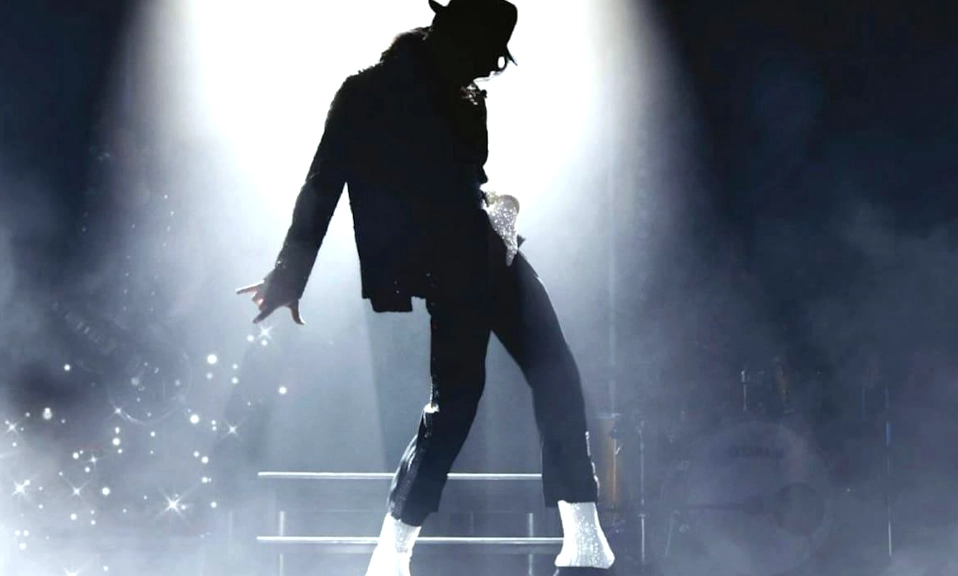
Seventeen years after his death, Michael Jackson is once again the biggest pop star on the planet. It’s a phenomenon that seemed impossible just a few years ago, but in 2026, the King of Pop has been resurrected by a blockbuster biopic, the relentless engine of TikTok, and a generation of young fans who weren’t even born when he died. This is the story of how Michael Jackson moonwalked his way back to the center of pop culture, and why Gen Z can’t get enough.
🎬 The Biopic That Sparked the Comeback
The catalyst for this global resurgence was the release of Michael, the long-awaited biographical film directed by Antoine Fuqua. Released on April 24, 2026, the film stars Jaafar Jackson, Michael’s real-life nephew, in the lead role, a piece of casting that immediately generated massive interest.
The film’s impact was seismic. It wasn’t just a box office success; it was a cultural event. The trailer alone garnered more than 116 million views in its first 24 hours, surpassing the trailers for other major music films like Taylor Swift: The Eras Tour and Bohemian Rhapsody. The film went on to become the highest-grossing music biopic of all time, pulling in over $850 million globally by late 2026. For many young people, this film was their first real introduction to the man behind the myth, a powerful entry point that turned a historical figure into a living, breathing artist.
📈 The Numbers Don’t Lie: A Chart Domination
The biopic didn’t just fill theaters; it sent Jackson’s music catalog rocketing back up the charts with a force that stunned industry observers. The week following the film’s release saw his solo catalog register 137.5 million official on-demand streams in the U.S. alone, a 146% increase that more than doubled his previous career high.
This surge propelled him to the top of the global charts. According to analytics platform Kworb, Jackson became the world’s number one streaming artist in May 2026, with a staggering 11,157 points in the Global Digital Artist Ranking. He was nearly 5,000 points ahead of the second-place artist, Justin Bieber, and ahead of global superstars like Taylor Swift, Bad Bunny, and BTS.
The resurgence also produced historic chart milestones. His 1983 classic, “Billie Jean,” hit number one on the Billboard Global 200. Even more remarkably, a lesser-known track, “Chicago,” from his 2014 posthumous album Xscape, became a viral hit and debuted on the Billboard Hot 100. This achievement made Jackson the first and only artist to have a new hit on the chart in six different decades, from the 1970s to the 2020s.
📱 TikTok and the “Memeable” King of Pop
If the biopic lit the fuse, TikTok was the explosion. The platform became the primary engine for Jackson’s music discovery among Gen Z, a generation that consumes music through short-form video.
His music, with its iconic hooks and cinematic production, proved to be perfectly suited for the TikTok format. Videos related to #BillieJean grew by 230% after the film’s release. Young users are recreating his choreography, attempting the moonwalk, and using his songs as soundtracks for their own content. The phenomenon isn’t limited to dance. One of his songs, “Chicago,” became a meme soundtrack for bird animations, sparking a viral trend that drove millions of streams.
For Gen Z, Jackson is “kind of memeable”. His unmistakable style—the “hee-hee,” the white socks, the military jackets—has become a shorthand for a certain kind of legendary, almost mythical, star power. This isn’t just nostalgia; it’s a form of discovery, where the meme is the entry point to the artistry.
🤔 Why Gen Z Is Fascinated: The Authenticity of a Pre-Internet Superstar
This is the most fascinating part of the story. Why would a generation raised on algorithmic feeds and 48-hour trends become obsessed with an artist from the pre-digital age? The answer, according to cultural commentators, lies in the very nature of his fame.
For Gen Z, Michael Jackson represents something the modern music industry rarely creates: a global superstar who conquered the entire planet without the help of social media. His fame was built purely on music, dance, and groundbreaking visuals that changed the world. He didn’t have a team optimizing his content for the algorithm; he was the event.
In an era where virality is fleeting and fame feels manufactured, Jackson’s sheer, undeniable talent and his larger-than-life presence feel authentic and monumental. As Time magazine noted, Jackson essentially created the model of the modern pop star, merging music, dance, fashion, and visual identity into a global brand. He became the prototype for everyone from Beyoncé to Taylor Swift. To a new generation, he isn’t just a singer from the past; he is the blueprint for the kind of icon that seems to no longer exist.
⚖️ The Complicated Legacy: Art vs. Allegations
Of course, this resurgence cannot be discussed without acknowledging the elephant in the room: Jackson’s deeply complicated and controversial legacy. The renewed interest in his music exists alongside persistent and serious allegations of child sexual abuse, which he denied and for which he was acquitted in his 2005 criminal trial.
The release of the biopic itself was reportedly shaped by these tensions. Legal restrictions from Jackson’s estate regarding the 1993 Jordan Chandler allegations forced the filmmakers to reshoot the entire third act of the film, a testament to how the controversy remains a powerful force. Netflix also released a three-part documentary, Michael Jackson: The Verdict, in June 2026, which dissected the 2005 trial and the complex legacy it left behind.
This creates a profound dilemma for the new generation of fans. How do you reconcile the undeniable genius of the art with the gravity of the allegations against the artist? The Spinoff aptly described it as a situation where “we are, like so many things in 2026, wrestling with a bunch of different conundrums and perspectives at once”. For many young fans, the answer seems to be a compartmentalization—separating the music from the man, allowing themselves to be swept up in the art while the debate about the artist continues to rage.
💎 Michael Jackson’s 2026
comeback is not a fleeting trend. It is a genuine cultural reset, powered by a blockbuster film that introduced his story to a new generation, and fueled by a social media landscape that found his music and image to be endlessly compelling. Gen Z’s embrace of the King of Pop is a testament to the timeless power of true, undeniable artistry. They are drawn to a level of fame and talent that the digital age has struggled to replicate, finding in his music and his myth a sense of awe that is increasingly rare.
His legacy is, and will likely always be, a battleground of art and allegation. But in 2026, the music is winning. The King of Pop is back on his throne, and a new generation is ready to kneel.