The modern home is shedding its cables. From the bedside table to the kitchen counter, from the balcony to the bathroom, a quiet revolution is underway — and it’s powered by batteries. Rechargeable lamps, fans, vacuums, and even kitchen appliances are becoming the new normal, and the reasons go far beyond mere convenience.
For decades, the cord was a fact of domestic life. A lamp needed a plug. A fan needed an outlet. A vacuum needed a wall socket and a clear path to it. But in 2026, the cordless home is no longer a niche fantasy. It is a rapidly expanding category, driven by better batteries, smarter design, and a cultural shift toward flexible, adaptable living spaces.
Here’s why the cordless revolution is happening — and why your next lamp, fan, or kitchen gadget might not have a plug at all.
The End of the Extension Cord Era
The most immediate benefit of cordless appliances is spatial freedom. You are no longer limited by the location of your outlets. A lamp can go on a shelf that has no nearby socket. A fan can follow you from the bedroom to the balcony. A vacuum can reach the corners of the house without dragging a cable behind it.
This freedom is especially valuable in older homes, where outlets are scarce, and in rented apartments, where you can’t rewire the walls. It’s also a game-changer for small spaces: a cordless lamp can be placed on a narrow windowsill or a high shelf that would never accommodate a cord.
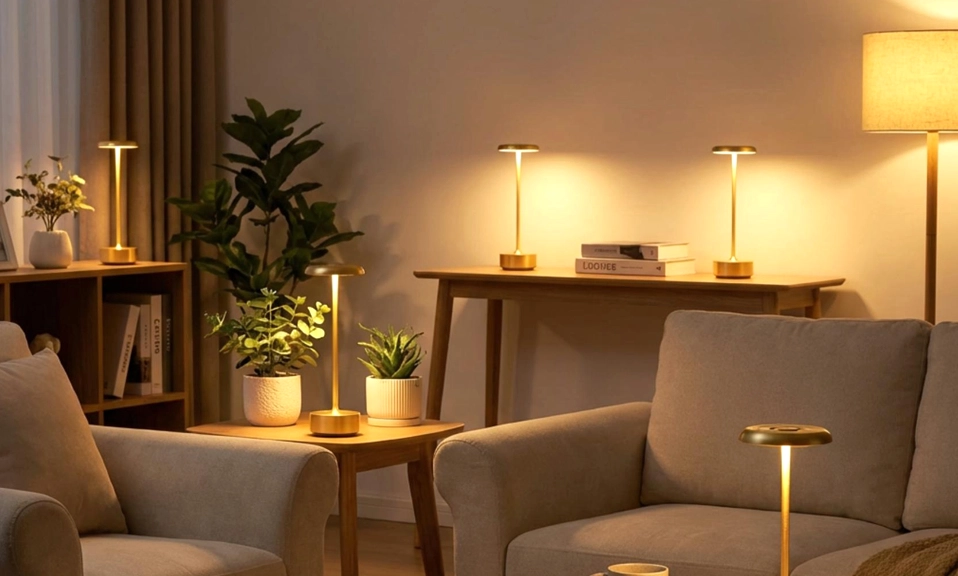
The design implications are just as significant. Cordless lamps have become decorative objects in their own right — sleek, sculptural, and often portable. They can be carried from room to room, used as a dining table centerpiece, or taken outside for an evening on the patio. The cord was always an aesthetic compromise. Removing it has allowed designers to create lamps that are as beautiful as they are functional.
The Battery Breakthrough
The cordless revolution is built on a simple technological truth: batteries have gotten much better.
Lithium-ion and lithium-polymer cells are now cheaper, lighter, and more energy-dense than ever. A modern cordless lamp can run for 20 to 40 hours on a single charge. A cordless fan can last through the night. A cordless vacuum can clean an entire apartment on one battery. And fast-charging technology means that topping up takes minutes, not hours.
The rise of USB-C charging has also made cordless appliances more convenient. You can charge a lamp, a fan, and a speaker with the same cable — the one that probably already charges your phone. This standardization has removed a major barrier to adoption: the fear of yet another proprietary charger.
The Safety and Practicality Factor
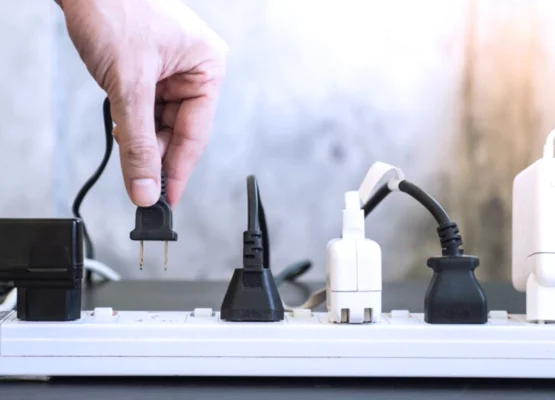
Cords are not just inconvenient. They are tripping hazards, especially in homes with young children or elderly residents. They are also vulnerable to pets, furniture, and repeated plugging and unplugging. A cordless appliance eliminates those risks entirely.
In the kitchen, cordless appliances offer a different kind of safety: no cords near water, no cables cluttering countertops, no need to unplug before wiping down surfaces. Cordless immersion blenders, hand mixers, and even electric knives are becoming popular for exactly this reason.
And then there’s the power outage factor. A cordless lamp that stays on when the grid goes down is not just a convenience — it’s a practical necessity in regions with unreliable electricity or extreme weather events. The same goes for a cordless fan during a summer blackout.
The Aesthetic Shift: The Cordless Home as a Design Statement
The cordless home is not just about practicality. It’s about a new aesthetic — one that values clean lines, flexibility, and intentional placement.
A cordless lamp can be placed anywhere. That means it can be used to highlight a specific corner of a room, to create a reading nook, or to add a warm glow to a dining table. It can be moved when you rearrange the furniture, without the hassle of finding a new outlet.
This flexibility is particularly appealing to renters and small-space dwellers — people who can’t rewire their homes but want the freedom to change their lighting and layout without constraint. It’s also appealing to the growing number of people who work from home and need adaptable spaces that can shift between work, rest, and entertainment.
The Challenges: What Still Holds Cordless Back
The cordless revolution is real, but it’s not complete. Several challenges remain.
Battery degradation is the most significant. All rechargeable batteries lose capacity over time. A cordless lamp that runs for 30 hours when new might run for 15 hours after three years of daily use. The appliance’s lifespan is tied to its battery, and replacing a battery is often more expensive or difficult than replacing a corded appliance.
Power limitations are another constraint. Cordless appliances are generally less powerful than their corded counterparts. A cordless vacuum may not have the suction of a plug-in model. A cordless fan may not move as much air. For heavy-duty tasks, cords still have the edge.
Cost is the third barrier. Cordless appliances are typically more expensive than corded equivalents, largely due to the cost of the battery and the engineering required to make the device efficient enough to run on limited power.
And then there’s the sustainability question. Batteries contain rare materials, and their disposal is a growing environmental concern. The cordless home is more convenient, but it is not necessarily more sustainable — unless the batteries are designed for longevity, repairability, and recycling.
The Future: The Cordless Home as the Default
Despite these challenges, the trajectory is clear. Cordless appliances are becoming better, cheaper, and more capable every year. The battery breakthrough is continuing. The design possibilities are expanding. And consumer expectations are shifting.
The next generation of homes may not be built around the location of outlets at all. They may be built around where the light and the air and the power are actually needed — with cordless appliances that can follow the rhythms of daily life.
The cord is not disappearing entirely. Corded appliances will always have their place for high-power tasks and long-term reliability. But for the everyday devices that shape the texture of home life — the lamp you read by, the fan that cools you at night, the vacuum that keeps the floors clean — the cord is becoming optional.
And that changes everything.
A Home That Moves With You
The cordless home is not just a collection of gadgets. It’s a different way of thinking about domestic space. It’s about flexibility, adaptability, and the freedom to change your environment without constraint. It’s about lamps that can go anywhere, fans that can follow you, and appliances that don’t tie you to the nearest outlet.
The cordless revolution is not coming. It’s already here. And once you’ve lived without the cord, you won’t want to go back.